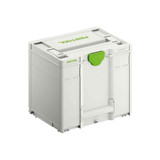
PRODUCT DETAILS
Click an item to expand and learn more
-
Functions
Well padded. Well protected.
All-round protection. In conjunction with the SE-DP SYS3 M cover pad, everything remains in situ.
- Secures and protects the content in the Systainer³ M
- protects the content
- made of foam
Additional Info
- Transporting delicate tools and equipment safely to job sites
- Storing sensitive electronic devices during travel or on-site use
- Protecting photographic or videography gear from shocks and impacts
- Organizing and cushioning small parts or components in transit
- Ensuring fragile items like glassware or ceramics remain intact during moves
- Providing a secure environment for precision instruments or measuring devices
- Keeping collectibles or hobby items safe from damage while in storage or during travel
- Use as a protective insert for carrying laptops, tablets, or other tech devices within a larger container
- Customizable padding for shipping or handling of custom-shaped or irregular items
-
-
Questions & Answers
Popular Questions
Variable speed control allows you to adjust the tool’s speed for different materials and tasks, increasing versatility and precision. Stepless controls provide smooth transitions for even finer adjustments. Festool tools often feature this capability, letting you slow down for delicate surfaces or speed up for rapid material removal. The Festool 577520 Finish Delta Sander DTS 400 REQ-Plus offers stepless variable speed for optimal finishing, while the Festool 577619 Cordless Drill C 18 HPC 4,0 I-Set provides electronic torque and speed adjustment for maximum control. A variety of speed control options are available to fit your preferences. See full answer »In the workshop, common tools include hammers, screwdrivers, wrenches, saws, and drills. These tools are used for building, repairing, and assembling various projects. Some workshops may also have specialized equipment like power tools and measuring instruments.
When buying tools remember you buy cheap you get cheap and shortened , dangerous use of them . I suggest buying as you need them and buying a better quality tool that will last so much longer.
Here is a link for your creative journey… See full answer »To write a description for a workshop, clearly state the workshop’s topic, objectives, and target audience. Briefly outline what participants will learn or achieve, and mention any key activities or outcomes. Use concise and engaging language to attract interest. See full answer »Tools are instruments or devices used to carry out creative tasks or activities, such as hammers, screwdrivers, or computers. Materials are the substances or items that are used to create, build, or complete a project, such as wood, metal, paper, or fabric. Together, tools and materials are essential for producing or constructing something.
All are used with the greatest tool your Brain and creativity there in .
Here is a Direct Link to all things for creativity… See full answer »The equipment needed for a workshop typically includes tools and machinery specific to the tasks being performed, such as drills, saws, wrenches, and measuring instruments. Additionally, safety gear like gloves, goggles, and first aid kits are important, along with workbenches and proper lighting. The exact equipment depends on the workshop’s focus, such as woodworking, metalworking.
A workshop can be any size from small to Big , creativity has no dimension , just know what you want to create there and move towards that idea… See full answer »In a workshop, common documents used include plans and worksheets to guide you. List of materials and finishing products.
Here is a link to all your needs in your shop.
https://toolstoday.com/ See full answer »Equipment in a workshop refers to the various tools, machines, and devices used to perform tasks such as cutting, shaping, assembling, or repairing materials. This does include hand tools like hammers and screwdrivers, as well as larger machinery like drills presses, saws, CNCs, and welding equipment. The type of equipment depends on the specific work being done in the workshop.
Remember your equipment is an extension of your ability ao get quality equipment and you will be successful.
Here is a link to Quality equipment… See full answer »A workshop is a place of Creativity and Learning of ideas and methods. It typically involves hands-on work , or collaborative problem-solving, often led by a need to be creative . Workshops are usually more participatory and ideas happen there.
Here is a link that will help your Creative journey.
https://toolstoday.com/ See full answer »The "best" joint for woodworking depends on the project, but the mortise and tenon joint is often considered one of the strongest and most versatile. It provides excellent strength and durability, making it ideal for furniture and structural frames. For quick and simple assembly, pocket hole or dowel joints are also popular choices.
Here is a link that will help in your wood jointing decision.
See full answer »A good size for a workshop depends on its purpose and hands-on activities and machine placement . Your shop doesn't have to be a Big shop , there are very productive small shop operating very well , mine included . I create is a 15 ft. by 14 ft. shop and turn out many beautiful items that are in great demand. The key to this is machine placement and quality tools , cheap toold will hamper your creations with breakage and inferior quality. My habit is to wait a little longer and save a little more to get a high Quality tool or machine that will give me many years od top quality service… See full answer »