Can You Use Woodworking Router Bits on Plastic?
Table of Contents
- Woodworking Router Bits vs. Plastic-Cutting Router Bits
- Example 1: Using Woodworking Router Bits on HDPE
- Example 2: Using a Woodworking Chamfer Bit on Acrylic
- Why Heat Matters When Routing Plastic
- When Should You Use an O-Flute Bit?
- Which Woodworking Router Bits Can Work on Plastic?
- Not All Plastics Machine the Same Way
- Tips for Using Router Bits on Plastic
- So, Do You Need Special Router Bits for Plastic?
- FAQs
Yes — in many cases, standard woodworking router bits can be used successfully on plastic. You don't necessarily need a plastic-specific bit for every routing operation.
That doesn't mean every woodworking bit is a good choice for every plastic. Plastic behaves differently from wood, particularly when it comes to heat. Bit selection, router speed, feed rate, and the type of plastic you're machining all matter.
But for operations such as flush trimming, rounding over edges, and cutting chamfers, a sharp carbide woodworking router bit may already be exactly what you need.
We've recently demonstrated this with two very different plastics: HDPE and acrylic.
Woodworking Router Bits vs. Plastic-Cutting Router Bits
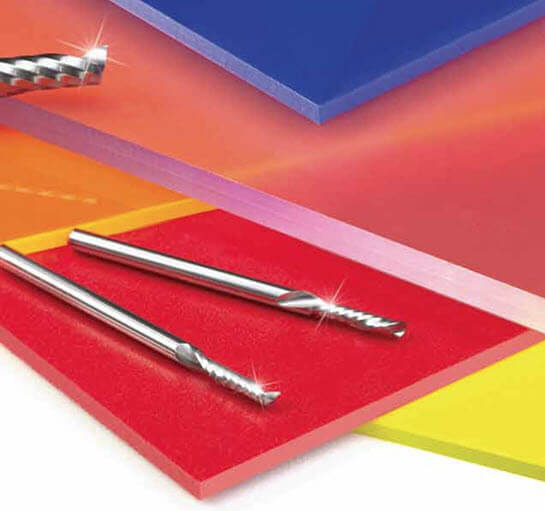
Router bits designed specifically for plastic are usually optimized to cut efficiently while removing chips and limiting heat buildup. That's especially important when you're cutting slots, profiles, or parts on a CNC router.
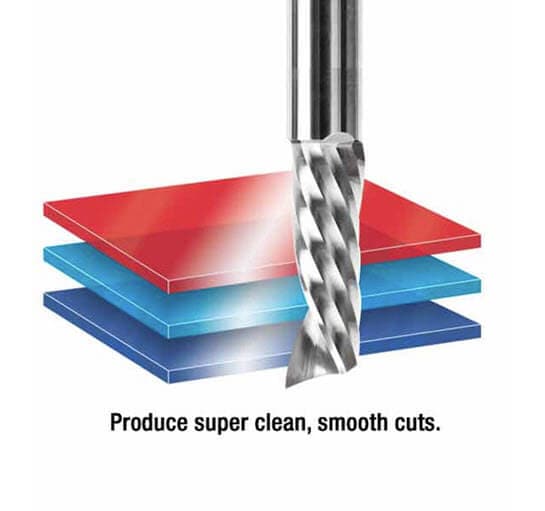
O-flute router bits are a common example. Their geometry produces larger chips and helps clear those chips away from the cutting edge. This reduces the chance of heat building up and softening or melting the plastic.
But not every operation requires an O-flute.
Once a part has been cut, you may need to:
- Flush trim an edge
- Add a roundover
- Cut a chamfer
- Bevel an edge
- Follow a template or bearing
Those are operations woodworkers perform every day with conventional router bits. With the right plastic and cutting conditions, many of those same bits can also produce excellent results on plastic.
Example 1: Using Woodworking Router Bits on HDPE
HDPE — high-density polyethylene — is a thermoplastic commonly used for signs, outdoor products, cutting boards, fixtures, and many other machined components.
In our Making Professional HDPE Signs on a CNC Router project, Matt used ColorCore HDPE to make two-layer garden signs. The CNC cuts through the outer colored layer to expose the contrasting core underneath.
The primary CNC cutting was performed with an Amana Tool 1/4" Up-Cut Spiral O-Flute Bit (51404-K).
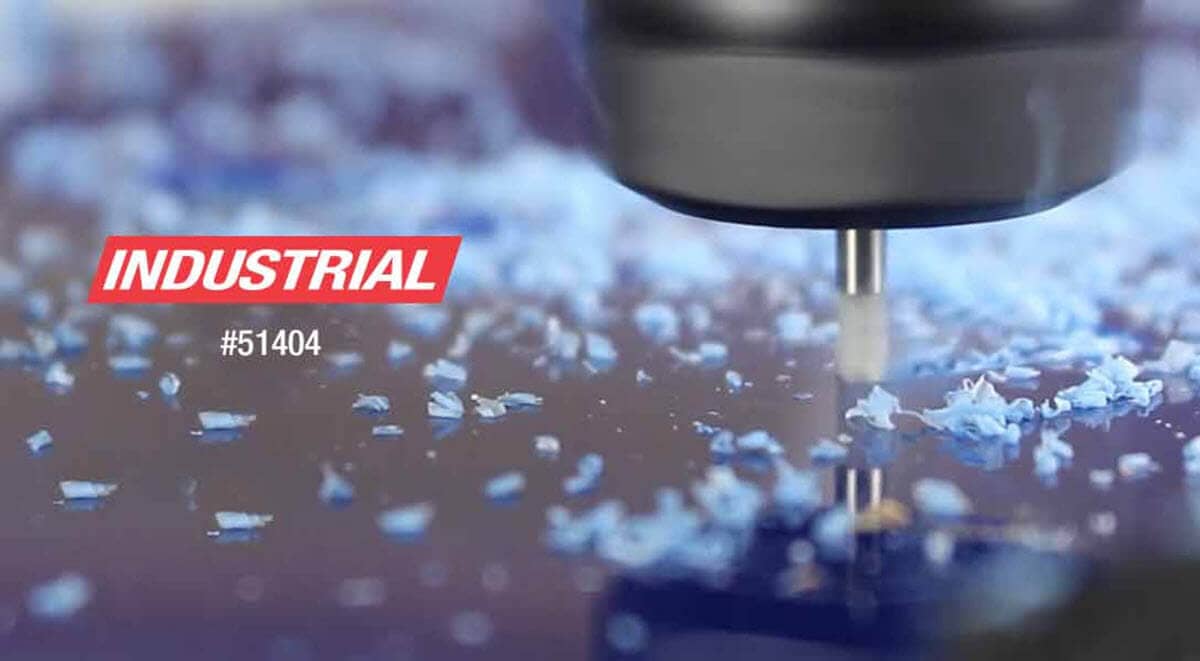
For that operation, an O-flute makes sense. The bit is doing the actual material removal, so efficient chip evacuation and heat management are important.
Matt ran the 51404-K at:
- 18,000 RPM
- 100 IPM feed rate
- 100 IPM plunge rate
- 0.25" depth per pass
But after the signs came off the CNC, something interesting happened.
Matt moved to the router table and used ordinary woodworking router bits to finish the HDPE.
Flush Trimming HDPE
After removing the tabs, Matt cleaned up the edges with an Amana Tool RC-47104 carbide insert flush-trim bit.
Flush-trim bits are among the most familiar woodworking router bits. The bearing follows an existing edge or template while the cutting edge removes the excess material.
The same principle works on machinable plastics such as HDPE. A sharp carbide cutting edge can leave a smooth, clean finished edge without requiring a specialized plastic profile bit.
Rounding Over HDPE Edges
Matt then used an Amana Tool 49492 1/16" radius roundover bit to soften the edges of the signs.
This wasn't just decorative. Machined HDPE can have surprisingly sharp edges. A small roundover makes the finished part more comfortable to handle while giving it a cleaner, more finished appearance.
Again, this is a standard woodworking router-bit profile being used successfully on plastic.
Example 2: Using a Woodworking Chamfer Bit on Acrylic
Acrylic presents a different challenge.
Like HDPE, acrylic is a thermoplastic, but it behaves differently when machined. One of the biggest concerns is heat. Too much friction can heat the material instead of cutting it cleanly, potentially causing melting, poor edge quality, or material sticking to the cutting edge.
For a recent acrylic project, Matt wanted to add a 45-degree chamfer.
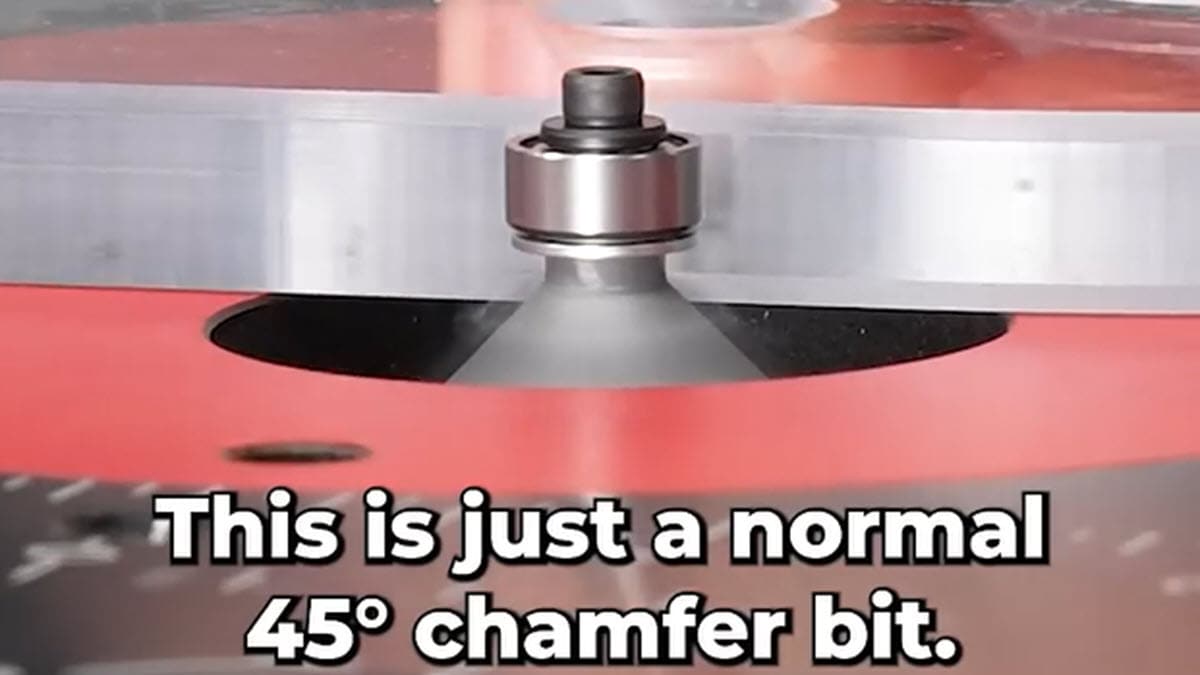
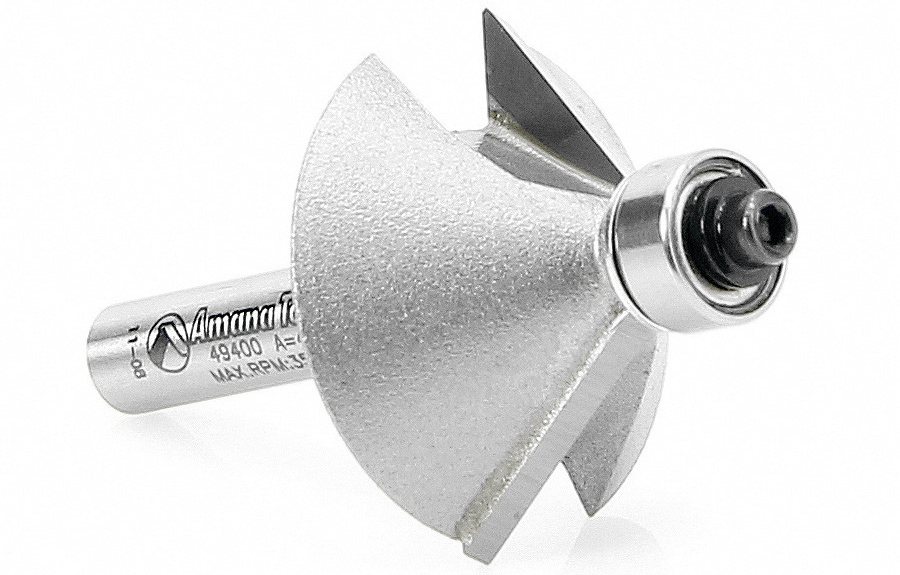
Rather than using a specialized plastic-cutting bit, he used an Amana Tool 49400 45° chamfer bit — a standard carbide router bit normally associated with woodworking.
The important adjustment was speed.
Matt reduced the router to approximately 13,000 RPM and kept the material moving steadily through the cut. The result was a clean chamfer without melting the acrylic.
That's an important lesson when routing plastic: more RPM isn't necessarily better.
Why Heat Matters When Routing Plastic
Wood and plastic respond very differently to heat.
With thermoplastics, excessive heat can soften the material. Instead of producing clean chips, the router may begin producing gummy material that can smear along the cut or stick to the bit.
Heat can build when:
- Router RPM is too high for the operation
- Feed rate is too slow
- The bit is dull
- Chips aren't clearing effectively
- The cutter rubs instead of taking a clean chip
- Too much material is removed in one pass
That's why the successful acrylic chamfer isn't simply a matter of putting a woodworking bit in the router. Matt changed the cutting conditions to suit the material.
When Should You Use an O-Flute Bit?
Standard woodworking bits can work very well for certain plastic-routing operations, but that doesn't make dedicated plastic-cutting bits unnecessary.
If you're using a CNC router to cut parts from plastic sheet, an O-flute bit is often the better starting point.
O-flute bits are designed to produce and evacuate a larger chip. Carrying that chip away also carries heat away from the cut, helping reduce melting and chip rewelding.
They're particularly useful for operations such as:
- Cutting parts from plastic sheet
- Slotting
- Pocketing
- Long CNC toolpaths
- Machining plastics where heat buildup is a concern
Think of the difference this way:
For primary CNC material removal, choose bit geometry suited to machining plastic. For edge finishing and profiling, don't automatically assume you need a plastic-specific bit.
Which Woodworking Router Bits Can Work on Plastic?
Depending on the material and operation, several common carbide woodworking profiles may be useful for plastics:
- Flush-trim bits for cleaning up edges and following templates
- Roundover bits for softening sharp edges
- Chamfer bits for beveling and decorative edge treatments
- V-groove bits for lettering, engraving, and decorative grooves where appropriate
The fact that a bit can cut plastic, however, doesn't mean that every plastic should be routed the same way.
Not All Plastics Machine the Same Way
"Plastic" covers a huge range of materials.
HDPE is relatively soft and forgiving to machine. Acrylic is harder and can produce beautiful machined edges, but heat and chipping need to be controlled. Other plastics can behave very differently.
Before routing an unfamiliar material, identify exactly what it is and confirm that machining it with a router is appropriate. Don't assume that settings that worked well on HDPE will also work on acrylic — or vice versa.
Tips for Using Router Bits on Plastic
If you're experimenting with a conventional woodworking router bit on plastic, keep a few basic principles in mind:
- Use a sharp carbide bit. A dull cutter creates additional friction and heat.
- Watch your RPM. Excessive spindle speed can generate heat faster than the cut can remove it.
- Keep the cutter moving. Dwelling in one location can quickly heat thermoplastic.
- Look at the chips. Clean chips are generally a better sign than melted strings or gummy residue.
- Clear chips from the cut. Recutting chips creates additional heat.
- Test first. Plastics vary, and a test cut on scrap material is worth the few extra minutes.
So, Do You Need Special Router Bits for Plastic?
Sometimes — but not always.
When you're cutting plastic sheet on a CNC router, specialized plastic-cutting geometry such as an O-flute can make a significant difference in chip evacuation, heat control, and cut quality.
But if you're flush trimming an HDPE part, rounding over its edges, or adding a chamfer to acrylic, you may already have a suitable bit in your router-bit collection.
The key is understanding the operation.
Choose the bit geometry for the cut you're making, then adjust speed, feed, and depth of cut for the material. As Matt's HDPE and acrylic projects demonstrate, a good carbide woodworking router bit isn't limited to woodworking.
FAQs
Can you use woodworking router bits on plastic?
Yes. Sharp carbide woodworking router bits can work well for many plastic-routing operations, particularly flush trimming, roundovers, chamfers and other edge-finishing cuts. The best bit depends on the type of plastic and the operation.
Do you need special router bits to cut plastic?
Not always. Standard woodworking bits can work well for some edge-finishing operations. For primary CNC cutting, slotting and pocketing, a plastic-cutting O-flute bit is often a better choice because its geometry helps evacuate chips and control heat.
Can you use a regular router bit on HDPE?
Yes. HDPE machines well with sharp carbide tooling. In our HDPE sign project, standard flush-trim and roundover bits produced clean finished edges, while an O-flute plastic-cutting bit was used for the primary CNC cutting.
Can you use a woodworking router bit on acrylic?
Yes, for some operations. We successfully used a standard 45° carbide woodworking chamfer bit on acrylic. Router speed was reduced to about 13,000 RPM and the material was kept moving to prevent excessive heat buildup. Those settings are an example from that specific project, not universal settings for acrylic.
Why does plastic melt when using a router?
Melting usually means too much heat is building at the cutting edge. Excessive RPM, feeding too slowly, dull tooling, poor chip evacuation or allowing the cutter to dwell can all contribute to heat buildup.
What is the best router bit for CNC cutting plastic?
For many thermoplastics, a sharp O-flute bit designed for plastic is an excellent starting point. Its large flute helps create and evacuate chips efficiently, carrying heat away from the cutting edge. The ideal geometry and cutting settings depend on the specific plastic and operation.