Which Dust Extractor Should You Buy? A Practical Guide
Table of Contents
A dust extractor isn't just an expensive shop vacuum. The right machine keeps your workspace cleaner, protects your lungs, extends the life of your power tools, and dramatically reduces cleanup time.
But choosing one can be confusing. Do you need HEPA? Is automatic filter cleaning worth the extra money? Should you buy Festool or FEIN? And how much capacity do you really need?
This guide will help you choose the right dust extractor based on the work you actually do.
Quick Recommendations
- Best value for most woodworkers: Festool CT 15 HEPA or FEIN Turbo I
- Best all-around professional extractor: Festool CT MIDI I HEPA
- Best for larger workshops: Festool CT 26 EI HEPA
- Best for drywall, masonry, or concrete dust: Festool CT 36 AC or CT 48 AC, or FEIN Turbo II X AC PRO
- Best cordless solution: Festool CTC MIDI I
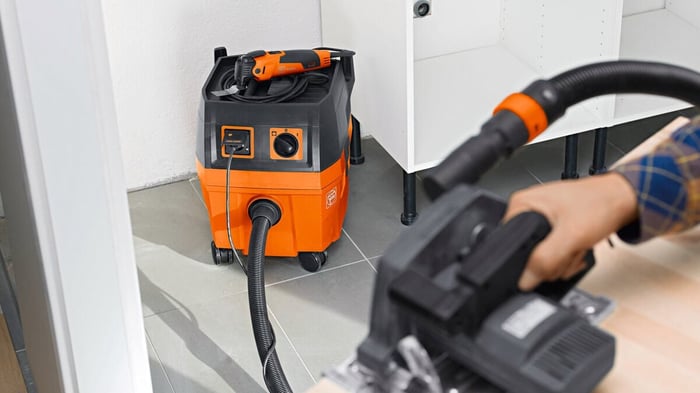
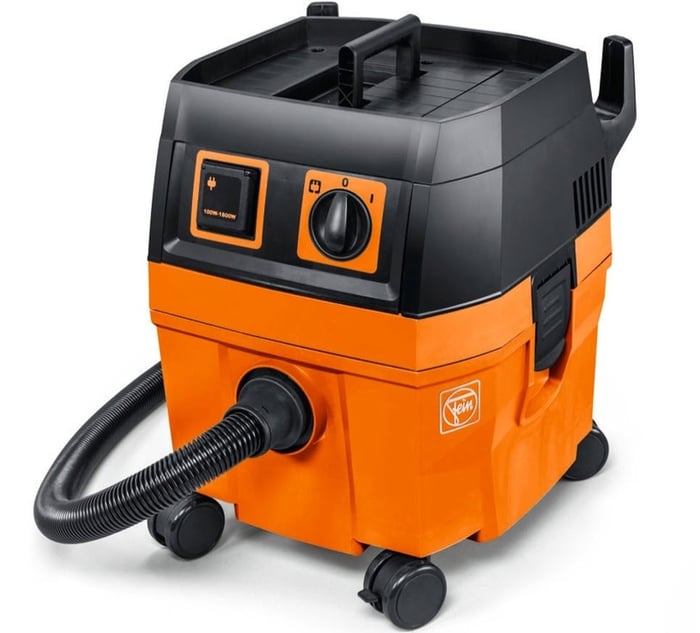 FEIN Turbo I Wet/Dry Dust Extractor/Vacuum might look like a shop vac but sounds much quieter at a volume of only 66 dB.
Dust Extractor vs. Shop Vacuum
If you've only used a standard shop vac, you may wonder why professional dust extractors cost considerably more.
Professional dust extractors are designed specifically for power tools.
- Higher-quality filtration (often HEPA certified)
- Automatic tool-start outlets
- Better airflow under continuous use
- Quieter operation
- Better hose management
- Anti-static systems that reduce dust buildup
- Designed for fine wood dust, drywall dust, MDF, and concrete dust
If you spend hours sanding, routing, sawing, or cutting sheet goods, the difference becomes obvious very quickly.
Step 1: How Much Dust Do You Produce?
Light Duty
If you mostly use:
- Random orbit sanders
- Track saws
- Domino joiners
- Small routers
You probably don't need a massive extractor.
Recommended:
Both provide excellent suction while remaining compact enough for smaller shops.
General Woodworking
If your day includes a mix of routers, sanders, track saws, planers, and occasional cleanup, a mid-size extractor offers the best balance of mobility and capacity.
Recommended:
These machines are ideal for furniture builders, cabinet shops, and serious hobbyists.
Heavy Dust Production
If you regularly generate large amounts of dust from:
- Drywall sanding
- Concrete grinding
- Masonry work
- Large CNC routers
- Production sanding
You'll appreciate a larger collection container and automatic filter cleaning.
Recommended:
Automatic filter cleaning helps maintain airflow without constantly stopping to clean clogged filters.
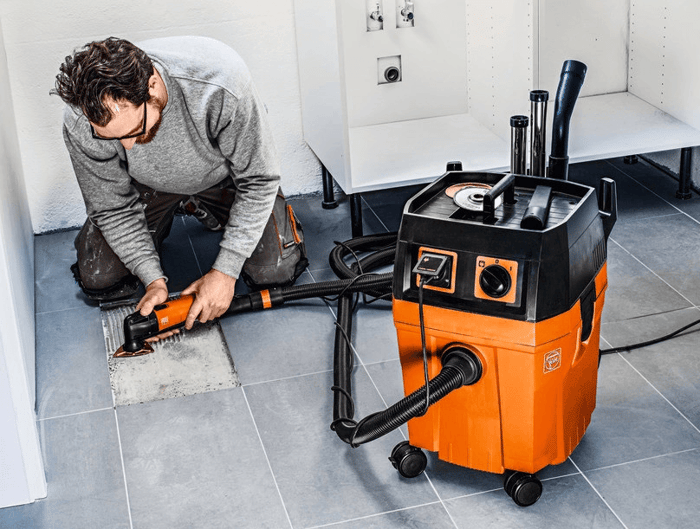 FEIN Turbo II HEPA Set Wet/Dry Dust Extractor/Vacuum adds a HEPA filter for handling fine dust
Step 2: Do You Need HEPA?
For many woodworkers, the answer is yes.
HEPA filters capture extremely fine particles that ordinary filters may miss, including MDF dust, hardwood dust, drywall dust, silica, and other airborne particles that can remain suspended long after cutting stops.
If you're working indoors—or care about the air you're breathing—a HEPA model is usually the better long-term investment.
Most Festool extractors include HEPA filtration, and several FEIN models are also available with HEPA filters.
Step 3: Is Automatic Filter Cleaning Worth It?
If you primarily cut hardwood, plywood, or sheet goods, probably not.
If you work with drywall, masonry, concrete, or other extremely fine dust, absolutely.
Automatic filter cleaning periodically shakes accumulated dust from the filter, helping maintain consistent airflow during demanding applications.
It's one of those features you don't realize you need until you spend an afternoon sanding drywall.
Festool or FEIN?
Both companies build excellent professional dust extractors, but they emphasize slightly different strengths.
Choose Festool if:
- You already own Festool tools
- You want seamless hose and accessory integration
- You appreciate premium organization and storage
- You frequently work on finished interiors or customer homes
Choose FEIN if:
- You want outstanding performance for the money
- You frequently perform wet/dry cleanup
- You prefer a more traditional industrial vacuum design
- You need professional performance at a lower price point
Neither choice is wrong. The better machine depends more on your workflow than the logo on the side.
Which Size Should You Buy?
| If you... | Recommended Size |
|---|---|
| Work in a garage or small shop | CT 15, CT MIDI, FEIN Turbo I |
| Move between jobsites | CT MIDI or CTC MIDI Cordless |
| Build cabinets or furniture daily | CT 26 or FEIN Turbo II |
| Create large volumes of fine dust | CT 36 AC, CT 48 AC, FEIN Turbo II X AC PRO |
Our Recommendations
Best Budget Professional Dust Extractor
A fantastic entry point into professional dust extraction. Compact, quiet, and perfect for hobbyists and small shops.
Best Value
Professional-grade performance at an attractive price, making it one of the best values in the lineup.
Best Overall
Excellent portability, enough capacity for most users, outstanding filtration, and compatible with virtually every Festool workflow.
Best for Production Shops
Large enough for full-time use while remaining easy to maneuver around the shop.
Best for Fine Dust
Automatic filter cleaning keeps airflow high during drywall, concrete, and masonry applications.
Best Cordless Dust Extractor
Perfect for jobsites where power isn't always available.
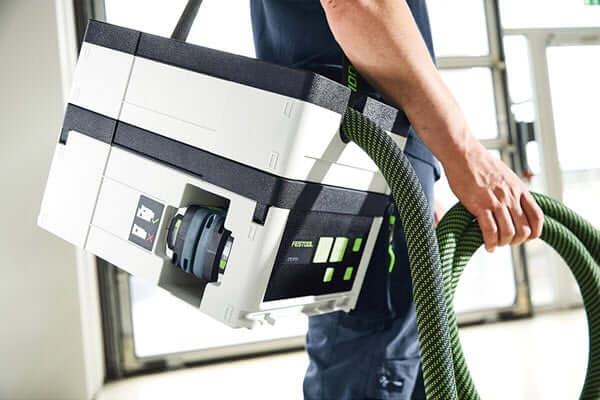 Festool Cordless Mobile Dust Extractor - Complete cordless freedom with 2 x 18 V (4.0/5.0/5.2 Ah) battery packs
The Bottom Line
The best dust extractor isn't necessarily the biggest—or the most expensive.
If you're a hobbyist or weekend woodworker, a compact machine like the Festool CT 15 or FEIN Turbo I may be all you'll ever need.
If you're building cabinets every day, stepping up to a CT MIDI, CT 26, or FEIN Turbo II makes sense.
And if you routinely generate extremely fine dust from drywall or concrete work, investing in automatic filter cleaning can save time, maintain suction, and reduce interruptions throughout the day.
Whatever model you choose, a quality dust extractor is one of the few shop upgrades you'll appreciate every single time you turn on a tool.
FAQs
What is the difference between a dust extractor and a shop vacuum?
A dust extractor is designed specifically for collecting dust from power tools. Compared to a typical shop vacuum, it usually offers better filtration, quieter operation, automatic tool activation, and more consistent airflow during continuous use. Many dust extractors also include HEPA filters to capture fine airborne dust.
Do I really need a HEPA dust extractor?
If you regularly work with hardwood, MDF, plywood, drywall, or concrete, a HEPA dust extractor is a worthwhile investment. HEPA filters capture at least 99.97% of airborne particles as small as 0.3 microns, helping keep your workspace cleaner and reducing the amount of harmful dust you breathe.
What is automatic filter cleaning, and when do I need it?
Automatic filter cleaning periodically shakes accumulated dust from the filter to maintain strong airflow. It's especially useful when collecting very fine dust from drywall, concrete, masonry, or similar materials. For typical woodworking, many users won't need this feature.
Is a larger dust extractor always better?
Not necessarily. Larger extractors hold more debris and require less frequent emptying, but they're also heavier and take up more space. Compact models are often the better choice for hobbyists, mobile contractors, and anyone working in a smaller shop.
Which is better: Festool or FEIN dust extractors?
Both brands offer professional-quality dust extractors. Festool is known for seamless integration with its power tools and accessories, while FEIN provides excellent performance and value, particularly for users who need a versatile wet/dry extractor. The best choice depends on your workflow, budget, and existing tools.
Can I use one dust extractor for multiple power tools?
Yes. Most dust extractors can be connected to routers, sanders, track saws, miter saws, planers, and many other power tools using the appropriate hose or adapter. Many models also feature automatic tool-start outlets that turn the extractor on and off with the connected tool.
Can a dust extractor replace my shop vacuum?
In many workshops, yes. A dust extractor can handle everyday cleanup while also providing superior dust collection for power tools. However, if you frequently clean up large debris, standing water, or construction waste, you may still find it useful to keep a traditional shop vacuum for those heavier tasks.