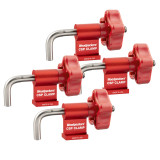
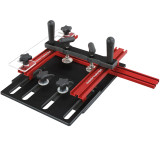
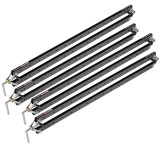
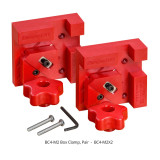
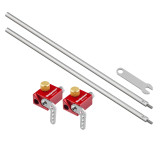
Woodpeckers SSMGZC-3PK Stealth Stop Miter Gauge Fence - Zero Clearance Blocks - 3 pack

Brand: Woodpeckers

SKU: #WP-SSMGZC-3PK
$9.99

Typically Ships in 3-5 Business Days, Subject to Change.

*Ships direct from manufacturer, Shipping fees may apply

*Coupon codes are not applicable for this item

- +
Adding to cart… The item has been added
Buy Now Pay Later

Earn 30 points with this purchase!

Frequently Bought Together

  • Total Price

    $19.98

Total Price

$19.98

PRODUCT DETAILS

Click an item to expand and learn more

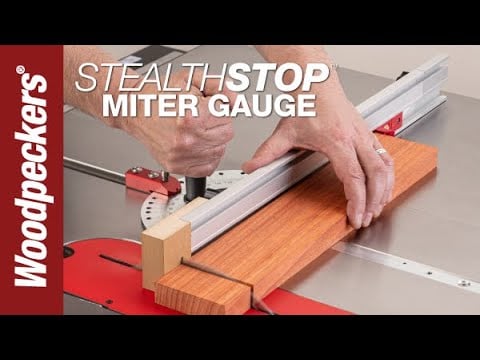
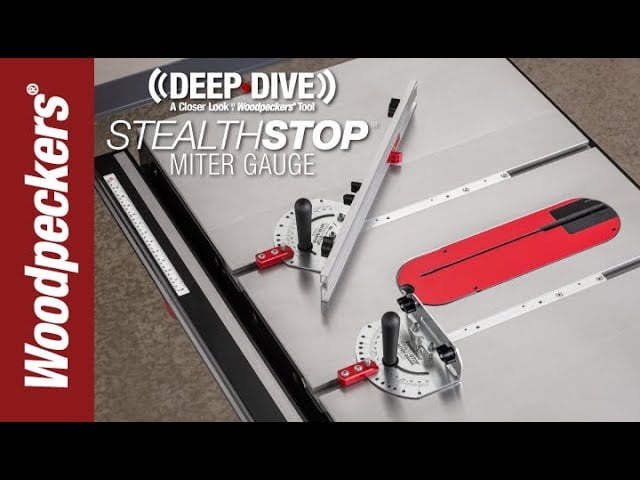
  • The StealthStop Miter Gauge is available with or without the extendable fence and stop. The fence gives you 20-1/2" of continuous support, which extends to 29". The StealthStop adjusts anywhere along the fence for repetitive cutting. The stop can be dialed in to perfect position with its built-in micro-adjuster and folds completely out of the way when not needed.

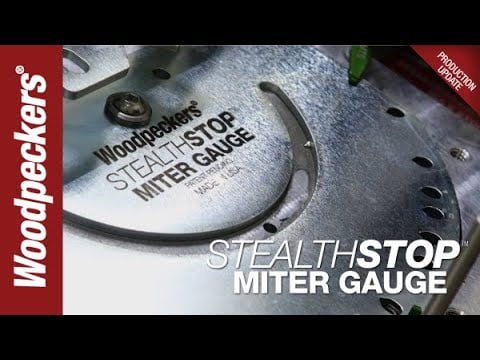
    Most after-market miter gauges include some sort of system to adjust for the width of your miter slot. But none of them compensate for a slot that varies and all of them are rubbing the side of the miter slot with something that wears and has to be readjusted. Woodpeckers patented leaf-springs expand and contract with variations in the slot and will for decades of heavy use. The bar slides smoothly through any slot, with no rattle or slop. If your saw has a T-track miter slot, the StealthStop Miter Bar has two track retainers, not just one, giving you extra support when making wide cross-cuts. No T-track? No problem. The T-washers come off with simple counter-sunk screws. Bottom line? If your miter slot is anywhere close to 3/8" x 3/4" the StealthStop Miter Gauge will fit. The leaf spring feature easily accommodates miter slots from .742" to .765" wide.

    There’s a “light bulb moment” in most woodworkers’ careers when they figure out that cutting to a line can never be as quick or as consistent as cutting to a stop. Woodpeckers designed the StealthStop to pop out and do its job instantly, then disappear completely until it’s needed again. The built-in micro-adjuster gives you pinpoint control over the length of your cut. By swinging out sideways rather than from the top, StealthStops handle mitered cuts better than any other stop you can get. 

    Many positive angle stops are spring-loaded so they engage as the protractor swings along its arc, catching every time on every stop. The StealthStop Miter Gauge takes a different approach. The stop never engages until you want it to. Just depress the button as you’re approaching your desired angle and it pops in perfectly. No excessive wear on the pin or the locks and fewer annoyances for you. 

    To support your material all the way through the cut, you can add a sacrificial end block to the fence. They’re available in 3-packs or you can make them yourself. Just add them to the end of the fence with a couple of track nuts. 

    Like all Woodpeckers products, the StealthStop Miter Gauge is precisely machined and carefully inspected in Strongsville, Ohio, facility just south of Cleveland. 

    Additional Info

    • **Creating Precision Cuts in Woodworking Projects**: Ideal for woodworkers looking to achieve precise, repeatable cuts for projects like cabinetry, picture frames, and custom furniture.
    • **Enhanced Support for Long Workpieces**: Use the extendable fence feature for added support when working with longer pieces of wood, ensuring accurate and safe cuts.
    • **Repetitive Cutting for Project Efficiency**: Perfect for projects requiring multiple pieces of the same length, enhancing productivity and consistency across your work.
    • **Improving Accuracy in Angled Cuts**: Utilize the StealthStop for mitered cuts, providing better handling and accuracy than traditional methods.
    • **Customized Woodworking Tasks**: With the ability to add a sacrificial end block, users can tailor their setup for specific projects, protecting the main fence from damage.
    • **Versatile Compatibility with Various Table Saws**: Thanks to its adjustable miter bar, it can fit a wide range of table saws, making it a versatile tool in the workshop.
    • **Crafting Complex Joinery**: The precise adjustments available make it ideal for creating complex joinery, such as dovetails or box joints, where accuracy is paramount.
    • **Streamlining Production in Professional Woodshops**: A valuable tool for professional woodworkers looking to streamline production processes while maintaining high-quality outputs.
    • **Educational Tool for Woodworking Classes**: An excellent demonstration tool for educators teaching precision woodworking techniques in classes or workshops.

    Read More

  • Questions & Answers
    avatar
    Popular Questions

    In the workshop, common tools include hammers, screwdrivers, wrenches, saws, and drills. These tools are used for building, repairing, and assembling various projects. Some workshops may also have specialized equipment like power tools and measuring instruments.
    When buying tools remember you buy cheap you get cheap and shortened , dangerous use of them . I suggest buying as you need them and buying a better quality tool that will last so much longer.
    Here is a link for your creative journey… See full answer »
    To write a description for a workshop, clearly state the workshop’s topic, objectives, and target audience. Briefly outline what participants will learn or achieve, and mention any key activities or outcomes. Use concise and engaging language to attract interest.
    In a workshop, common documents used include plans and worksheets to guide you. List of materials and finishing products.
    Here is a link to all your needs in your shop.

    https://toolstoday.com/
    The equipment needed for a workshop typically includes tools and machinery specific to the tasks being performed, such as drills, saws, wrenches, and measuring instruments. Additionally, safety gear like gloves, goggles, and first aid kits are important, along with workbenches and proper lighting. The exact equipment depends on the workshop’s focus, such as woodworking, metalworking.
    A workshop can be any size from small to Big , creativity has no dimension , just know what you want to create there and move towards that idea… See full answer »
    Equipment in a workshop refers to the various tools, machines, and devices used to perform tasks such as cutting, shaping, assembling, or repairing materials. This does include hand tools like hammers and screwdrivers, as well as larger machinery like drills presses, saws, CNCs, and welding equipment. The type of equipment depends on the specific work being done in the workshop.
    Remember your equipment is an extension of your ability ao get quality equipment and you will be successful.
    Here is a link to Quality equipment… See full answer »
    Tools are instruments or devices used to carry out creative tasks or activities, such as hammers, screwdrivers, or computers. Materials are the substances or items that are used to create, build, or complete a project, such as wood, metal, paper, or fabric. Together, tools and materials are essential for producing or constructing something.
    All are used with the greatest tool your Brain and creativity there in .
    Here is a Direct Link to all things for creativity… See full answer »
    A workshop is a place of Creativity and Learning of ideas and methods. It typically involves hands-on work , or collaborative problem-solving, often led by a need to be creative . Workshops are usually more participatory and ideas happen there.
    Here is a link that will help your Creative journey.

    https://toolstoday.com/
    The "best" joint for woodworking depends on the project, but the mortise and tenon joint is often considered one of the strongest and most versatile. It provides excellent strength and durability, making it ideal for furniture and structural frames. For quick and simple assembly, pocket hole or dowel joints are also popular choices.
    Here is a link that will help in your wood jointing decision.
    See full answer »
    A workshop is a place of learning and creating , a place of teaching , a place where mistakes will be made but lessons are learned by them.
    Your shop can be any size and still be a productive place but you must not rush in and buy inferior tools because you will pay in the long run with injury and breakdowns.
    Take your time , save just a little more for that better tool… See full answer »
    The basic hand tools in a workshop include hammers, screwdrivers, pliers, wrenches, measuring tapes, and saws. These tools are essential for tasks such as cutting, shaping, fastening, and measuring materials. They are commonly used in woodworking, metalworking, and general repair work.
    view