Architectural Millwork: Classic Profiles, Modern Solutions
Table of Contents
Architectural millwork—the trims, moldings, and detailed wood components that define interior spaces—has always been about precision and style. From classic crown molding to modern casing, professional millworkers are tasked with delivering profiles that are both beautiful and consistent. Today’s shops face a dual challenge: honoring traditional designs while working efficiently with modern materials and tooling.
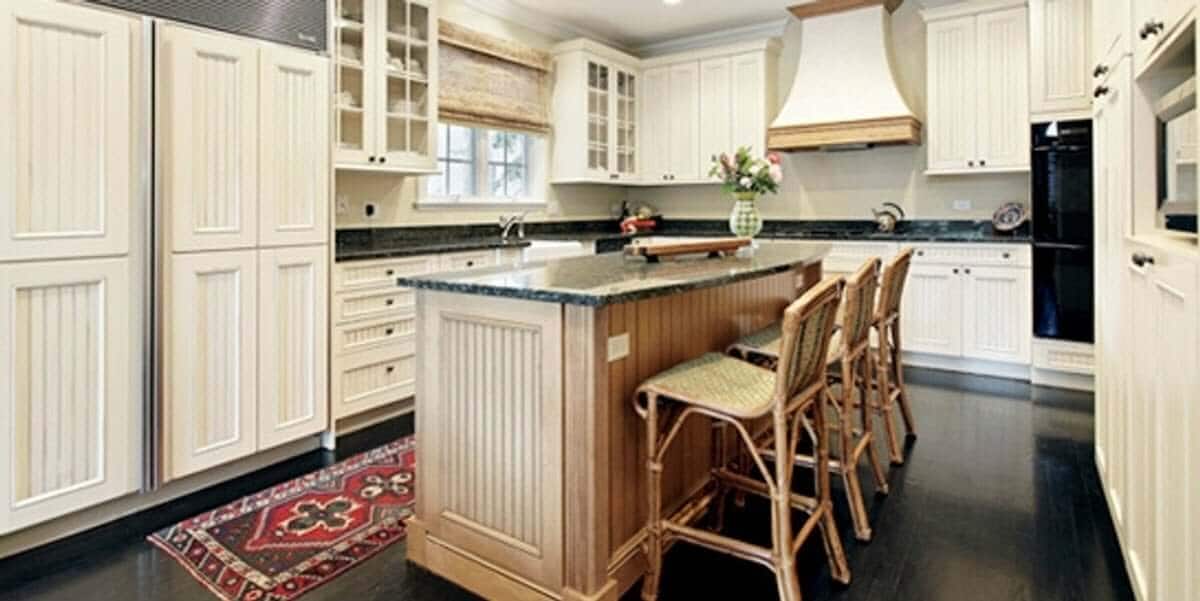
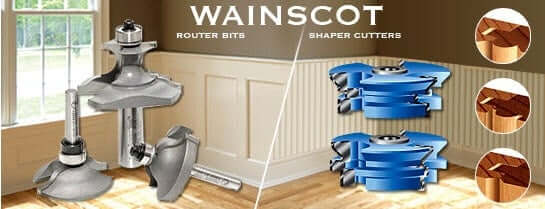 For the record, wainscotting is the paneling on the lower portion of these walls. The chair rail is the strip of molding above the wainscot, and the baseboard is below.
Classic Profiles Every Millworker Should Know
Although design trends evolve, certain profiles remain staples of architectural millwork. These shapes are the foundation of most trim packages and restoration projects:
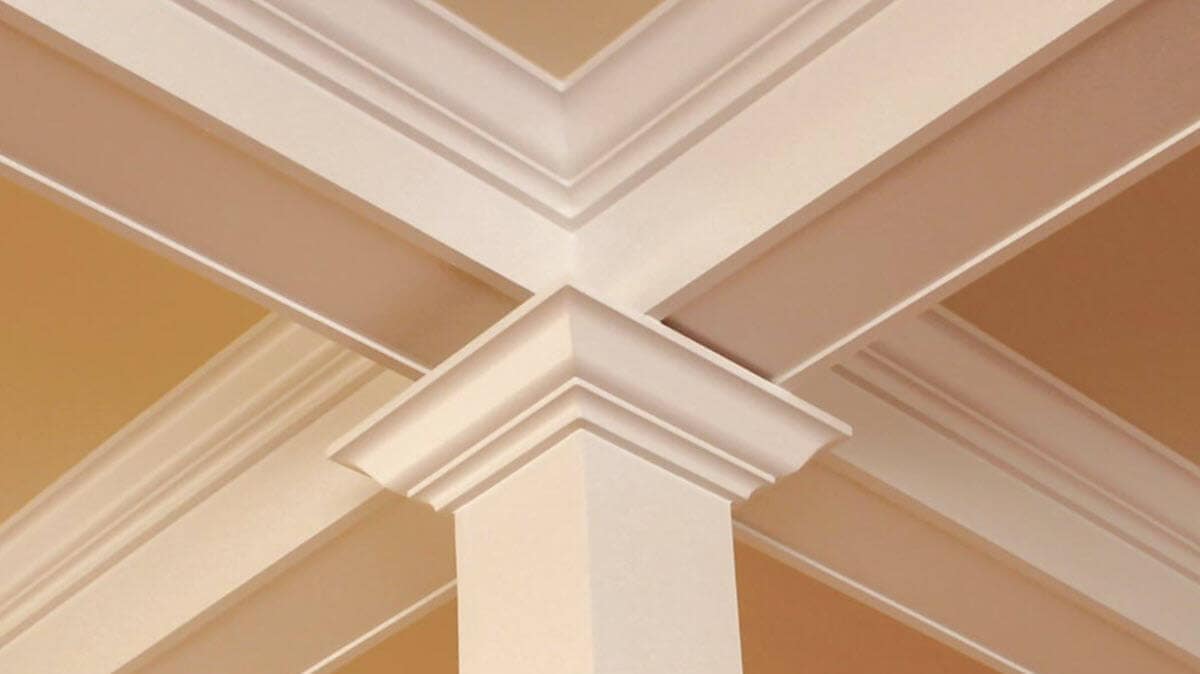
- Crown molding – bridges wall to ceiling; variations include cove, ogee crown, and stacked assemblies.
- Baseboard – protects the bottom of walls; usually simple but sometimes detailed with beads or coves.
- Casing / Architrave – frames doors and windows; can range from simple rounds to elaborate multi-step designs.
- Chair rail & picture rail – originally functional, now often decorative.
- Panel moldings / wainscoting – define wall panels or raised-panel assemblies.
- Specialty details – beads, coves, ovolos, Roman ogees, fillets, and lamb’s tongues add fine accents.
For restoration work, the ability to match an existing profile exactly can make or break a project.
Modern Solutions for Creating Millwork Profiles
Traditional shapers and hand-held routers still have their place, but today’s millworkers also rely on CNCs and insert tooling for accuracy and repeatability. Here’s how each approach fits into a professional workflow:
Router Bits
Handheld and table-mounted routers equipped with profile bits remain one of the most straightforward ways to cut architectural details. Edge-forming bits such as ogee, cove, roundover, and bead cutters are perfect for smaller runs, shop-made trim, or custom accents.
Profile Bits on CNC Routers
Yes, CNC machines can run profile bits. This is useful when you need a quick, repeatable ogee or cove on flat stock. However, most shops prefer other tooling for more complex moldings, since CNC flexibility comes from toolpaths rather than fixed cutter shapes.
Standard CNC Tooling
Spiral, straight, and ballnose bits are the real workhorses on CNC routers. By layering toolpaths, operators can “build” virtually any custom molding profile. This is the go-to method for wide crown moldings or unique historic reproductions.
Insert Profile Tooling
For high-volume runs, insert profile cutters shine. Replaceable knives keep costs down and performance consistent, especially when working with MDF or other abrasive sheet goods. These can be used on CNCs or shapers depending on shop setup.
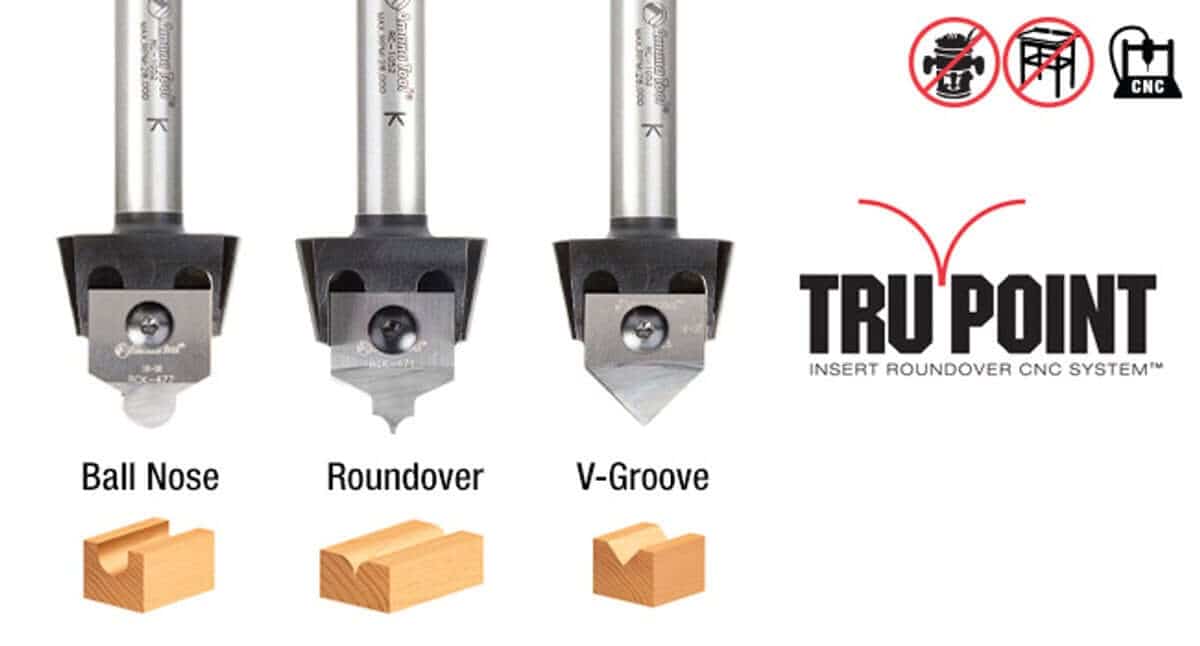
Professional millworkers prefer solid carbide insert cutters such as the Tru-Point CNC insert bits (above) or the Profile-Pro interchangeable shaper cutters (below), for long-lasting edges and cost-savings.
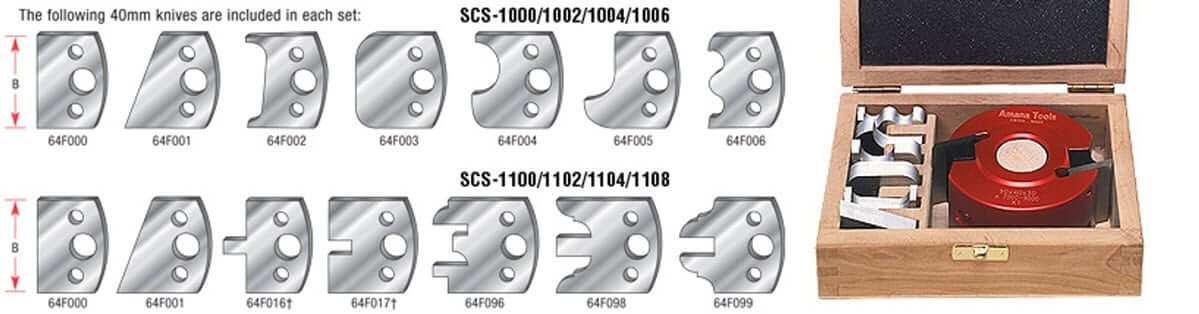
The Profile Pro™ features over 135 different interchangeable steel knife patterns, ranging from molding to joinery to door sets, which can all be used with a single cutterhead. Blank (unground) knives are also available for custom patterns.
Shaper Cutters
Shapers remain indispensable for large runs of stock profiles. Many shops still turn to them for their ability to handle wide cutters and long production cycles—especially when reproducing historic details at scale.
Which do pros use more—shapers or CNCs?
In reality, most millwork shops still rely heavily on shaper cutters for everyday molding runs.
Shapers handle wide stock, long lengths, and repeat profiles with ease.
At the same time, CNC adoption has grown rapidly, especially in shops that also build cabinetry, wall panels, or custom architectural elements.
Many professional shops now run a hybrid setup: shapers for standard profiles and volume work, and CNCs for specialty jobs or where flexibility is key. The best solution often comes down to your shop’s workload, space, and the variety of profiles you need to produce.
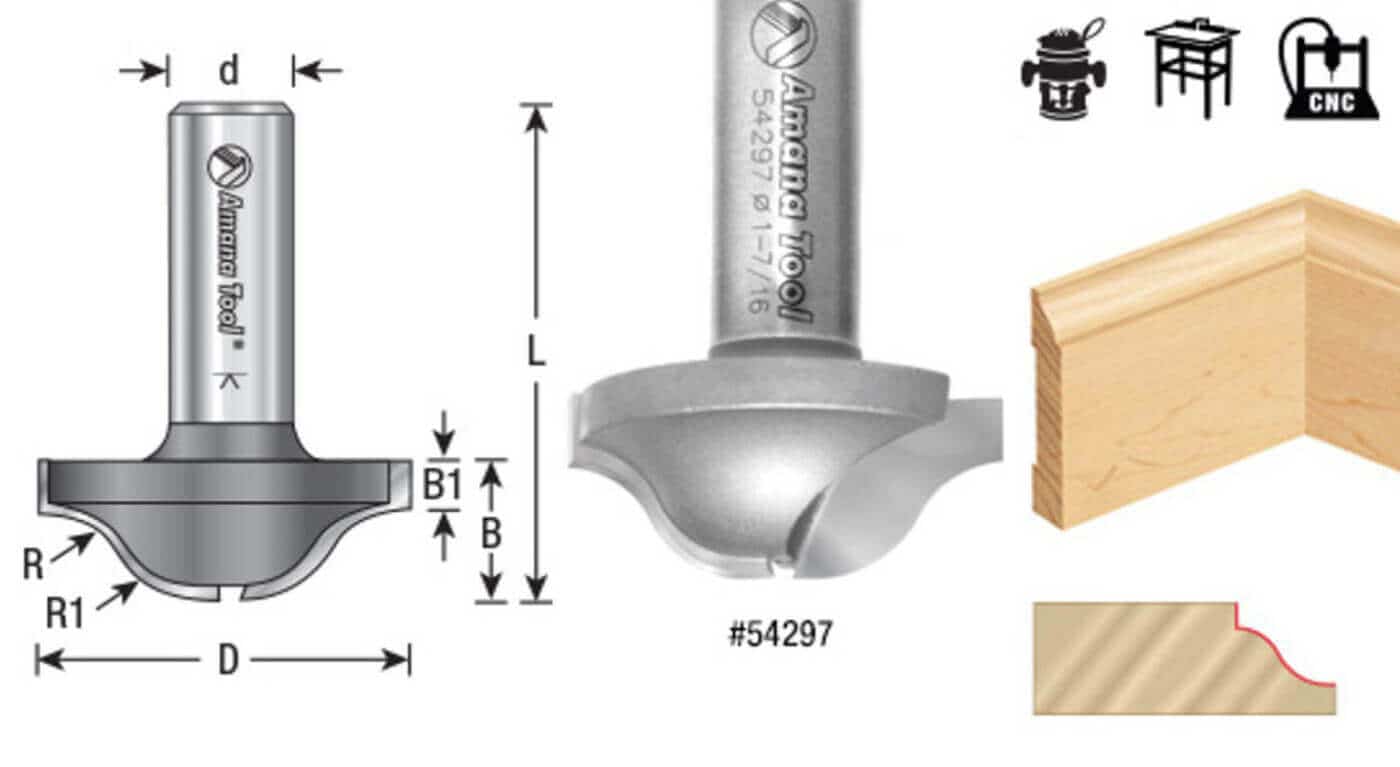
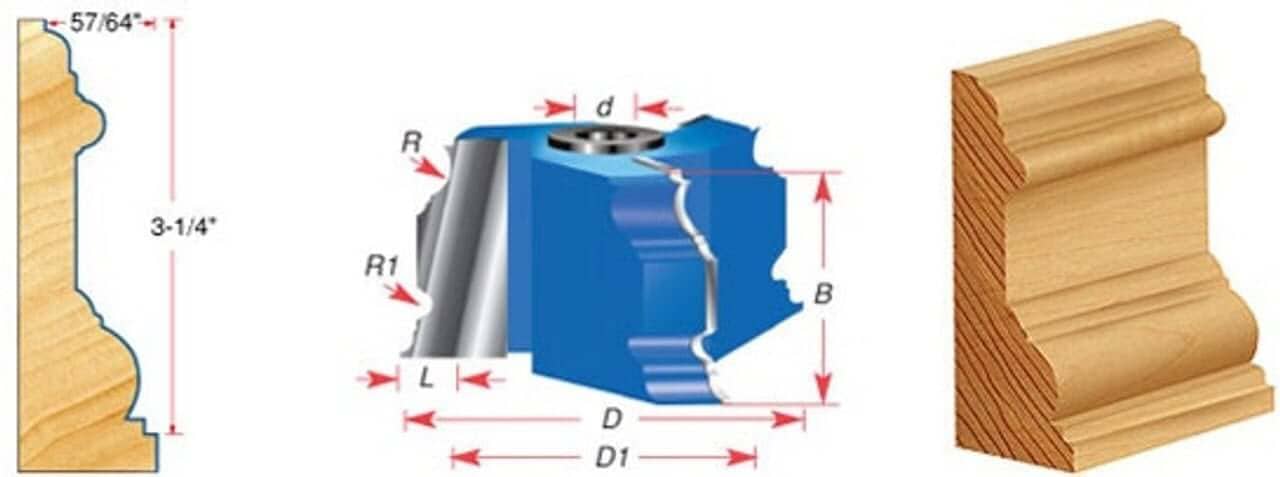
Baseboards run the gamut from a simple, classic ogee made with a handheld router & bit (above, Amana Tool 54297 Carbide Tipped Base Molding Ogee Edge Detail) to intricate profiles created on a shaper (below, Amana Tool SC668 Carbide Tipped 3-Wing Base Molding). Whatever your preference or tool, Amana has you covered.
Material Considerations
Millwork isn’t only about the profile—it’s also about the material:
- Hardwoods
For a complete, finished look, natural wood is a traditional material whose hardwoods like oak and mahogany stain beautifully. Stained solid wood crown molding will add color and warmth to any room, and because the material is routable, hardwoods allow us to create any pattern we like when using crown molding router bits.
Pro tip: Use sharp tooling to avoid burn marks or tear-out.
Softwoods
Softwood crown moldings, such as pine or aspen, is often a cheaper alternative than high-grade solid wood moldings due to the greater availability of trees. They are easier to cut and sand than hardwoods, and make an excellent choice for moldings that will be painted. These too are routable, allowing us to create any pattern we like when using crown molding router bits.
Pro tip: Softwoods cut easily but can crush under dull tools. They also have more resin than hardwoods, which will dull your blades even faster.
MDF
Crown molding made from MDF (a wood-based composite material that uses wood fibers with a synthetic resin) is another inexpensive alternative for homeowners and contractors to add beauty to a home. MDF won’t split when cutting, is easy to cut with miter saw blades, is resistant to warping and can be painted with any high quality oil or latex paint, making it one of the most versatile types of crown molding on the market today.
Pro tip: MDF is common in painted trim; demands sharp, durable cutters or insert tooling due to abrasiveness.
Polyurethane
This crown molding is resistant to weather, scratching and erosion, making it one of the most durable types of crown molding. However it is generally manufactured in white and will not hold paint or stain for a proper finishing.
Flexible
When you find yourself presented with a doorway or curved window, the above choices will not help you complete your molding project. For this there is flexible crown molding, which won’t break or split, thus making it easy to decorate around curved windows and doorways. Flexible molding is one type of polyurethane, which is formed from a polymer resin, that is engineered to curve and bend around shapes other than a standard 90º angle.
Aluminum, Copper & Steel
Often used for exteriors, stamped metal crown molding features heavy-duty construction available for use as a decorative accent. It is preformed inside and outside corners eliminate miter cuts, making installation easy. It is easy to cut with steel cutting saw blades, and installs like traditional moldings. It may also be used for retail spaces, workshop, garages, kitchens, offices and trade shows.
Feed rate, tool sharpness, and chip evacuation all play a major role in producing clean results, regardless of material.
Pro Tips for Millworkers
Match existing profiles by creating templates or scanning with CNC software for restorations.
Use jigs and fences to maintain consistency across multiple pieces.
Choose tooling by run size—stock router bits for short runs, insert tooling for production.
Mind safety when using large profile cutters; always use proper guarding and speeds.
ToolsToday Solutions
At ToolsToday, we stock a wide range of edge-forming and architectural profile router bits from Amana Tool, along with CNC tooling and shaper cutters for every type of millwork application. For production environments, our insert profile tooling delivers long-lasting performance and easy knife replacement.
Conclusion
Architectural millwork continues to combine tradition with innovation. By understanding classic profiles and choosing the right modern tooling—whether router, shaper, CNC, or insert cutter—professional millworkers can deliver timeless results with today’s efficiency. The right tools don’t just cut wood—they help shape the character of a space.
FAQs
What are the most common architectural millwork profiles?
Crown molding, baseboards, window and door casing, chair rails, and panel moldings are staples in any millworker’s toolkit. Decorative touches like beads, coves, ovolos, and Roman ogees add style and character.
Can CNC routers use profile bits for millwork?
Absolutely! CNCs can run profile bits for simple, repeatable shapes like ogees and coves. For larger or more intricate profiles, pros usually rely on standard end mills or ballnose bits to “build” the shape with precision.
What materials work best for architectural millwork?
Hardwoods deliver crisp, durable edges. Softwoods cut easily but can crush under dull tools. MDF is perfect for painted trim—but it’s abrasive, so sharp tools or insert cutters are a must.
Which modern tools make millwork faster and easier?
Handheld and table-mounted router bits, shaper cutters, CNC tooling, and insert profile bits all help pros cut precise, repeatable profiles quickly—saving time without sacrificing quality.
How do you match existing profiles in restoration projects?
Templates, CNC scans, and insert profile cutters let millworkers replicate historic moldings accurately. This ensures restorations match the original design while cutting down on guesswork.
How do you prevent tear-out when cutting hardwood moldings?
Use sharp router bits or insert cutters, feed the material at the proper speed, and cut in multiple shallow passes to maintain clean, smooth edges.
What’s the difference between shaper cutters and router bits for architectural millwork?
Shaper cutters handle larger stock and longer production runs, making them ideal for wide moldings. Router bits are more versatile for handheld or table-mounted routers and small batch projects.
Can insert profile tooling be used on both CNC and shaper machines?
Yes! Insert profile cutters with replaceable knives are compatible with many CNC and shaper setups, offering consistent cuts and easy maintenance for high-volume millwork.
Which router bit profiles are best for crown molding?
Ogee, cove, and combination profile bits are most commonly used for crown molding, delivering clean decorative edges that match classic architectural designs.
Are multi-flute router bits better than single-flute bits for moldings?
Multi-flute bits produce smoother cuts in hardwoods and reduce tear-out, while single-flute bits excel at chip evacuation in softwoods or MDF, giving faster, cleaner results.