PCD Router Bits: When Are They Worth the Investment?
Table of Contents
- What Is a PCD Router Bit?
- Why Production Shops Use PCD Router Bits
- Which Industries Use PCD Router Bits?
- Which Materials Justify PCD Router Bits?
- PCD vs. Carbide Router Bits
- When Is PCD Worth the Cost?
- When Is Carbide Still the Better Choice?
- Why Compression Geometry Matters
- How to Think About ROI
- Is a PCD Router Bit Right for Your Shop?
- Final Thoughts
- FAQs
PCD router bits are not for every shop. For occasional CNC work, a high-quality carbide bit is often the more practical choice. But for production environments cutting abrasive sheet goods, composites, MDF, melamine, ACM, fiberglass, plastics, or other tough materials day after day, polycrystalline diamond tooling can dramatically reduce tool changes, improve consistency, and lower cost per part.
The real question is not simply, “Is PCD better than carbide?” The better question is: does your shop run enough material to make longer tool life worth the higher upfront cost?
What Is a PCD Router Bit?
PCD stands for polycrystalline diamond. In PCD tooling, diamond particles are fused onto a carbide substrate under high heat and pressure. The result is an extremely hard cutting edge that offers much higher wear resistance than carbide.
Because diamond is far harder than carbide, PCD tooling is especially useful when cutting materials that quickly wear down conventional router bits. These include MDF, particleboard, melamine, composite panels, aluminum composite material, fiberglass, plastics, and other abrasive materials commonly used in CNC production.
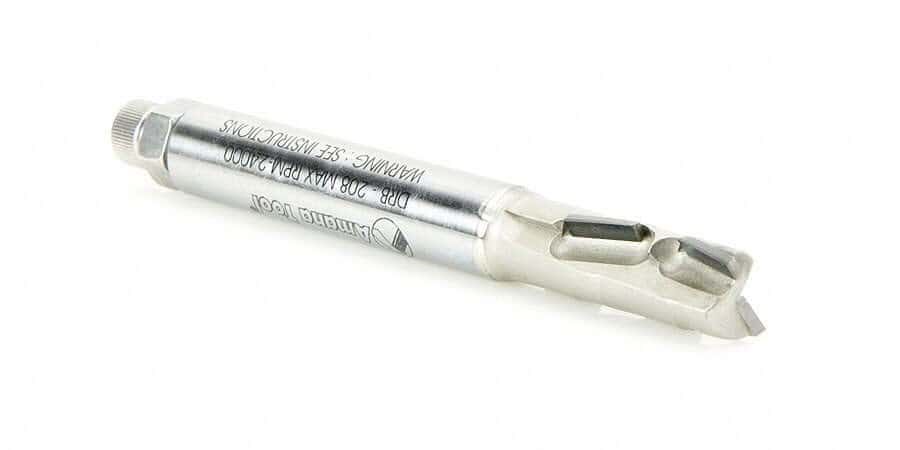 CNC Polycrystalline Diamond (PCD) Compression Router Bit Up/Down Shear with Carbide Plunge Point RH Rotation
Why Don't PCD Router Bits Have Spiral Flutes?
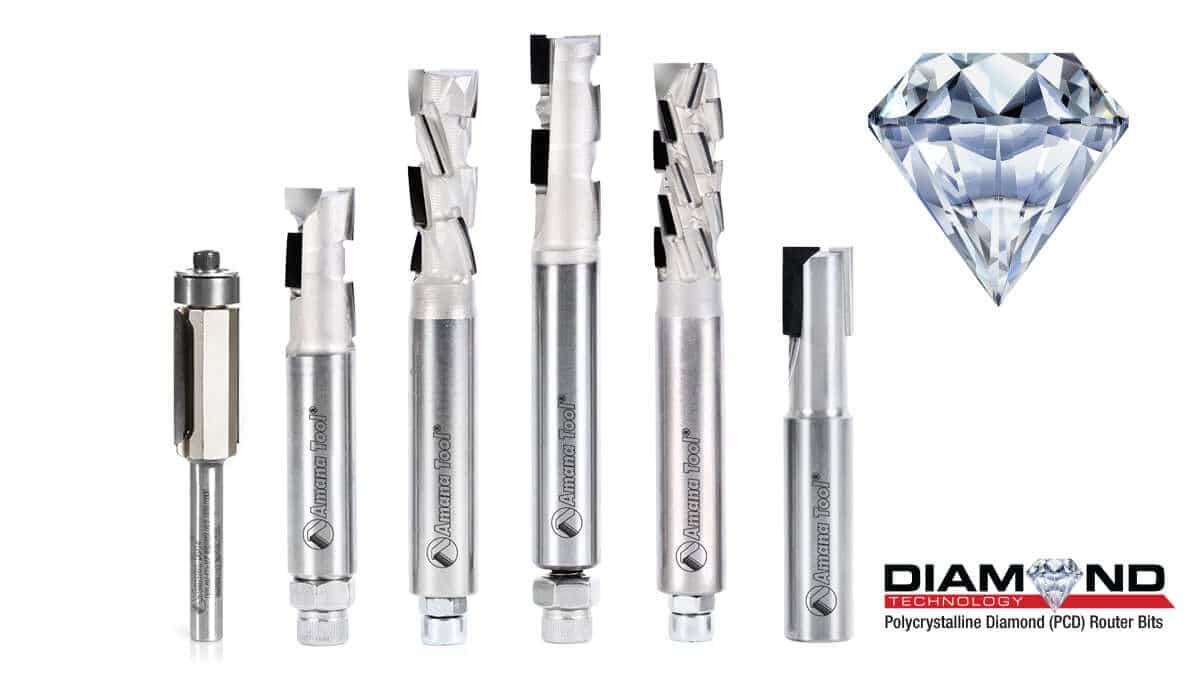
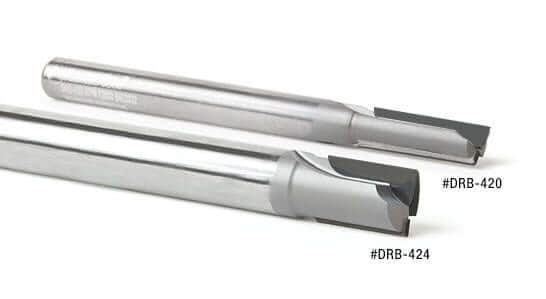
If you've used solid carbide router bits before, a PCD router bit may look unfamiliar. Instead of continuous spiral flutes, many PCD tools feature a series of staggered diamond cutting inserts brazed onto the tool body.
This design is intentional. Polycrystalline diamond is manufactured differently than solid carbide, making long, continuous spiral cutting edges impractical and expensive to produce. By brazing individual PCD cutting segments onto the tool body, manufacturers create an extremely durable cutting tool that can withstand demanding production environments while maintaining exceptional edge life.
The staggered cutting inserts also offer several performance advantages. Rather than having one long cutting edge remove all the material at once, each insert removes a portion of the cut as it enters the workpiece. This helps distribute cutting forces more evenly, reduce vibration, improve chip evacuation, and minimize heat buildup during long CNC runs.
On compression-style PCD router bits, the inserts are precision-ground and positioned to create both up-shear and down-shear cutting action. This produces the same clean top and bottom edges that woodworkers and CNC operators expect from a traditional compression bit, while delivering the extended tool life that makes PCD tooling attractive for high-volume production.
Although the design looks very different from a conventional spiral router bit, it is engineered specifically for industrial CNC machining, where maximizing tool life, maintaining cut quality, and reducing machine downtime are often more important than minimizing the initial cost of the tool.
Why Production Shops Use PCD Router Bits
PCD router bits are expensive, but production shops do not buy them because they are “fancier” than carbide. They buy them because downtime is expensive.
In a busy CNC shop, every tool change interrupts production. A worn bit can also lead to poor edge quality, rejected parts, slower feed rates, extra sanding, or additional finishing work. If a PCD bit can run many times longer than carbide in the same material, the savings can go far beyond the cost of the tool itself.
PCD tooling can help reduce:
- Tool changes during long production runs
- Machine downtime
- Setup interruptions
- Edge quality variation from tool wear
- Rejected parts caused by dull tooling
- Labor spent sanding, cleaning up, or reworking edges
Which Industries Use PCD Router Bits?
Although PCD router bits are sometimes described as woodworking tools, the real market is broader and more industrial. They are best suited for CNC users cutting abrasive materials in repeated, high-volume, or high-value applications.
1. Cabinet and Kitchen Manufacturers
Cabinet shops and kitchen manufacturers are among the most common users of PCD compression router bits. These shops often cut large volumes of MDF, melamine, particleboard, plywood, laminated panels, and veneered sheet goods.
For this type of production, a compression geometry is especially useful because it helps produce clean top and bottom edges in sheet materials. When the same nested cabinet parts are being machined all day, longer tool life can make a meaningful difference.
2. Commercial Millwork and Architectural Interior Shops
Commercial millwork shops produce store fixtures, office interiors, reception desks, hotel casework, wall panels, and custom architectural components. These jobs often involve large volumes of MDF, veneer, laminated panels, and composite boards.
For these shops, PCD tooling is less about hobby-style woodworking and more about predictable CNC production. The goal is clean, repeatable cuts with fewer interruptions.
3. Furniture Manufacturers
Furniture manufacturers cutting sheet goods, veneered panels, MDF, plywood, and composite boards may benefit from PCD tooling, especially when producing the same parts repeatedly.
In furniture production, consistency matters. A tool that holds its edge longer can help maintain the same cut quality from the first part to the last.
4. Sign, Display, and Exhibit Shops
Sign and display manufacturers often cut materials that are hard on carbide tooling, including aluminum composite material, plastics, PVC, acrylic, HDPE, foam board, and composite panels.
PCD tooling can be a strong fit when these shops are cutting the same materials every day, especially when edge quality and production speed both matter.
5. RV, Marine, and Transportation Manufacturers
RV, marine, and transportation manufacturers frequently use lightweight composites, fiberglass panels, structural foam, plywood, and other abrasive materials. These are exactly the kinds of materials that can shorten carbide tool life quickly.
For manufacturers producing floors, panels, interior components, or lightweight structural parts, PCD router bits may reduce tool wear and improve production reliability.
6. Composite Material Fabricators
Composite fabricators cutting fiberglass, fiber-reinforced urethane, structural foam, custom composite materials, and lightweight panels are strong candidates for PCD tooling.
Composites are often abrasive, and tool wear can become a major cost when production volume is high. PCD tooling is designed for this kind of demanding environment.
7. Plastic Fabricators
Some plastic fabrication shops use PCD tooling for long CNC runs in materials such as acrylic, HDPE, PVC, and other plastics. Whether PCD makes sense depends on the material, cut quality requirements, and production volume.
For occasional plastic cutting, carbide or coated carbide may be sufficient. For repeated production cutting, PCD may be worth evaluating.
8. PCB and Electronics-Related Applications
Fiberglass PCB board is highly abrasive. For shops machining fiberglass-reinforced materials or similar substrates, PCD tooling may offer a longer-lasting cutting edge than carbide.
Which Materials Justify PCD Router Bits?
PCD router bits are most valuable when the material is abrasive enough, or the production run is long enough, that carbide bits wear out too quickly.
Common materials include:
- MDF
- Melamine-coated MDF
- Particleboard
- Chipboard
- Plywood
- Veneered panels
- Aluminum composite material
- Composite panels
- Fiberglass
- Fiberglass PCB board
- Fiber-reinforced urethane
- Fiber-reinforced structural foam
- Lightweight composites
- Plastics
- Hardwoods and softwoods in production settings
PCD can cut wood-based materials, but that does not mean the typical hobby woodworker needs it. The advantage appears when the shop is cutting enough material for longer tool life to offset the higher tool cost.
PCD vs. Carbide Router Bits
Carbide router bits are still the right choice for many CNC users. They cost less, are available in many geometries, and work well for general-purpose cutting. For small shops, prototyping, short runs, or mixed materials, carbide may be the smarter purchase.
PCD router bits are a better fit when tool life, uptime, and consistency matter more than upfront cost.
| Factor | Carbide Router Bits | PCD Router Bits |
|---|---|---|
| Upfront cost | Lower | Higher |
| Tool life | Good | Much longer in abrasive materials |
| Best for | General CNC work, shorter runs, mixed jobs | Production cutting, abrasive materials, repeated jobs |
| Downtime reduction | Limited | Strong advantage in high-volume shops |
| Best buyer | Hobbyists, small shops, custom shops | Production CNC shops and manufacturers |
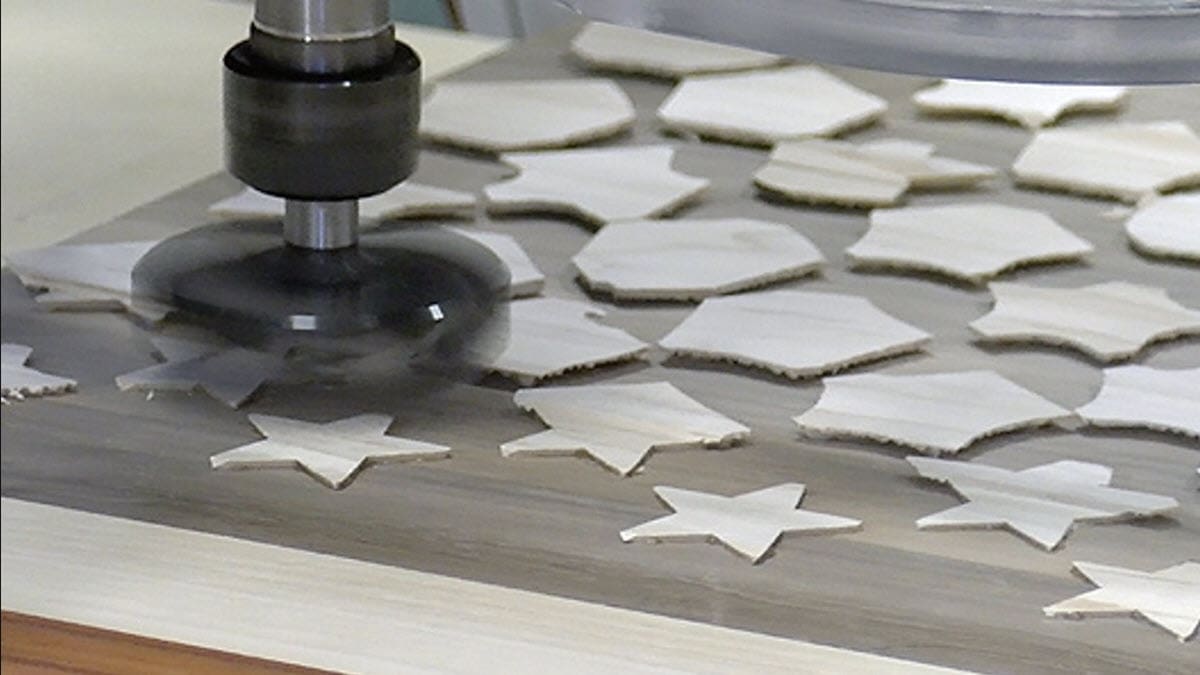
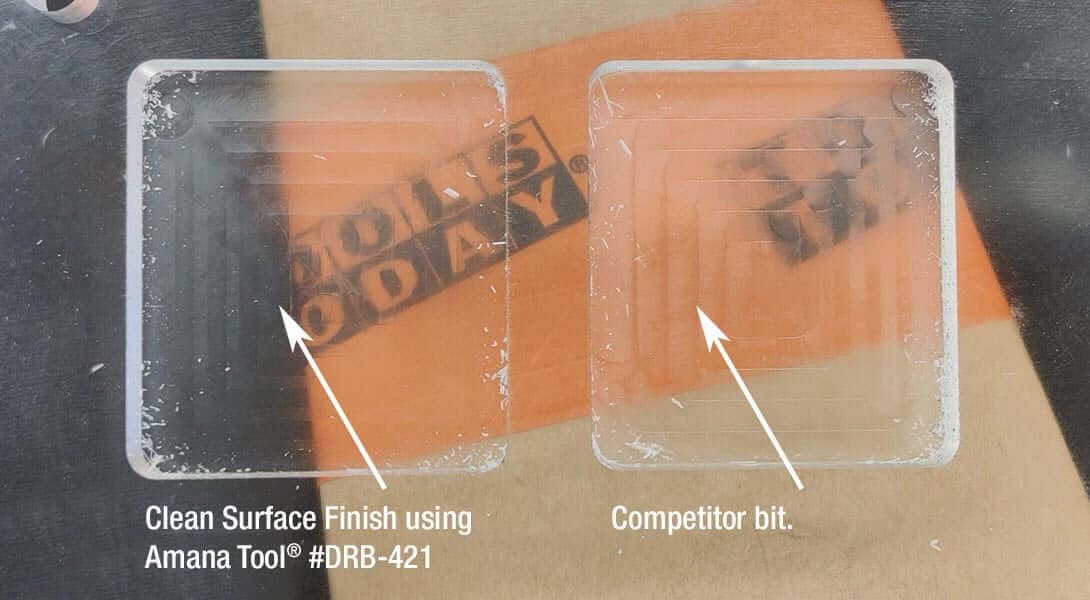 Quality of Finish is Significantly Improved with Polycrystalline Diamond (PCD) Tipped Router Bits
When Is PCD Worth the Cost?
PCD tooling starts to make sense when the cost of replacing carbide bits becomes less important than the cost of stopping the CNC machine.
PCD may be worth it if:
- You cut MDF, melamine, particleboard, composites, or ACM every day
- You regularly replace carbide bits due to wear
- You run long nested sheet jobs
- You need consistent edge quality across many parts
- Tool changes interrupt production
- Your shop tracks cost per part, not just tool cost
- Rejected parts or rework are expensive
When Is Carbide Still the Better Choice?
PCD is not automatically the best choice for every CNC user. In many cases, premium carbide tooling is still the better value.
Carbide may be better if:
- You cut occasionally rather than continuously
- You are a hobbyist or small custom shop
- You frequently change materials and job types
- You are testing new designs or making prototypes
- Your carbide bits are already lasting long enough
- You are not losing meaningful production time to tool changes
In short: if you are not wearing out carbide bits quickly, you may not need PCD yet.
Why Compression Geometry Matters
Many PCD router bits used in CNC production are compression bits. A compression bit combines upcut and downcut geometry. The lower portion of the cutting edge pulls chips upward, while the upper portion pushes downward.
This helps reduce chipping on both the top and bottom faces of sheet goods, making compression bits especially useful for plywood, melamine, veneered panels, laminated boards, and cabinet parts.
For best results, the material thickness and cutting depth must allow the compression geometry to work properly. If the cut is too shallow, the downcut and upcut sections may not engage the material as intended.
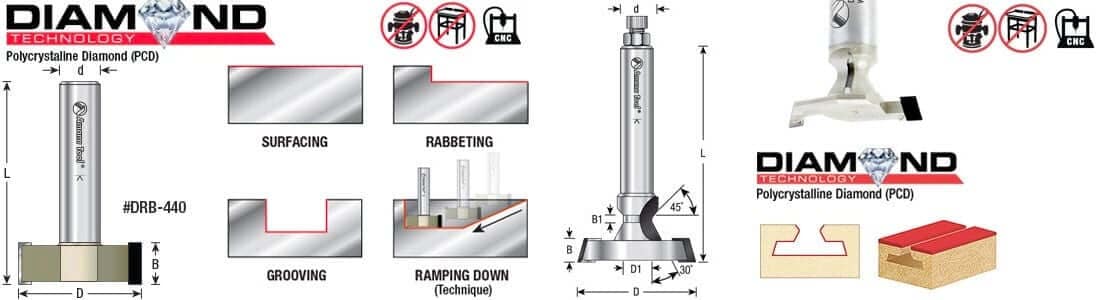 Polycrystalline Diamond (PCD) Tipped CNC Spoilboard Surfacing Router Bits and PCD Tipped T-Slot Router Bit - don't get them confused :)
How to Think About ROI
The biggest mistake is comparing PCD and carbide only by purchase price. PCD should be evaluated by total production cost.
Consider:
- How many carbide bits you currently use for the same material
- How often the CNC must stop for tool changes
- How much labor is involved in resetting tools
- How much scrap or rework is caused by dull tooling
- Whether longer tool life would allow longer unattended runs
- How important consistent finish quality is to your finished product
For a hobbyist, the math may never work. For a production cabinet shop, sign shop, or composite fabricator, the savings can be significant.
Is a PCD Router Bit Right for Your Shop?
PCD router bits are best understood as production tools. They are not simply “better woodworking bits.” They are specialized CNC tools designed for shops where abrasive materials, long runs, and machine uptime matter.
If your shop cuts MDF, melamine, composite panels, ACM, fiberglass, plastics, plywood, or particleboard every day, PCD may be worth the investment. If you are doing occasional CNC work, a premium carbide bit may still be the more practical choice.
The right tool is the one that matches your material, machine, production volume, and cost-per-part goals.
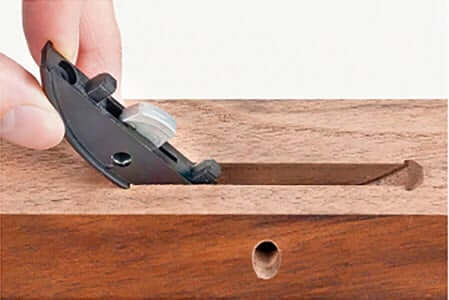 Need to cut grooves for Lamello® Systems? See the PCD Router Bits for P-System, or PCD Blades for Zeta P2
Final Thoughts
PCD router bits make the most sense when tool life directly affects profitability. For production CNC shops, the value is not just the harder cutting edge. It is fewer interruptions, more consistent parts, longer runs, and less downtime.
For the right application, PCD tooling can be one of the most cost-effective upgrades in the shop. For the wrong application, it may simply be more tool than the job requires.
FAQs
What is a PCD router bit?
A PCD (Polycrystalline Diamond) router bit is a CNC cutting tool with diamond cutting edges bonded to a carbide substrate. Because diamond is significantly harder than carbide, PCD router bits last much longer when machining abrasive materials such as MDF, melamine, particleboard, fiberglass, aluminum composite material (ACM), and many composite panels.
Are PCD router bits better than carbide?
Not always. Premium carbide router bits are an excellent choice for hobbyists, custom shops, prototypes, and short production runs. PCD router bits become the better investment when a shop cuts large volumes of abrasive materials and wants to reduce tool changes, machine downtime, and overall cost per part.
Which industries benefit most from PCD router bits?
PCD router bits are commonly used by cabinet manufacturers, commercial millwork shops, furniture manufacturers, sign and display companies, RV and marine manufacturers, composite fabricators, plastic fabricators, and other production CNC shops that regularly machine abrasive materials.
What materials can PCD router bits cut?
PCD router bits are designed for demanding materials including MDF, melamine, particleboard, plywood, hardwoods, softwoods, aluminum composite material (ACM), fiberglass, composite panels, plastics, fiber-reinforced materials, and structural foam. They are especially valuable when machining materials that quickly wear down carbide tooling.
Why are PCD router bits so expensive?
PCD tooling costs more because the cutting edges are made from laboratory-manufactured polycrystalline diamond bonded to carbide. While the initial investment is higher, many production shops find that the longer tool life, fewer tool changes, reduced downtime, and improved productivity lower their overall machining costs.
How long do PCD router bits last?
Tool life varies depending on the material, feed rates, spindle speed, and machining conditions. In abrasive materials, PCD router bits often last many times longer than carbide tooling. In production environments, the extended tool life can significantly reduce machine downtime and increase productivity.
Are PCD router bits worth it for small shops?
For many small or occasional CNC users, premium carbide router bits offer the best value. PCD router bits typically become cost-effective when a shop runs high production volumes, machines abrasive materials every day, or loses significant production time to frequent tool changes.
Can PCD router bits be sharpened?
Yes. Unlike disposable tooling, many PCD router bits can be professionally resharpened multiple times. This helps extend the tool's service life and can further improve its long-term return on investment for production shops.