The Complete Guide to CNC Vacuum Tables: How They Work and How to Choose One
Table of Contents
- How Does a CNC Vacuum Table Work?
- Not All CNC Vacuum Systems Work the Same Way
- How to Choose the Right Vacuum System for Your CNC Router
- Understanding Vacuum, CFM, and Pump Sizing
- Vacuum Tables vs. Clamps, Screws, Tape, and Tabs
- Should You Build a DIY CNC Vacuum Table?
- CNC Vacuum Table Buying Checklist
- Choosing the Right CNC Vacuum Workholding Setup
- FAQs
A CNC vacuum table holds material in place by creating lower air pressure beneath the workpiece, allowing atmospheric pressure to press the material against the table or fixture. For sheet goods and repeat-production work, that can mean faster setup, fewer clamps in the toolpath, and access to more of the workpiece during machining.
But not all CNC vacuum systems work the same way. Some use a gasketed table and dedicated vacuum pump. Others pull air through an MDF spoilboard. Some are designed around high airflow, while others rely on a stronger vacuum and a well-sealed workpiece.
So choosing a system isn't simply a matter of matching a pump to the dimensions of your CNC. The better question is: what kind of vacuum workholding fits your machine, your materials, and the way you work?
How Does a CNC Vacuum Table Work?
A vacuum source removes air from beneath the material, creating lower pressure below the workpiece. Atmospheric pressure above it then pushes the material toward the table.
Holding force depends on the workpiece area, the quality of the seal, leakage through the material or spoilboard, and the forces generated during cutting. That's why large, flat parts are generally easier to hold than very small parts.
Not All CNC Vacuum Systems Work the Same Way
Rather than thinking of every vacuum table as a variation of the same system, look at how it creates and controls vacuum beneath the workpiece.
Gasketed Vacuum Tables
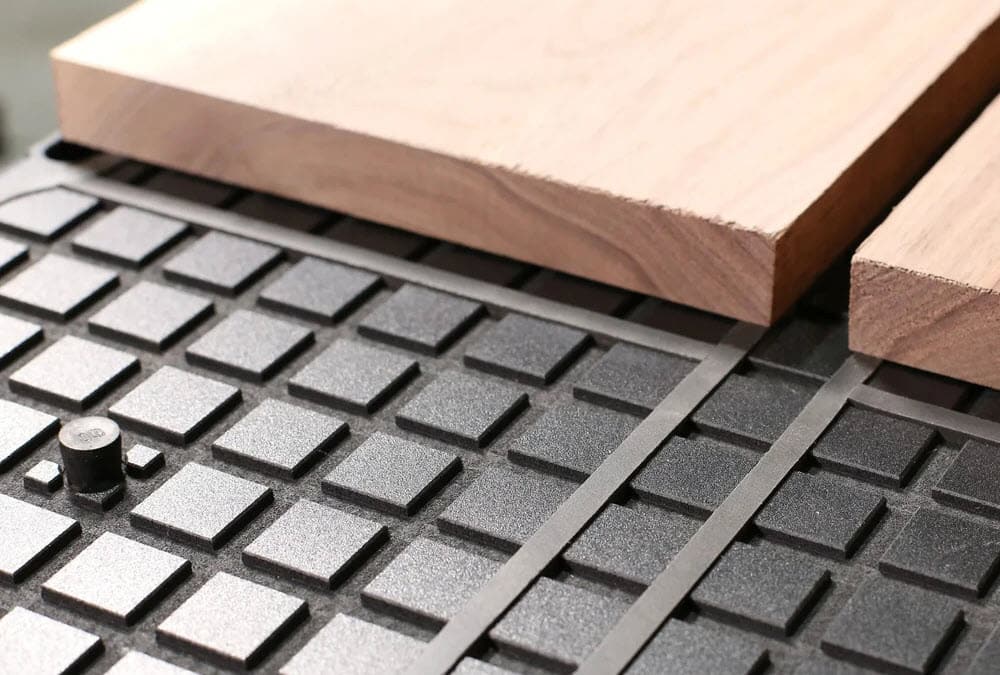
A gasketed vacuum table creates a sealed area beneath the workpiece, concentrating the available vacuum where it is needed. The gasket can often be configured around different workpiece sizes and shapes.
AirWeights vacuum tables, for example, use a grid pattern that allows the gasket layout to be customized around the workpiece. Complete systems pair the table with vacuum equipment, with independently controlled zones available on larger configurations.
This approach works particularly well for flat workpieces that provide a good seal and when fast, repeatable setup is important.
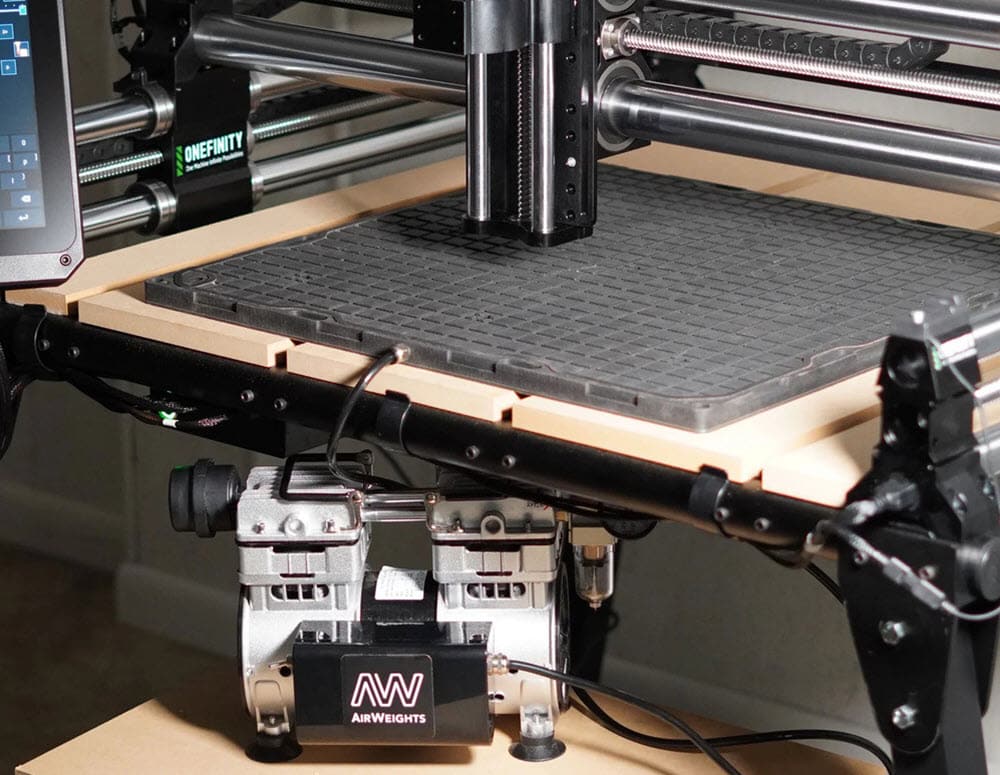 The complete AirWeights kit includes everything you need to get started, and setup takes just a few minutes. The 24"x24" table can be attached to nearly any CNC machine, with multiple integral slots for screwing or clamping to your machine.
 Flow-Through Vacuum Tables and Spoilboards
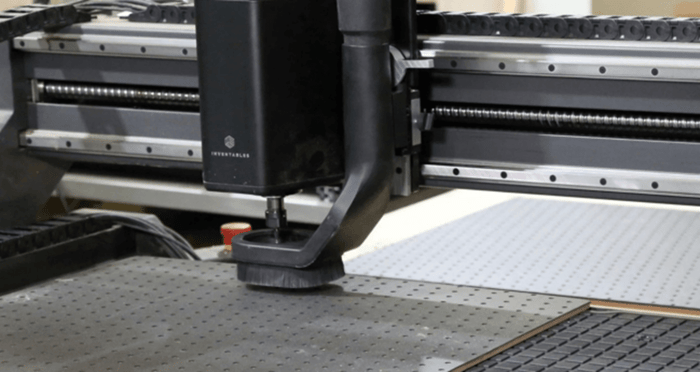
Another approach is to pull air through a porous spoilboard, typically MDF. This is especially useful for panels and sheet goods because the cutter can pass through the workpiece and slightly into the sacrificial spoilboard.
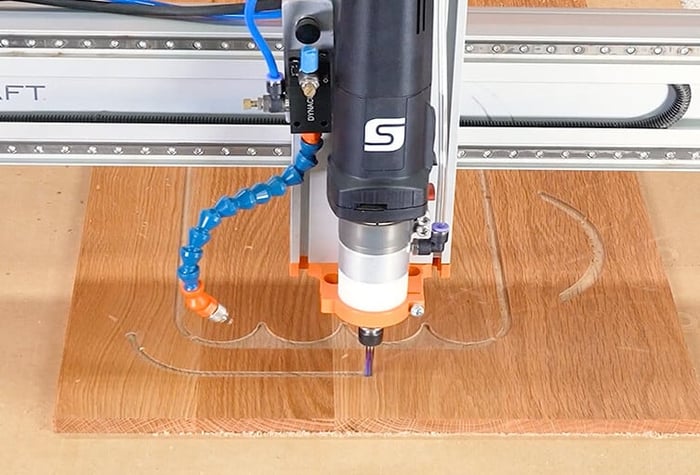
The STEPCRAFT M-Series Vacuum Tables are an example. Their grid system can be sectioned to match the material being machined, and an MDF spoilboard can be used for flow-through workholding.
This type of setup is common for cabinet components, signs, nested sheet production and other jobs where parts are cut from larger panels.
High-Flow Vacuum Systems
Some CNC applications can't maintain a nearly airtight seal. Spoilboards and porous materials leak air, and through-cuts create additional paths for air to enter the system. In these situations, maintaining hold-down may require a vacuum source capable of moving a high volume of air.
Black Box Vac systems are designed for this type of CNC application. The manufacturer provides specific table-size recommendations for its Storm and Cyclone systems.
Those recommendations should not be treated as a universal table-size-to-CFM formula. Different vacuum technologies and table designs have different requirements.
Integrated and Hybrid Vacuum Tables
Some systems combine vacuum with other ways of securing material. STEPCRAFT's Vacuum T-Track Table, for example, combines vacuum capability with T-tracks, allowing the operator to use vacuum or mechanical workholding depending on the job.
The Simply Technologies CNCVT Vacuum Table takes another approach, providing full-surface workholding with either a vacuum pump or blower depending on the application.
The important point is that "vacuum table" describes a category of workholding, not one specific setup.
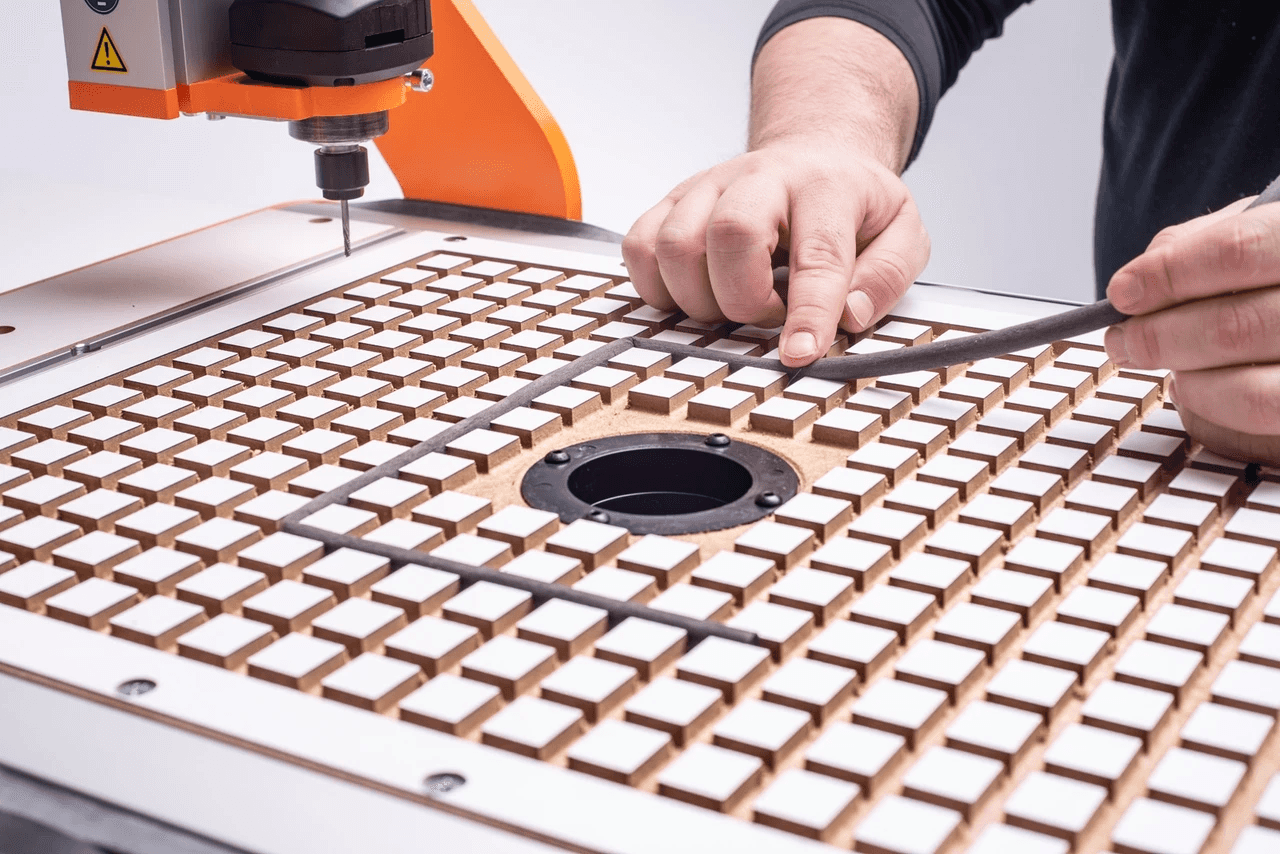 The STEPCRAFT M-Series CNC Systems are one of the only benchtop CNC's that offer an integrated flow-thru vacuum table solution.
How to Choose the Right Vacuum System for Your CNC Router
Before comparing pumps or CFM ratings, start with two questions: What CNC router do you already own, and what kind of work do you need to hold?
1. What CNC Router Do You Already Own?
Check whether your CNC manufacturer offers a vacuum table designed specifically for your machine. A purpose-built table can simplify installation and reduce the need for additional mounting hardware or modifications.
STEPCRAFT, for example, offers vacuum tables designed for specific D-Series and M-Series machines. Other systems, including AirWeights, offer flexible mounting options for a wider range of CNC routers.
Compatibility is a starting point, not the entire decision. A machine-specific table may be easier to integrate, while a universal system may offer features better suited to your materials, part sizes or workflow.
2. What Size Material Do You Usually Machine?
Large sheets provide plenty of surface area for vacuum hold-down. Small parts provide less area—and therefore less potential holding force. For smaller workpieces, a zoned table, gasketed fixture or another workholding method may be more appropriate.
3. Are Your Materials Porous?
MDF is deliberately used as a flow-through spoilboard because air can pass through it. Other porous materials may also require the vacuum source to compensate continuously for leakage. Nonporous materials such as acrylic can provide a good seal when properly gasketed.
Don't assume the same vacuum setup will perform identically with MDF, plywood, solid wood, plastics and composites.
4. Are You Cutting Small Parts From Full Sheets?
A full sheet may hold well initially, but every through-cut creates another potential path for air leakage. For nested cutting, spoilboards, zoning and toolpath strategy can therefore be just as important as the vacuum source itself.
5. Do You Need the Entire Table Under Vacuum?
Vacuum zones let you concentrate vacuum where material is actually present. Closing unused zones can reduce unnecessary leakage when machining a smaller workpiece on a larger CNC.
6. How Often Do You Change Workpieces?
For occasional CNC projects, clamps, screws or double-sided tape may be adequate. Vacuum becomes especially attractive when you're loading sheet after sheet or making repeated parts and reducing setup time has real value.
Understanding Vacuum, CFM, and Pump Sizing
Two specifications frequently appear when comparing CNC vacuum systems: vacuum level and airflow, measured in CFM (cubic feet per minute). Vacuum level indicates how much the system can reduce pressure, while CFM indicates how much air it can move.
A well-sealed fixture may need relatively little airflow, while a porous spoilboard or leaky setup may require substantial airflow to maintain useful vacuum.
That's why there is no reliable rule that says a particular CNC table size always requires a particular CFM. Table design, workpiece area, material porosity, spoilboard permeability, zoning and expected leakage all affect the requirement.
Use the vacuum-system manufacturer's recommendations when sizing the vacuum source. When a table and pump are sold as a complete system, the components have already been selected to work together.
You can compare the CNC vacuum tables and vacuum systems available at ToolsToday to see the different approaches and sizes available.
Vacuum Tables vs. Clamps, Screws, Tape, and Tabs
A vacuum table isn't automatically the best workholding method for every CNC job.
| Workholding Method | Best Suited For | Considerations |
|---|---|---|
| Vacuum | Sheet goods, flat workpieces, production and repeated setups | Requires suitable surface area, sealing and a vacuum source |
| Clamps | General-purpose workholding and irregular parts | Must stay clear of the toolpath |
| Screws | Sacrificial material and jobs where screw locations are safe | Leaves holes and requires careful placement |
| Double-sided tape | Small or occasional jobs | Setup and cleanup can be inconvenient for production |
| Tabs | Parts cut from sheet material | Requires additional cleanup after machining |
Many CNC users combine methods, using vacuum for sheet work and clamps, fixtures or tape for unusually small or irregular parts.
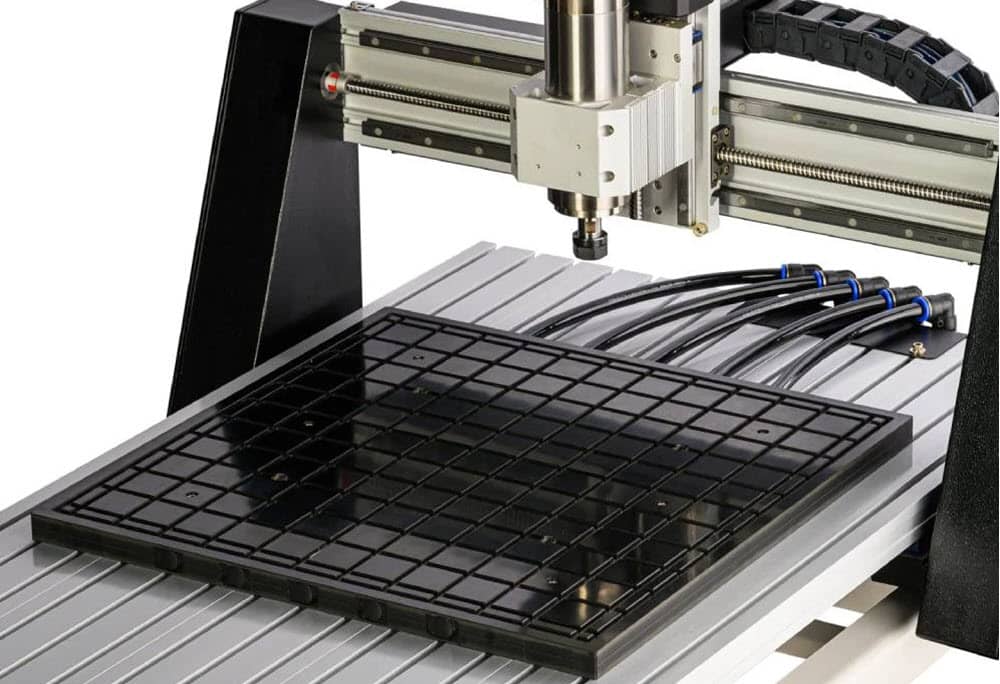 Simply Technologies CNCVT Vacuum Table for CNC switches between vacuum-pump or blower operation modes to match material type and production workflow.
Should You Build a DIY CNC Vacuum Table?
A DIY vacuum table can be practical for an experienced CNC user and can be customized around a machine's exact dimensions, zones and workflow.
The trade-off is that you're responsible for table flatness, plumbing, sealing, zoning and matching the vacuum source to the application. A manufactured system costs more upfront but eliminates much of that design and troubleshooting.
The real question is: how much system design, setup and troubleshooting do you want to take on yourself?
CNC Vacuum Table Buying Checklist
Before choosing a vacuum workholding system, ask:
- Is there a vacuum table designed specifically for my CNC?
- What size workpieces do I normally machine?
- Am I cutting sheet goods or individual parts?
- Are my materials porous or relatively airtight?
- Will I cut through the material into a spoilboard?
- Do I need independently controlled vacuum zones?
- Would integrated T-tracks be useful?
- What vacuum source does the manufacturer recommend?
Choosing the Right CNC Vacuum Workholding Setup
The right vacuum system isn't necessarily the one with the highest CFM rating or strongest advertised vacuum. It's the one that provides reliable hold-down for your CNC, your materials, your part sizes and your workflow.
Start with machine compatibility and the work you need to hold. From there, you can determine whether a gasketed, flow-through, high-flow or hybrid approach makes the most sense—and evaluate the vacuum source according to the manufacturer's recommendations.
FAQs
What is a CNC vacuum table?
A CNC vacuum table holds a workpiece in place by creating lower air pressure beneath it. Atmospheric pressure pushes the material against the table, providing hold-down without clamps or screws in the toolpath.
Do I need a vacuum table for my CNC router?
Not necessarily. Clamps, screws, tape, and other workholding methods may be sufficient for occasional or small jobs. Vacuum tables are especially useful for sheet goods, repeat production, and applications where faster setup and unobstructed access to the workpiece are important.
What size vacuum pump do I need for a CNC vacuum table?
There is no universal CFM requirement based on table size alone. The right vacuum source depends on the table design, workpiece size, material porosity, spoilboard, zoning, and expected air leakage. Follow the vacuum-system manufacturer's sizing recommendations.
Can I use a vacuum table with MDF, plywood, or acrylic?
Yes, but different materials behave differently. MDF is porous and is commonly used as a flow-through spoilboard, while relatively nonporous materials such as acrylic can provide a strong seal with a properly configured gasketed system. Plywood and other materials can vary in porosity.
Is a vacuum table better than clamps for CNC workholding?
It depends on the job. Vacuum is particularly useful for flat sheet material and repeated setups, while clamps may be simpler for small, irregular, or occasional workpieces. Many CNC users use both methods depending on the project.
Can I add a vacuum table to my existing CNC router?
Often, yes. Some CNC manufacturers offer vacuum tables designed for specific machines, while universal vacuum tables can be mounted to a wider range of CNC routers. Check machine compatibility and mounting requirements before choosing a system.