ROI on CNC Router Bits: Calculate Tooling Life & Cost per Part
Table of Contents
- Why Tool ROI Matters More Than Ever
- Understanding Tool Life and Cost per Part
- Where the Numbers Change: Coating, Geometry, and Material
- Case Example: Cost per Part in Real CNC Production
- ROI Beyond Longevity: The Hidden Multipliers
- Practical ROI for Smaller CNC Shops
- Measuring What Matters
- Explore Spektra™ Coated CNC Router Bits
- FAQs
How to measure the true ROI on your CNC router bits by understanding tooling life, cost per part, and what really drives your return on investment.
Why Tool ROI Matters More Than Ever
In today’s CNC shops, margins often come down to the smallest numbers—seconds shaved from cycle time, fractions of a millimeter in tool wear, or a few dollars saved per job. One of the most overlooked cost factors in any production setup is the life of the cutting tool itself.
A router bit doesn’t just cost what’s printed on the label. Each tool represents setup time, wear on machinery, and the quality of your finished product. The smartest fabricators and shop owners calculate cost per part, not just cost per bit—and that’s where your tooling choices start making a measurable difference.
Understanding Tool Life and Cost per Part
Start simple. Your cost per part for a router bit is:
Tool Cost ÷ Number of Parts Produced = Cost per Part
If a $40 bit cuts 100 parts before dulling, each part effectively costs $0.40 in tooling. If another $60 bit lasts 250 parts, that’s only $0.24 per part—a 40% savings in operating cost. Now multiply that across thousands of parts per month or multiple CNC stations, and the “premium” bit becomes a financial advantage rather than an expense.
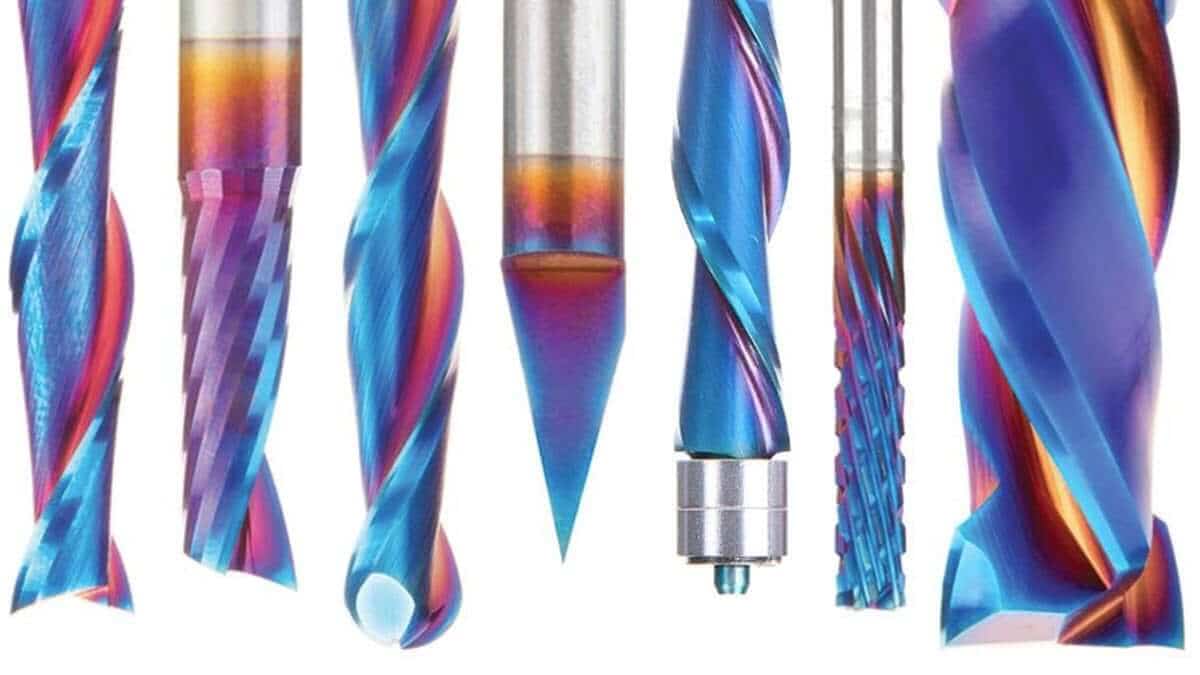
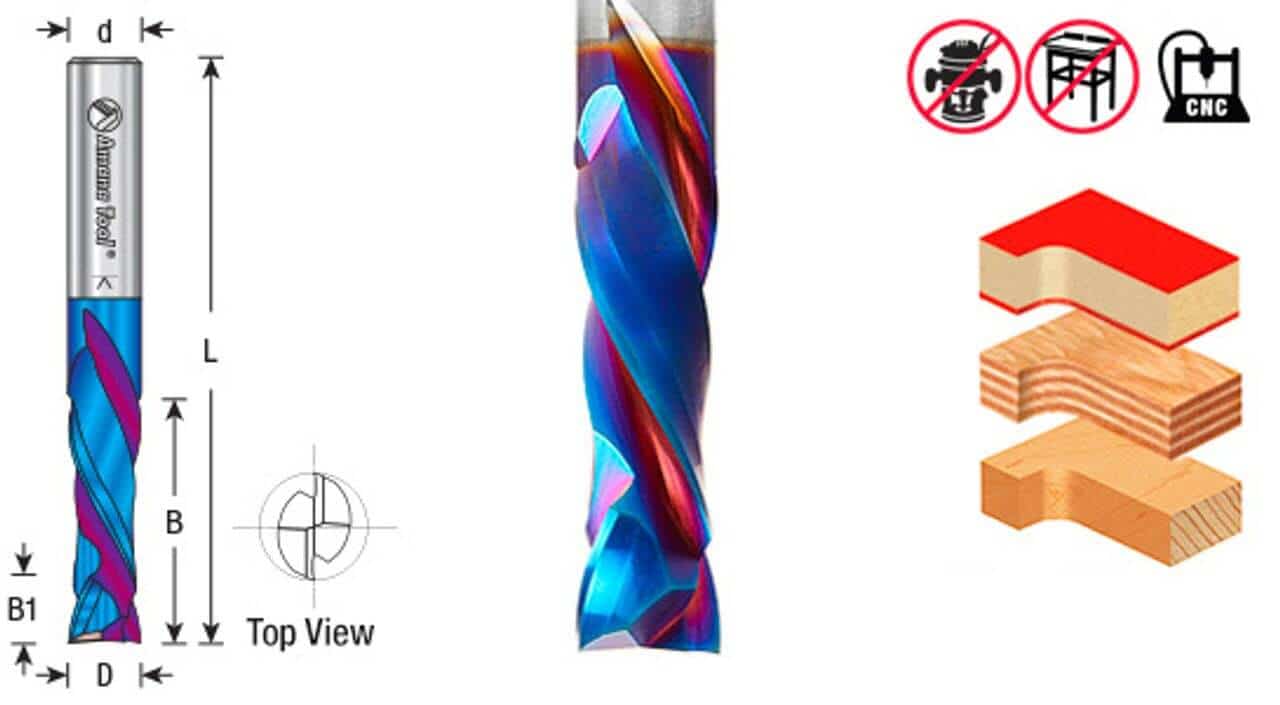 Spektra's unique carbide grade, increased clearance geometry, & razor-sharp cutting edges with polished flutes provide a superior finish and longer tool life especially in abrasive materials. Great for production settings. Primarily used on CNC machines but can be used with handheld and table-mounted portable routers.
Where the Numbers Change: Coating, Geometry, and Material
Tool life is shaped by three main factors: cutting material, geometry, and coating. Each one influences how long a bit lasts, how cleanly it cuts, and ultimately, what it costs to produce each part. Understanding how these factors interact helps explain why two similar-looking bits can deliver very different returns on investment.
Cutting Material
The foundation of any router bit is the material it’s made from. Solid carbide bits—like those in the Spektra™ line—offer the best combination of hardness, rigidity, and heat resistance for CNC work. Unlike carbide-tipped bits, which bond small carbide inserts to a steel body, solid carbide bits maintain consistent strength throughout the tool. That translates to smoother cuts, less vibration, and better edge retention under continuous loads. When precision and repeatability matter, the bit’s base material is the first place ROI starts.
Geometry
While coating often gets the spotlight, geometry plays an equally critical role in tool life and finish quality. Geometry refers to the exact shape and angles of the bit—the rake, relief, and helix angles; the number and polish of the flutes; and even the transition between the cutting edge and the shank.
Amana’s Spektra™ bits are known for their precise flank geometry and polished flutes, which reduce friction and heat buildup. The sharper, more refined cutting edge shears material cleanly rather than scraping it, extending tool life and producing smoother surfaces. Each bit type uses geometry tuned to its task: compression bits balance up-cut and down-cut spirals to minimize tear-out, O-flute bits use a deep, polished flute to evacuate plastic chips efficiently, and spiral bits combine a shearing and augering action for cleaner cuts in wood and composites. The coating protects that geometry, but it’s the geometry itself that determines how efficiently the bit cuts, clears chips, and resists wear over time.
Coating
The standout performer in Amana’s lineup is the Spektra™ Extreme Life Coating, which uses a nACo® nanocomposite layer to improve wear resistance, heat resistance, and surface smoothness. The coating measures about 4,500 Vickers hardness on the cutting surface—supporting a conservative, public-facing claim of up to 2.5× longer tool life compared to uncoated bits.
It’s physics at the edge: harder coatings resist micro-chipping, while lower friction helps chips evacuate more efficiently and reduces heat—two of the biggest enemies of tool life. The result is a sharper edge that lasts longer, cuts cleaner, and runs cooler, improving cost per part across nearly every CNC material category.
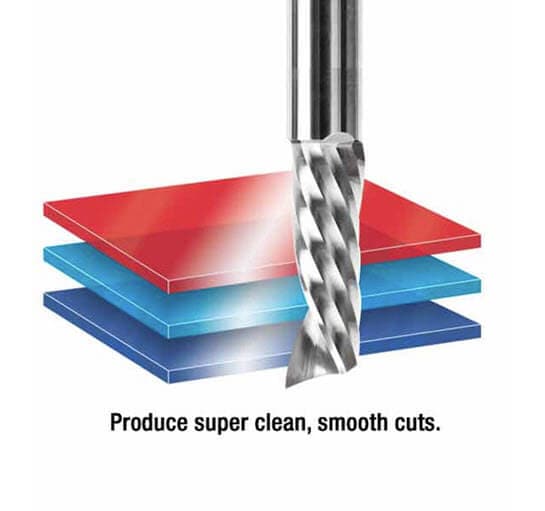
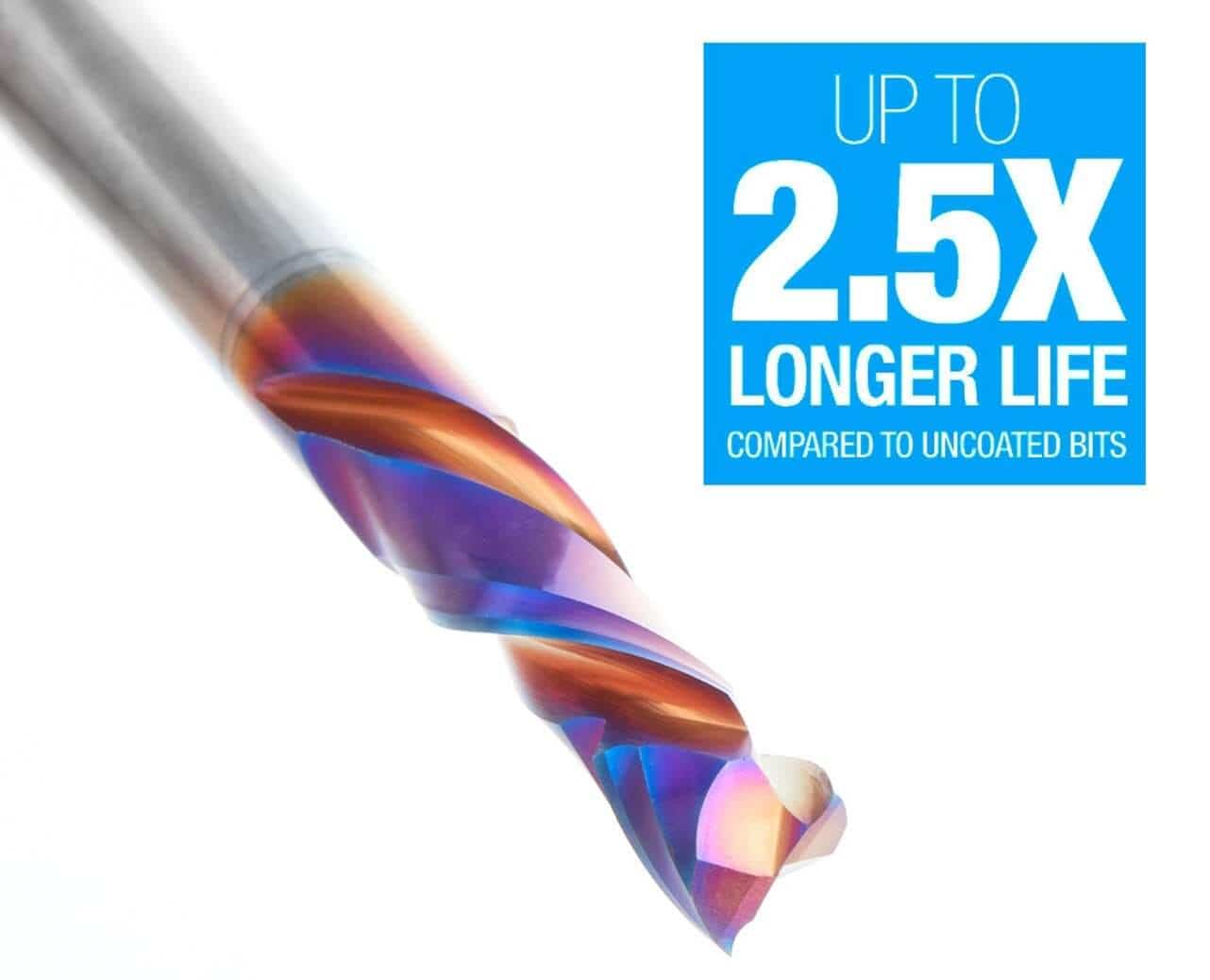 Spektra compression bits are designed for CNC applications requiring high feed rates and flawless compression cuts. Particularly suitable for double-sided melamine or laminated material.
Case Example: Cost per Part in Real CNC Production
Consider a shop favorite for sheet goods: the Amana 46170-K 1/4" Compression Router Bit.
| Bit Type | Price | Avg. Life (parts) | Cost per Part |
|---|---|---|---|
| Uncoated Compression Bit | $40 | 100 | $0.40 |
| Spektra™ 46170-K | $60 | 250 | $0.24 |
Even with a conservative 2.5× multiplier, the coated bit yields more parts per tool, fewer bit changes, and less downtime—about 40% savings per part before you even count cleaner edges and reduced rework.
The same story repeats across popular models:
- 46202-K (1/4") Up-Cut Spiral
- 46225-K (1/8") Up-Cut Spiral
- 46170-K (1/4") Compression
- 46172-K (3/8") Compression
- 51411-K (1/8") Plastic-Cutting Spiral “O” Single Flute
- 51404-K (1/4") Plastic-Cutting Spiral “O” Single Flute
Tip: When cutting materials that generate heat or fine dust—acrylic, HDU, plywood laminates—the difference in edge wear between coated and uncoated bits becomes dramatic after only a few runs.
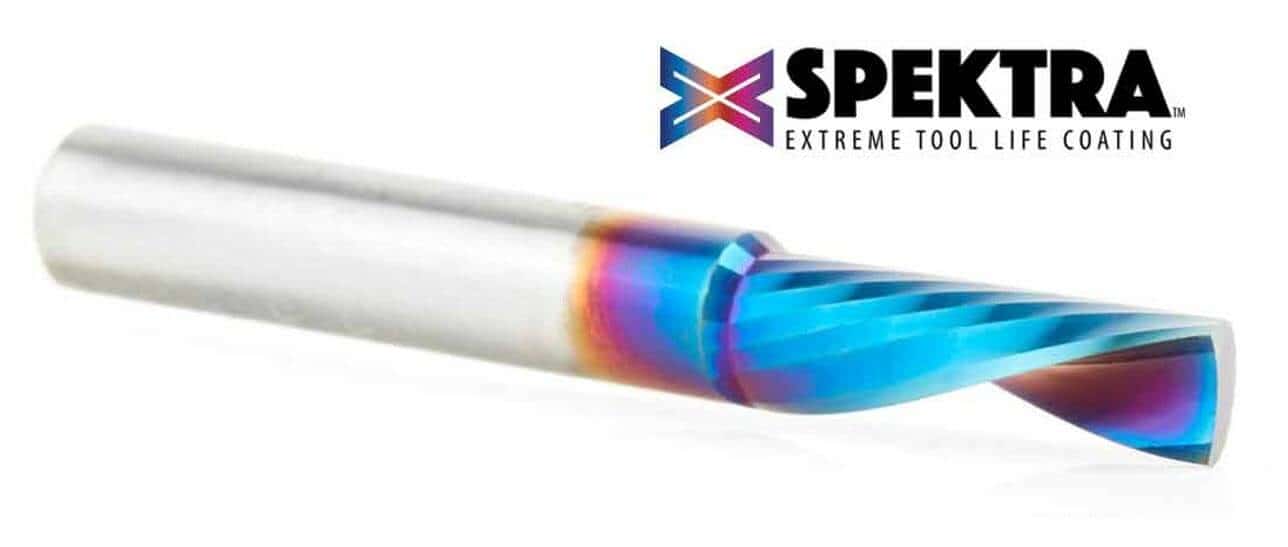 Solid carbide Spiral 'O' flute plastic cutting router bits use best sub-micrograin carbide, have a special proprietary edge processing system, & feature a super-high polished cutting edge with a unique “mirror finish”, resulting in clean cuts, superior finish and longer tool life. The Spiral ‘O’ flute sharpening/finishing process increases feed rates, allowing for more linear feet routed in less time.
ROI Beyond Longevity: The Hidden Multipliers
- Reduced Downtime: Fewer tool changes mean less time re-zeroing, checking offsets, and restarting production.
- Faster Feeds & Speeds: Lower friction and cleaner chip evacuation often support modest speed increases without risking tool burn.
- Lower Scrap Rate: Sharp, hard edges reduce tear-out, chatter, and melting—yielding cleaner parts and fewer rejects.
- Machine Longevity: Smooth cutting reduces spindle load and vibration, supporting longer machine life.
Practical ROI for Smaller CNC Shops
You don’t need a full analytics stack. Track a few basics:
- How many sheets or parts does a bit produce before retirement?
- Approximate hours of run time per tool?
- Time lost per tool change (setup, probing, verification)?
Switching from uncoated spirals to Spektra-coated bits can cut tool changes dramatically—often freeing an extra hour or two of productive machining per week. That’s tangible ROI.
Measuring What Matters
Keep a simple log or spreadsheet of bit changes, materials, and hours run. Patterns emerge quickly—and the cost justification for higher-end tooling becomes self-evident.
If your team regularly cuts dense composites, MDF, or plastics, Spektra-coated CNC bits offer straightforward gains:
- Longer tool life (public-safe claim: up to 2.5×)
- Cleaner edges and finishes
- Fewer interruptions and changes
- Lower true cost per part
Explore Spektra™ Coated CNC Router Bits
Find a match for your material and application: Spektra™ Collection at ToolsToday.
FAQs
How do I calculate cost per part for a router bit?
Divide the bit’s cost by the number of parts or sheets it cuts before dulling. For example, a $60 bit that cuts 250 parts has a tooling cost of $0.24 per part. Tracking this helps you compare the real-world ROI between bit types or coatings.
What’s the main benefit of the Spektra™ coating?
The nACo® nanocomposite coating used in Amana’s Spektra line provides up to 2.5× longer tool life compared to uncoated bits. It hardens the cutting edge to about 4,500 Vickers and reduces friction, heat, and micro-chipping — all of which extend tool life and improve finish quality.
Is the ROI on coated bits worth it for smaller CNC shops?
100%. Even if you’re not running 24/7 production, fewer tool changes, cleaner cuts, and more consistent results save time and reduce scrap. Over months of cutting, the reduced downtime and waste outweigh the higher upfront cost.
What materials benefit most from Spektra-coated bits?
High-friction or heat-sensitive materials such as MDF, plywood, HDU, PVC, and acrylic benefit most. Coatings reduce heat buildup, which prevents resin and plastic from melting or sticking to the cutting edge.
How can I tell when it’s time to replace a router bit?
Watch for dull edges, burning, chatter, or rough cut finishes. If the bit starts producing more dust than chips, or requires reduced feed rates to maintain quality, it’s near the end of its efficient life — and the cost per part begins to climb rapidly.