Whatever Happened to Shop Class?
Table of Contents
- From Wood Shop to CNC & Modern Manufacturing
- Shop Class Really Did Shrink
- Why Did Traditional Shop Classes Decline?
- “Vocational Education” Became Something Bigger
- Meet the New Shop Class
- The Tools Changed. The Skills Didn't.
- Shop Class May Look Different—But Making Things Still Matters
- The Next Generation of Makers
- FAQs
From Wood Shop to CNC & Modern Manufacturing
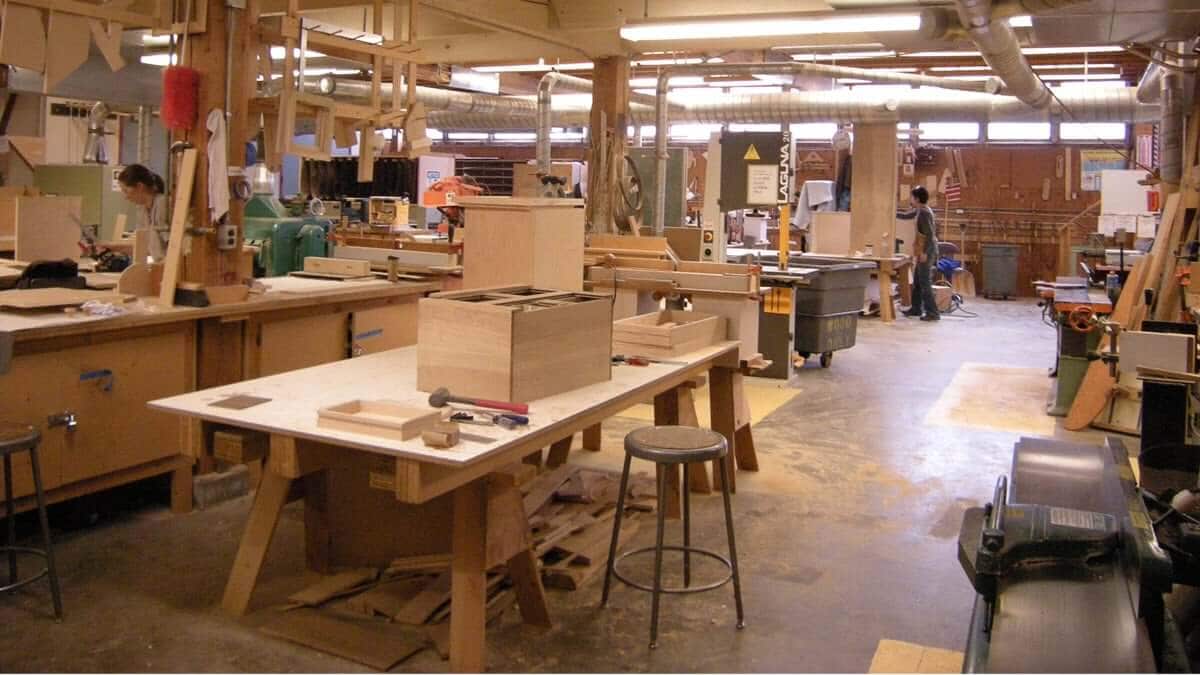
For generations of Americans, shop class was simply part of high school. You learned to read a drawing, measure twice, use a drill press or bandsaw, turn something on a lathe, and perhaps bring home a slightly lopsided cutting board or bookshelf at the end of the semester.
Today, plenty of students can graduate without ever setting foot in a wood shop or machine shop. So, as Labor Day approaches, we started wondering: whatever happened to shop class?
The easy answer is that schools stopped teaching it. The real answer is more interesting. Traditional shop classes did decline, but vocational education didn't simply disappear. High-school priorities changed, the economy changed, and hands-on education changed with them.
In some schools, what used to be called shop class now includes CAD software, CNC routers and mills, laser cutters, 3D printers and other technology that would have seemed like science fiction to an industrial-arts student 50 years ago.
Shop Class Really Did Shrink
If it seems like high-school students once spent more time in vocational classes, the numbers back that up.
According to the National Center for Education Statistics (NCES), vocational coursework accounted for about 21% of the credits earned by public high-school graduates in 1982. By 1992, that figure had fallen to 16%.
Over the same decade, students earned more credits overall and considerably more academic credits. Average academic coursework rose from 14.2 to 17.3 credits, while vocational coursework declined from 4.6 to 3.8 credits.
In other words, shop class wasn't just lost to nostalgia. There really was a shift in what American high-school students were studying.
Why Did Traditional Shop Classes Decline?
It's tempting to reduce the story to, "Schools decided everyone should go to college." There's some truth behind that perception, but the change was broader than a single decision or policy.
One important turning point came in 1983 with the influential federal report A Nation at Risk. Concerned about academic performance, the report recommended tougher high-school graduation requirements, including four years of English, three years each of mathematics, science and social studies, and a half-year of computer science.
Across the country, greater emphasis on academic coursework followed. But a high-school schedule only has so many periods in it. As students took more required academic classes, there was less room for electives and longer sequences of vocational courses.
NCES researchers examining the period found precisely that pattern: between 1982 and 1992, academic course-taking increased while vocational course-taking declined. Importantly, most students still took some vocational education. What declined most was the amount and intensity of it.
There were other pressures as well. A traditional shop requires dedicated space, expensive machinery, maintenance, safety procedures, consumable materials and instructors qualified to operate and teach the equipment. Meanwhile, the economy itself was changing. Computers and technology were creating entirely new skills for schools to teach.
Shop class didn't disappear because America suddenly stopped making things. The high-school curriculum—and the economy it was preparing students for—were changing.
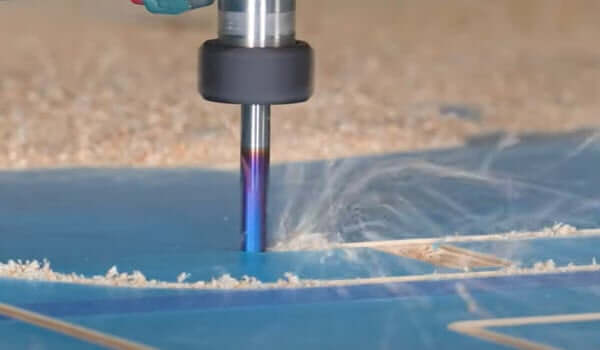 Perfect CNC Starter Pack: Vectric VCarve Pro Software for CNC AND Amana Tool AMS-257 8-Pc General Purpose CNC Router Bit Set Everything you need to get started.
 “Vocational Education” Became Something Bigger
The terminology changed too.
The traditional industrial arts program exposed students to materials, drafting, tools, machinery and processes such as woodworking and metalworking. Beginning in the late 20th century, many industrial-arts programs began shifting toward broader technology education, incorporating design, engineering concepts and technological systems.
Meanwhile, what was once broadly called vocational education increasingly developed into today's Career and Technical Education (CTE).
CTE isn't simply a new name for shop class. It can encompass healthcare, information technology, agriculture, business, construction, engineering, manufacturing, transportation and many other career fields. Modern CTE programs also frequently connect high-school coursework with postsecondary education, certifications, apprenticeships or industry credentials.
That means a school can have a thriving CTE program without having anything resembling the wood shop someone remembers from 1975.
But some schools still do have shops. And that's where things get especially interesting.
Meet the New Shop Class
Walk into the right high-school shop today and you might still see a bandsaw, drill press, lathe and workbench. Look a little farther, though, and you may find a CNC router, CNC mill, laser cutter or 3D printer—and computers running the software that tells those machines what to make.
At Coon Rapids High School in Minnesota, for example, woodworking instructor Bobby Miller has developed a program that combines traditional woodworking craftsmanship with CNC technology. Woodworking Network profiled the program in 2026, describing an approach intended not simply to teach a hobby but to introduce students to professional opportunities in woodworking and manufacturing.
Other high-school manufacturing programs go well beyond the traditional wood shop. Students may learn CAD (computer-aided design), CAM (computer-aided manufacturing), CNC machining and digital fabrication while still learning how materials behave when they're actually cut, drilled, routed or milled.
That combination matters. Designing a part on a screen is one skill. Turning that design into a physical object that fits, works and survives real-world use is another.
And some student projects are very real indeed. Modern school woodworking and manufacturing programs have tackled cabinetry, furniture and community projects rather than limiting students to exercises that exist only for a grade.
The result doesn't always look like the shop class previous generations remember. But the central idea—learning by designing and making something tangible—is remarkably familiar.
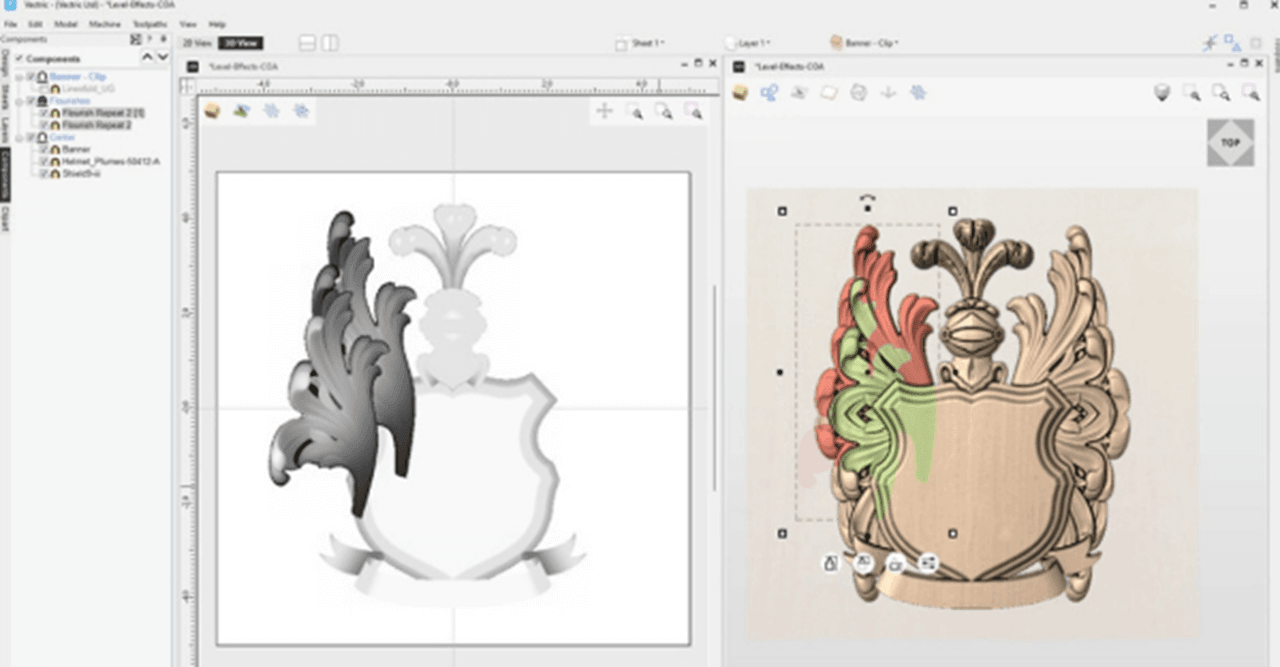
New to CNC Software? Vectric VCarve Master CNC Training Course Sstep-by-step training course simplifies complex CNC design, guiding you from beginner basics to advanced toolpaths. Looking to upgrade your game? Unlock advanced 3D modeling and rotary machining with the Aspire Master Training Course.
The Tools Changed. The Skills Didn't.
A student programming a CNC router in 2026 may be using equipment very different from what a student encountered in a 1970s wood shop. Yet many of the underlying lessons haven't changed much at all.
You still need to measure accurately. You still need to understand the material you're cutting. You need the right cutter for the job, secure workholding and a sensible cutting strategy.
You also need to recognize when something is going wrong.
A computer can tell a CNC machine where to move, but it can't repeal the laws of machining. Wood can still tear out. Cutters can still overheat. Tools can deflect. A poorly secured workpiece can move. The wrong combination of feed rate, spindle speed and cutter geometry can still produce a bad cut—or a broken tool.
In that sense, CNC adds a layer of digital knowledge without eliminating the physical knowledge shop classes have always taught.
A modern student may need to understand CAD/CAM software and toolpaths in addition to feeds and speeds, cutter selection and material behavior. That's not less hands-on than the old shop class. In some ways, it demands a broader mix of skills.
And one lesson hasn't changed at all: working safely around machinery matters. Whether you're standing at a router table or operating a CNC machine, knowing the equipment and respecting what it can do is part of learning the craft.
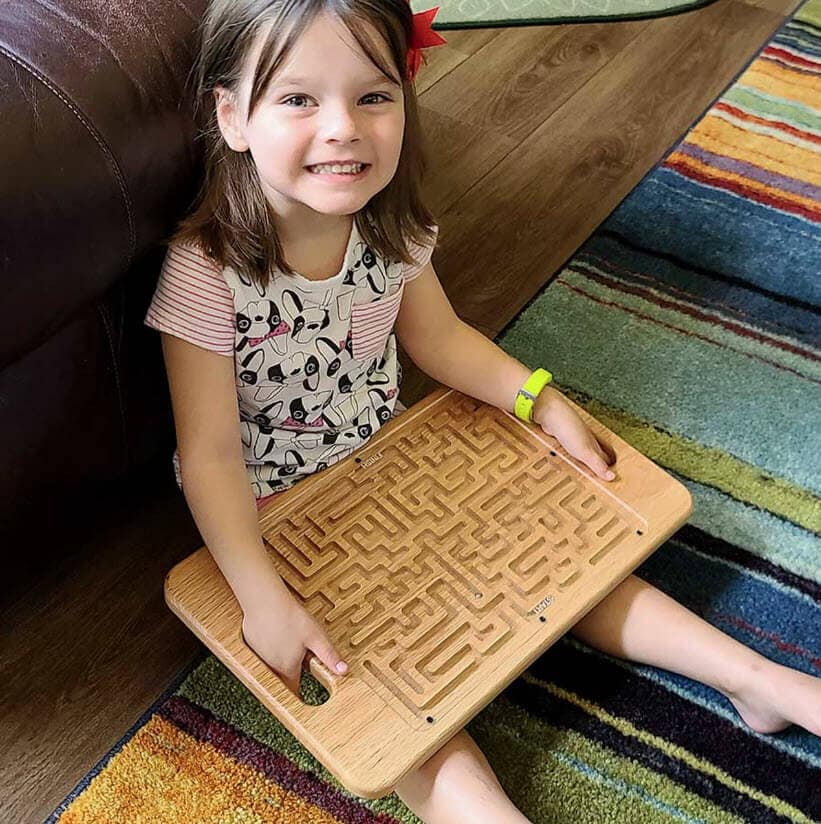 Get off on the right CNC foot with one of our Downloadable and Customizable CNC Project Plans - like this Maze Game. All plans come with a detailed PDF with step-by-step instructions, SVG files, DXF Files, Vectric Aspire and Vectric V-Carve Pro files (both compatible with version 9 and up). The Vectric files include all toolpaths set for you.
Shop Class May Look Different—But Making Things Still Matters
Modern manufacturing also makes the old distinction between “academic” and “vocational” education increasingly difficult to draw.
Consider what can happen during a single CNC project. A student might use geometry to create a design, computer skills to build a CAD model, manufacturing knowledge to plan the operation, mathematics to calculate dimensions, and hands-on skills to select tooling, secure material and evaluate the finished cut.
Is that academic education or vocational education?
It's both.
Those skills can lead in many directions: cabinet and furniture manufacturing, CNC machining, fabrication, construction, engineering, aerospace, advanced manufacturing, technical education or an apprenticeship. Some students will go directly into skilled work. Others will continue their education. Still others may never work in manufacturing at all—but will leave school understanding how designs become physical things.
Perhaps that's one of the biggest ways shop class has evolved. The goal isn't necessarily to teach one machine or prepare every student for one trade. At its best, modern hands-on education connects design, technology, materials and problem-solving.
The Next Generation of Makers
Labor Day celebrates the people whose work builds, repairs, manufactures and keeps things running. It's also a good time to think about where the next generation of those workers will learn their skills.
The machines have changed. The terminology has changed. The career paths have changed. But there is still something powerful about learning how to take an idea, select the right tools and materials, solve the problems that arise along the way, and turn that idea into something real.
For educators helping the next generation develop these skills, ToolsToday offers special pricing on woodworking and CNC tooling for schools, universities and other educational programs. Learn more about ToolsToday educational discounts and support for woodworking programs.
Maybe shop class didn't disappear after all.
In some schools, you just have to look past the CNC router to recognize it.
FAQs
What is shop class called in high school today?
Traditional shop classes may now be offered as industrial technology, technology education, manufacturing, woodworking, engineering, or Career and Technical Education (CTE). Names and programs vary by school and state, and CTE encompasses many fields beyond traditional wood and metal shop.
Do high schools still have wood shop?
Yes, some high schools still offer woodworking and other hands-on shop courses, although availability varies considerably by school district. Modern programs may combine traditional woodworking tools and machinery with CAD/CAM software, CNC routers, laser cutters, 3D printers, and other digital fabrication technology.
Why did shop classes decline in high schools?
There was no single cause. Beginning particularly in the 1980s, high schools increased academic graduation requirements, leaving students less room for vocational electives. Changes in technology, employment, educational priorities, and the resources required to maintain specialized shop programs also influenced how hands-on education evolved.
What is CTE in high school?
Career and Technical Education (CTE) combines academic knowledge with technical and career skills. CTE programs can cover manufacturing, construction, engineering, information technology, healthcare, agriculture, transportation, and many other fields. CTE is therefore much broader than the traditional idea of shop class.
Do high schools teach CNC machining?
Some do. Modern manufacturing and woodworking programs may give high-school students experience with CNC routers, CNC mills or lathes, CAD/CAM software, laser cutting, 3D printing, and other advanced manufacturing technologies alongside conventional shop tools and techniques.