Woodworking Planers Under $1,000: How to Choose the Right Machine
Table of Contents
- Quick Summary
- What Does a Thickness Planer Actually Do?
- Comparing Three JET Benchtop Planers Under $1,000
- Straight Knives vs. Helical Cutterheads: Is the Upgrade Worth It?
- What About Handheld Electric Planers?
- Five Things to Consider Before Buying a Benchtop Planer
- Which Planer Under $1,000 Should You Buy?
- A Capable Planer Doesn't Have to Cost Thousands
- FAQs
A good woodworking planer can cost several thousand dollars. But if you're working in a home workshop, small cabinet shop, or shared workspace, you may not need a large industrial machine.
In fact, you can get a capable 13-inch benchtop thickness planer for around $600. Spend a little more, and you can upgrade to a helical cutterhead or a heavier machine with additional features.
So what do you actually get for your money? And which features are worth paying extra for?
We'll compare three JET benchtop planers priced under $1,000, explain the differences between straight knives and helical cutterheads, and take a quick look at two Festool handheld planers designed for different woodworking tasks.
Quick Summary
- Best budget option: The JET JWP-13BTK offers 13-inch thickness planing and a 2 HP motor for approximately $600.
- Best compact helical option: The JET JWP-13BTHH adds a 30-insert helical cutterhead for approximately $800.
- Best heavier-duty benchtop option: The JET JWP-13BT adds a cast-iron bed, four-post construction, and two feed speeds for approximately $935.
- For trimming, rabbeting, and chamfering: Festool handheld electric planers are useful alternatives, but they serve a different purpose from benchtop thickness planers.
What Does a Thickness Planer Actually Do?
A thickness planer reduces the thickness of a board while making its upper surface parallel to the surface riding on the planer bed.
For example, if you're building a cabinet and need several boards to finish at exactly 3/4 inch thick, a thickness planer helps you achieve consistent dimensions across the entire batch.
It's particularly useful for:
- Preparing rough-sawn lumber for furniture and cabinetry.
- Bringing multiple boards to a uniform thickness.
- Removing saw marks and surface irregularities.
- Reducing oversized lumber to a specific dimension.
- Preparing boards for glue-ups and other joinery.
One important limitation: A thickness planer is not the same as a jointer. It follows the underside of the board, so a twisted or badly cupped board may come out thinner without becoming flat. For reliable results, start with one flat reference face, usually prepared with a jointer or an appropriate planer sled.
Comparing Three JET Benchtop Planers Under $1,000
All three JET models offer a 13-inch maximum planing width, a 6-inch maximum workpiece thickness, and a 2 HP motor. All operate on 120V power, making them practical choices for workshops without dedicated industrial electrical service.
The differences are primarily in the cutterhead, machine construction, and feed controls.
| Feature | JET JWP-13BTK | JET JWP-13BTHH | JET JWP-13BT |
|---|---|---|---|
| Approx. Price | $600 | $800 | $935 |
| Cutterhead | 3 straight knives | Helical, 30 inserts | Helical-style, replaceable inserts |
| Motor | 2 HP | 2 HP | 2 HP |
| Maximum Width | 13" | 13" | 13" |
| Maximum Thickness | 6" | 6" | 6" |
| Feed Speed | 24.6 FPM | 24.6 FPM | 18 or 26 FPM |
| Weight | 66 lbs. | 66 lbs. | Heavier cast-iron construction |
| Best For | Budget-conscious woodworkers | Compact shops wanting a helical head | Frequent use and greater machine stability |
Prices are approximate and subject to change. Check individual product pages for current pricing and availability.
1. JET JWP-13BTK: An Affordable Entry Into Thickness Planing
Approximate price: $600
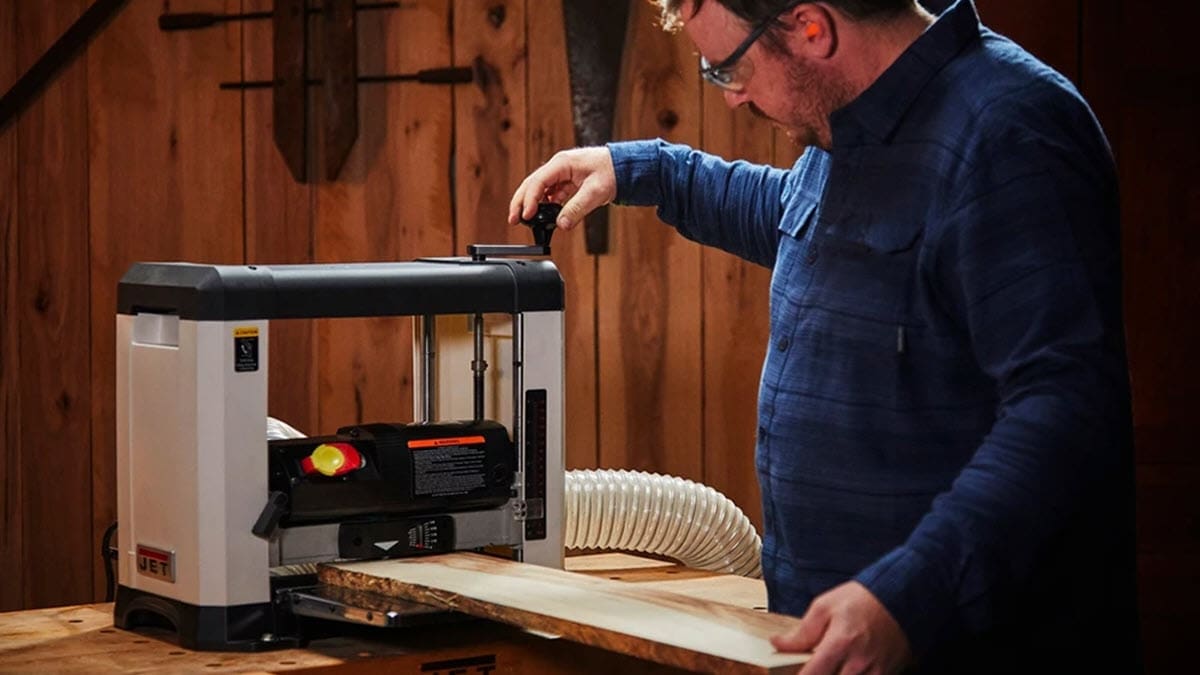
If you've been putting off buying a thickness planer because of the cost, the JET JWP-13BTK 13-Inch Benchtop Planer is worth considering.
It provides a 13-inch planing capacity, a 2 HP motor, and a traditional three-knife cutterhead in a machine weighing just 66 pounds.
That's enough capacity for many furniture, shelving, and cabinetry projects without dedicating permanent floor space to a stationary planer.
Key features:
- Three-knife cutterhead operating at 9,500 RPM.
- 13-inch maximum planing width and 6-inch thickness capacity.
- Maximum depth of cut of 1/8 inch, depending on stock width and material.
- Folding infeed and outfeed tables.
- 2 HP motor operating on 120V power.
- Compact 66-pound design with integrated carrying points.
What's the tradeoff? Straight knives can produce excellent results, but they may require more involved maintenance when an edge becomes dull or damaged. Compared with insert-style cutterheads, they're also more likely to produce noticeable tear-out in difficult grain, depending on cutting conditions.
Best for: Hobbyists, small-shop woodworkers, and anyone buying their first thickness planer who wants useful capacity without spending close to $1,000.
View the JET JWP-13BTK Planer at ToolsToday
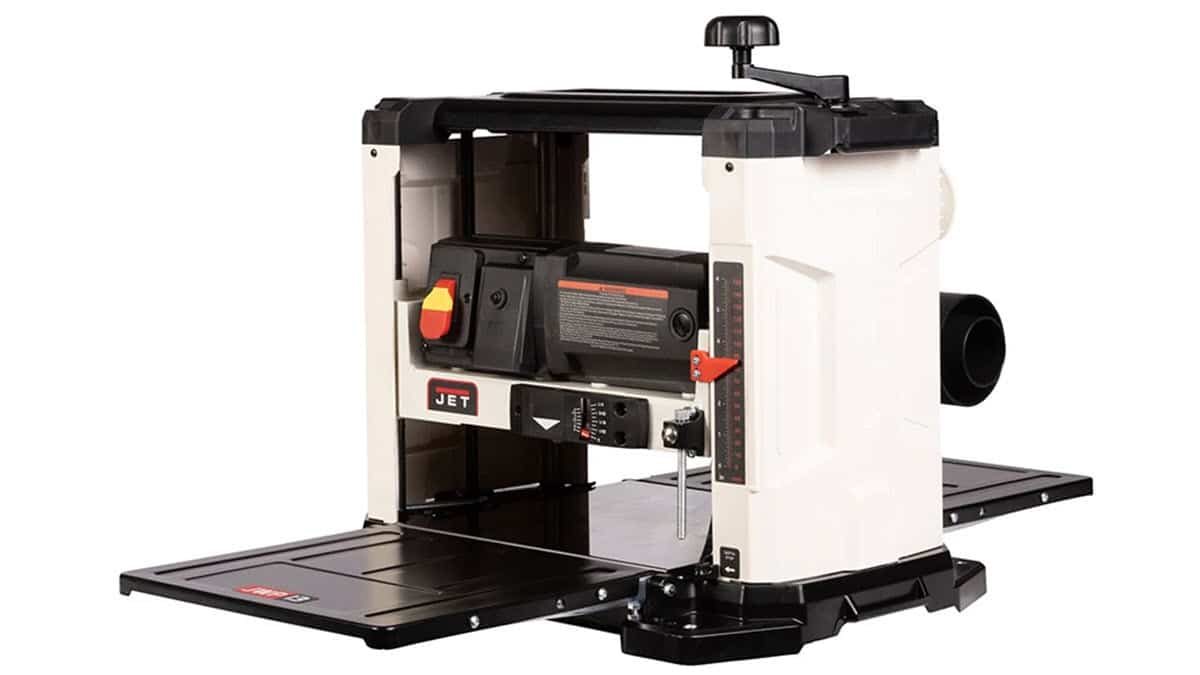 Jet 2989 13" Benchtop Helical Head Planer built for woodworkers who need real capability without committing to a full-size stationary machine.
2. JET JWP-13BTHH: Upgrade to a Helical Cutterhead
Approximate price: $800
For about $200 more than the straight-knife model, the JET JWP-13BTHH 13-Inch Benchtop Planer replaces the traditional knife arrangement with a helical cutterhead containing 30 inserts.
Rather than relying on three long knives, the cutterhead uses multiple smaller cutting edges. This design can offer quieter cutting, convenient edge maintenance, and improved results on challenging wood grain.
If an individual insert becomes nicked, it can be rotated or replaced as appropriate rather than requiring replacement of an entire full-width knife.
Key features:
- Helical cutterhead with 30 inserts.
- 2 HP motor and 13-inch planing capacity.
- 9,500 RPM cutterhead speed.
- 24.6 feet-per-minute feed rate.
- Folding tables and compact 66-pound construction.
- Depth-stop preset for repeatable thickness settings.
The machine retains the same basic capacity and portability as the straight-knife model. The extra investment goes primarily toward the cutterhead and its potential benefits in finish quality, noise, and maintenance.
Best for: Furniture makers, serious hobbyists, and small shops that frequently work with hardwoods or want the convenience of replaceable cutterhead inserts.
View the JET JWP-13BTHH Planer at ToolsToday
3. JET JWP-13BT: Heavier Construction and More Control
Approximate price: $935
The JET JWP-13BT 13-Inch Planer takes a different approach to benchtop planing.
It combines a helical-style cutterhead with a precision-machined cast-iron bed, four-post cutterhead support, and two selectable feed speeds.
The heavier construction is intended to improve stability and help reduce snipe, the unwanted deeper cut that can occur near the beginning or end of a board.
Key features:
- Helical-style cutterhead with individually replaceable inserts.
- 2 HP, 15-amp motor.
- Precision-machined cast-iron bed.
- Four-post cutterhead support.
- Two feed speeds: 18 and 26 feet per minute.
- 13-inch maximum width and 6-inch thickness capacity.
- Folding infeed and outfeed tables.
The slower feed setting can provide more cutter contact per inch of board, potentially improving surface finish. The faster setting helps move material through the machine more quickly when production speed is the priority.
Unlike the lighter JET models, this machine emphasizes rigidity and control over easy one-person portability.
Best for: Woodworkers who use a planer regularly, process a variety of lumber, and value machine stability and adjustable feed speed.
View the JET JWP-13BT Planer at ToolsToday
Straight Knives vs. Helical Cutterheads: Is the Upgrade Worth It?
One of the biggest decisions when buying a planer is whether to choose a traditional straight-knife cutterhead or pay more for a helical design.
Straight-Knife Planers
Traditional cutterheads use long knives extending across the planing width. They're relatively straightforward, economical, and capable of producing smooth surfaces when the knives are sharp and properly maintained.
However, a nick in a knife can leave a visible line along the board. Knife maintenance may also involve replacing or adjusting full-width cutting edges.
Helical and Helical-Style Planers
Helical and helical-style cutterheads use multiple smaller cutting edges distributed around the cutterhead. Depending on the design, those edges may engage the wood at an angle or in a staggered arrangement.
Potential advantages include:
- Reduced cutting noise compared with traditional straight knives.
- Less tear-out on some difficult grain patterns.
- Individual inserts that can be rotated or replaced when damaged.
- Convenient maintenance without changing full-width knives.
Not every helical or helical-style cutterhead has the same geometry, so results will vary by machine, wood species, grain direction, and depth of cut.
Our advice: If you're buying your first planer and mainly processing ordinary softwoods and straight-grained hardwoods, the $600 straight-knife model may be all you need. If you frequently work with figured hardwoods or want easier cutter maintenance, spending more for an insert-style cutterhead is worth considering.
What About Handheld Electric Planers?
Not every woodworking planer is designed to process boards through a stationary machine.
Handheld electric planers are useful for trimming doors, adjusting edges, cutting rabbets, and removing material from specific areas. They're particularly valuable for carpentry, installation, remodeling, and fitting work.
ToolsToday carries two Festool models under $1,000 that illustrate the difference.
Festool HLC 82 Cordless Planer: Portable Trimming and Chamfering
Approximate price: $449, tool-only configuration
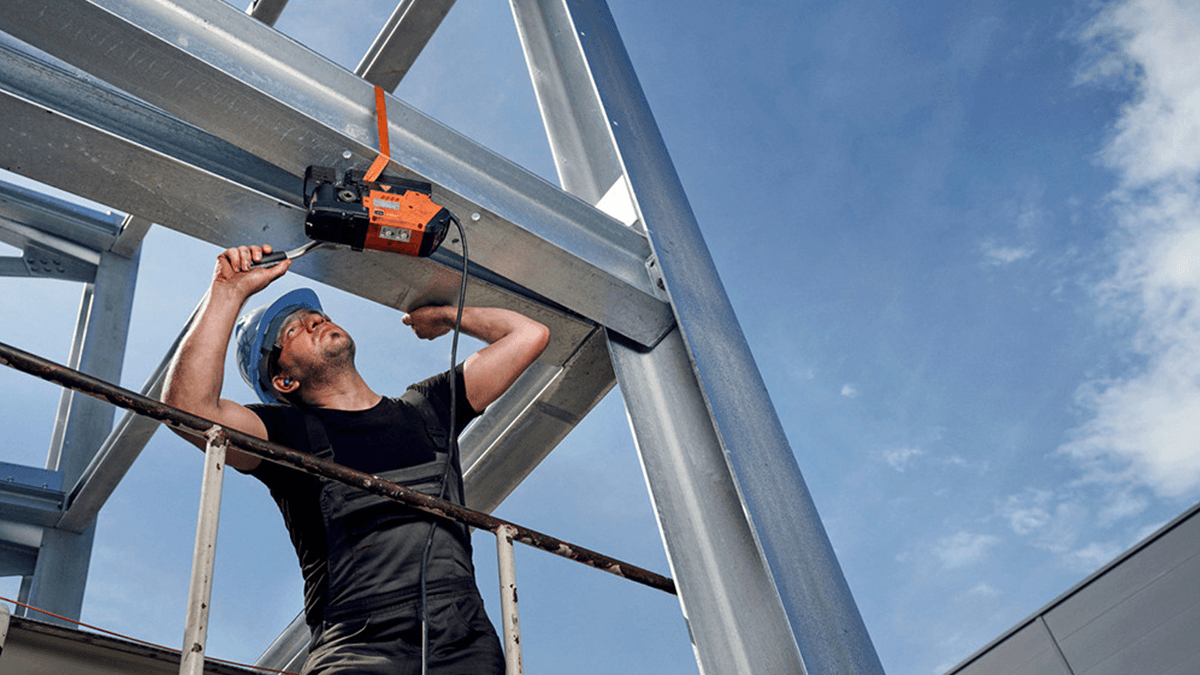
The Festool HLC 82 Cordless Planer is designed for precise, portable material removal.
Its 3-1/4-inch planing width makes it useful for trimming doors, fitting wooden components, and working on edges. Three integrated V-grooves help produce consistent chamfers, while the cordless design allows convenient movement around a jobsite.
It also offers rabbeting capability up to approximately 1 inch deep.
Important: The Basic configuration is a tool-only option. Budget separately for compatible Festool 18V batteries and a charger if you don't already own them.
View the Festool HLC 82 Cordless Planer
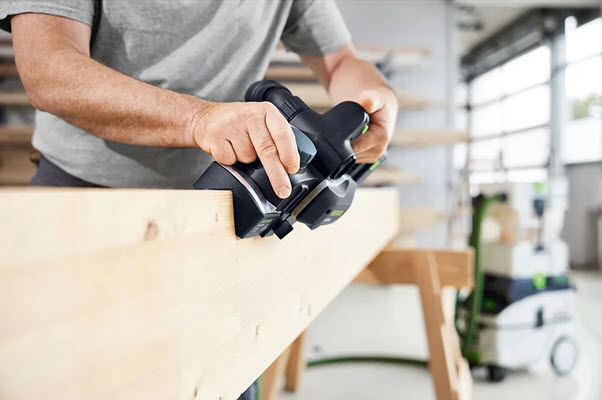 Festool Cordless Planer HLC 82 EB-F-Basic features easy depth adjustment and built‑in v‑grooves for clean chamfers.
Festool HL 850: Specialized Rabbeting and Edge Work
Approximate price: $799
The Festool HL 850 Electric Planer is particularly interesting because of its unlimited rabbeting-depth design.
Unlike many conventional handheld planers, the HL 850 can plane flush to an adjacent surface without leaving an uncut lip along the edge. Its cutterhead position and retractable guard make it especially useful for deep rabbets and precision edge work.
It also offers interchangeable cutterheads for decorative and textured wood surfaces.
View the Festool HL 850 Planer
Which type should you buy? If your goal is to make multiple boards the same thickness, choose a benchtop thickness planer. If you're trimming doors, fitting components, cutting rabbets, or chamfering edges, a handheld planer may be the more appropriate tool.
Five Things to Consider Before Buying a Benchtop Planer
1. Planing Width and Thickness Capacity
All three JET models in this guide accommodate boards up to 13 inches wide and 6 inches thick. That's sufficient for many furniture, cabinetry, and general woodworking projects.
Remember that the maximum width is not necessarily the width you can plane at the maximum depth of cut. Wider boards and harder woods often require shallower passes.
2. Cutterhead Design
Straight knives keep the initial purchase price lower. Helical and helical-style cutterheads may offer advantages in maintenance, noise, and surface finish. Consider how frequently you'll use the machine and the types of wood you typically process.
3. Machine Weight and Stability
A lighter planer is easier to move and store, which matters in a garage or multipurpose workshop. A heavier machine with a rigid bed and cutterhead support may offer better stability during repeated planing operations.
4. Dust and Chip Collection
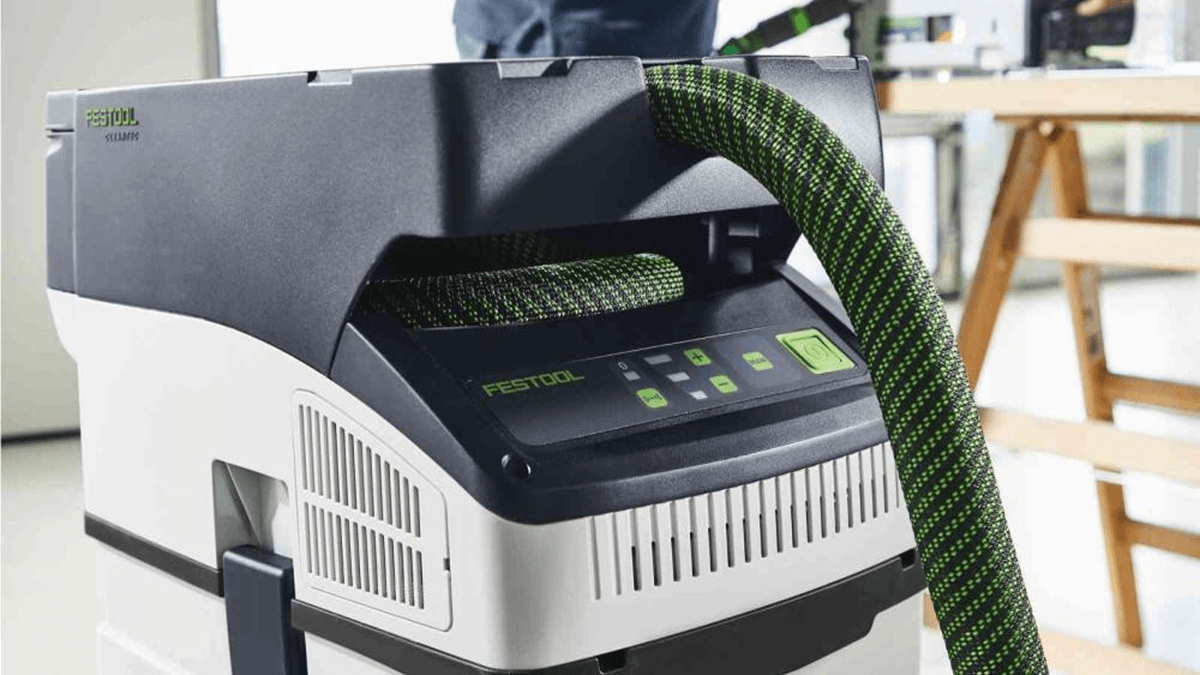
Thickness planers generate a substantial volume of wood chips. Effective collection isn't optional for a clean, practical workflow.
The JET JWP-13BTK and JWP-13BTHH specify a minimum dust-collection airflow of 550 CFM and use 4-inch dust ports. Make sure your dust collector can meet the requirements of the planer you choose.
For more guidance, see our Guide to Dust Collection Systems for Woodshops.
5. Board Support and Snipe
Snipe is an unwanted deeper cut near the ends of a board. It can result from board movement, inadequate support, or machine setup.
Folding infeed and outfeed tables help support longer workpieces, but proper adjustment is important. Supporting long boards, taking reasonable cuts, and checking table alignment can all help minimize snipe.
Which Planer Under $1,000 Should You Buy?
Here's a simple way to narrow the choices:
- Choose the JET JWP-13BTK if you want an affordable, full-capacity thickness planer and don't mind traditional knife maintenance.
- Choose the JET JWP-13BTHH if you want a compact thickness planer with a helical cutterhead and replaceable inserts.
- Choose the JET JWP-13BT if you prioritize heavier construction, cutterhead support, and selectable feed speeds.
- Choose the Festool HLC 82 if you need a cordless handheld planer for fitting, trimming, and chamfering.
- Choose the Festool HL 850 if your work frequently involves deep rabbeting or planing flush to an adjacent surface.
For most buyers specifically looking for a thickness planer, the decision comes down to the three JET models. The $600 machine gets you started, the $800 model upgrades the cutterhead, and the $935 model adds a more substantial machine platform.
A Capable Planer Doesn't Have to Cost Thousands
Industrial thickness planers are built for demanding production environments, but not every woodworking shop needs that level of capacity or investment.
Today's benchtop machines offer practical alternatives for woodworkers who want consistent board thickness without sacrificing valuable shop space or spending several thousand dollars.
Whether you choose a straightforward $600 straight-knife planer or invest more in a helical cutterhead and heavier construction, the best choice is the one that fits the work you actually do.
Explore Woodworking Planers at ToolsToday
FAQs
Is a benchtop planer good enough for hardwood?
Yes. A quality benchtop thickness planer can process many hardwood species, including oak, maple, and walnut. Harder woods and wider boards generally require shallower cuts. Sharp cutting edges, appropriate feed settings, and adequate dust collection are important for good results.
Do I need a jointer if I have a thickness planer?
Not necessarily, but the two machines perform different jobs. A jointer creates a flat reference face or straight edge, while a thickness planer makes the opposite face parallel. If you work with rough or twisted lumber, you'll need a reliable method of establishing a flat face before conventional thickness planing. A planer sled can sometimes substitute for a jointer.
Is a helical cutterhead worth the extra money?
It depends on how often you use your planer and the materials you work with. Helical and insert-style cutterheads can reduce maintenance inconvenience and may improve cutting performance on difficult grain. For occasional use with straightforward lumber, a traditional straight-knife planer may offer better value.
Can a thickness planer straighten a warped board?
Not by itself. A thickness planer references the board's underside and may reproduce existing curvature or twist. A jointer or suitable flattening sled is generally needed to establish a flat reference surface first.
What's the difference between a handheld planer and a thickness planer?
A handheld electric planer is guided across the workpiece and is particularly useful for trimming edges, fitting doors, cutting rabbets, and chamfering. A benchtop thickness planer feeds boards through the machine to produce a consistent thickness across their length and width.
Can I use a benchtop planer in a garage workshop?
Yes. Compact 120V benchtop planers are well suited to many garage workshops. However, they still require adequate electrical capacity, dust collection, space for feeding long boards, and hearing protection. Follow the manufacturer's electrical and operating requirements.