
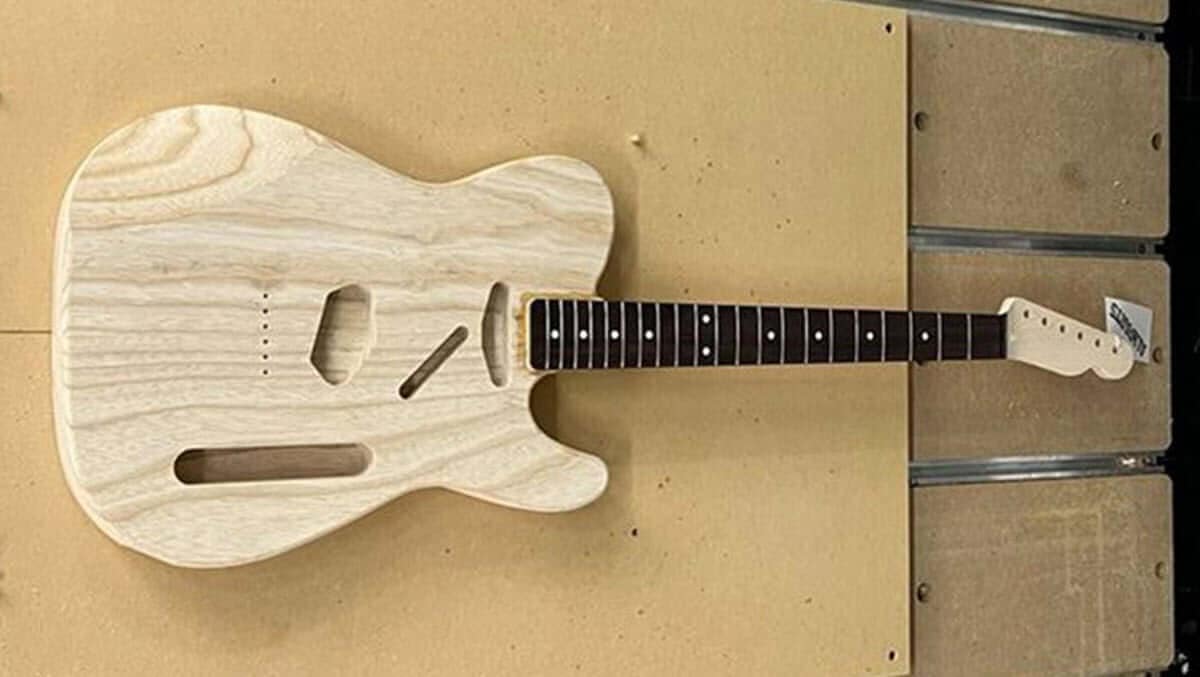
7 Best CNC Router Bits for Guitar Building & Luthiery
Table of Contents
- Why Router Bit Quality Matters in Guitar Building
- Choosing the Right Router Bit Geometry for Luthiery
- Essential CNC Router Bits for Guitar Building
- Routing Exotic Tonewoods Without Tear-Out
- Upcut vs. Downcut vs. Compression Bits for Guitar Bodies
- Specialty Tooling for Fretboards
- Reducing Sanding Time with Premium Router Bits
- Feeds, Speeds, and Tool Life: Practical CNC Tips
- Why Professional Shops Buy Router Bit Sets
- Common Router Bit Mistakes in Guitar Building
- Final Thoughts: Better Tooling, Cleaner Builds
- FAQs
In guitar building, the right router bit can make the difference between a clean, repeatable cut and hours of extra sanding, scraping, or repair work. This is especially true in professional luthier shops, where figured maple tops, mahogany bodies, ebony fingerboards, binding channels, pickup cavities, and delicate inlay pockets all demand precision.
Whether you are machining guitar bodies on a CNC, routing neck pockets, cutting control cavities, shaping edges, or adding decorative inlays, premium carbide tooling helps improve cut quality, extend tool life, and reduce time spent on hand-finishing.
Below, we break down the essential CNC router bits and specialty cutters used in professional guitar building, including the 6-Pc CNC Electric Guitar Making Router Bit Set, 1/4 Inch Shank, which offers approximately $100 in savings compared to purchasing the included bits individually.
Why Router Bit Quality Matters in Guitar Building
Guitar making often involves expensive materials and highly visible surfaces. A small amount of tear-out on a figured maple cap, a rough pickup cavity edge, or a poorly routed binding channel can add significant finishing time—or ruin the look of the instrument entirely.
Professional guitar builders and production shops rely on high-quality carbide router bits because they offer:
- Cleaner edges on figured and exotic tonewoods
- Longer tool life in dense hardwoods
- Reduced sanding and cleanup time
- More consistent results across multiple instruments
- Better performance in CNC guitar body machining
- Improved accuracy for neck pockets, pickup cavities, and inlay work
For busy luthier workshops, the real cost of a router bit is not only the purchase price. It is the cost per clean cut, the time saved at the bench, and the reduction in mistakes on valuable materials.
Choosing the Right Router Bit Geometry for Luthiery
Different guitar-building operations require different cutter geometries. Using the wrong bit can cause tear-out, burning, chatter, poor chip evacuation, or inconsistent edges.
Downcut Spiral Bits
Downcut spiral bits push chips downward and help protect the top surface of the material. They are especially useful for clean pocket edges, figured maple tops, veneered surfaces, and visible cavities where top-edge tear-out must be minimized.
For guitar bodies, downcut bits are commonly used for pickup cavities, control cavities, neck pockets, and shallow-to-medium pocketing operations where a clean top edge is critical.
Upcut Spiral Bits
Upcut spiral bits pull chips upward, which can improve chip evacuation in deeper cuts. However, they may lift fibers at the top surface, making them less ideal for highly figured tops or visible guitar surfaces unless the operation and material are carefully controlled.
Compression Bits
Compression bits combine upcut and downcut geometry. When used at the proper depth, they can produce clean edges on both the top and bottom faces of the material. They are useful for guitar body profiling, sheet goods, and certain exotic tonewoods, but they must be matched carefully to the material thickness and cut depth.
Profile and Bearing-Guided Bits
Roundover, core box, and bearing-guided bits are used for shaping body contours, edge radiuses, control cavity transitions, and decorative details. For instrument work, smooth profiles and clean bearings matter, especially when working close to finished or highly visible surfaces.
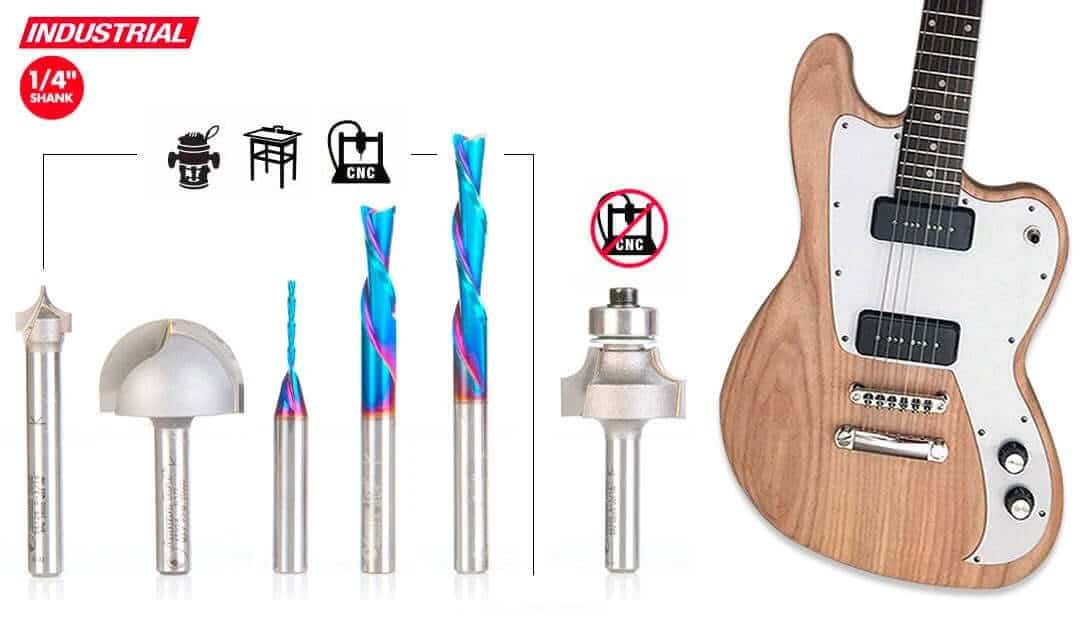 The Amana AMS-320 Guitar Building Router Bit Set includes 3 specialty downcut bits, 2 round-over bits, and a core-box bit.
Essential CNC Router Bits for Guitar Building
1. Body Profiling, Pickup Cavities, and Neck Pockets
Guitar bodies require clean, repeatable routing for pickup cavities, control cavities, neck pockets, wiring channels, and perimeter profiles. These cuts often need to be accurate, clean, and consistent across multiple builds.
For deep cavity work, the Amana Tool 46421-K Solid Carbide Spektra™ Coated Spiral Plunge Down-Cut Router Bit is a strong choice. Its 1/4-inch diameter, 1-1/4-inch cutting height, and 3-inch overall length make it useful for deeper pocketing operations where reach and clean top edges are important.
For standard clean-edge pocketing, the Amana Tool 46202-K Solid Carbide Spektra Extreme Tool Life Coated Spiral Plunge Down-Cut Router Bit is a versatile option for routing clean pockets, cavities, and profiles in guitar bodies.
2. Intricate Inlays and Detail Work
Custom inlays, headstock logos, fretboard details, and decorative pockets require small-diameter tooling that can hold tight tolerances. A bulky or dull bit can chip delicate materials like pearl, abalone, or fine wood inlay stock.
For detail work, the Amana Tool 46403-K Solid Carbide Spektra™ Coated 1/16-Inch Down-Cut Spiral Bit is designed for small, precise cuts. Its micro diameter makes it suitable for tight corners, narrow inlay pockets, and detailed CNC luthiery work.
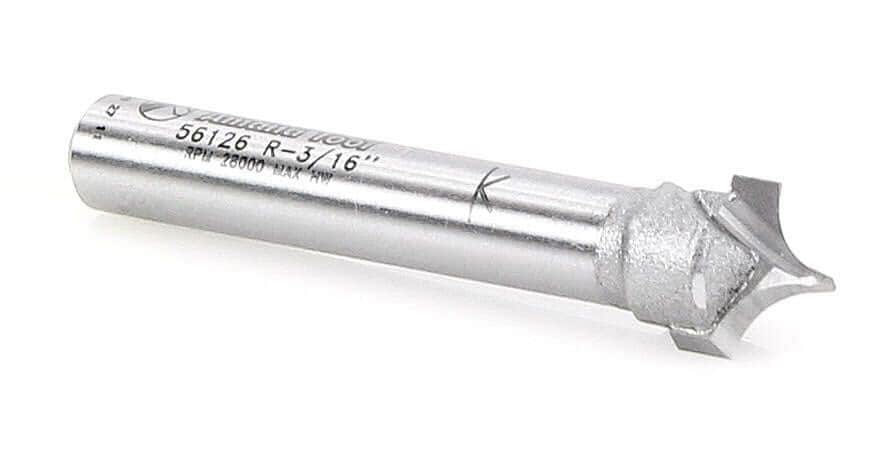 Amana 56126 Carbide Tipped Point Cutting Roundover Router Bit for both corner-rounding and carving delicate inlays.
 3. Body Ergonomics, Comfort Carves, and Control Cavities
Guitar bodies are not only functional parts—they are sculpted, tactile objects. Belly cuts, arm contours, rounded edges, recessed covers, and smooth transitions all affect the feel and finish of the final instrument.
For smooth recesses, control cavity transitions, and curved profiles, the Amana Tool 45924 Carbide Tipped Core Box Router Bit can help create clean concave shapes and rounded interior cuts.
For decorative details, bead-like accents, or small rounded transitions, the Amana Tool 56126 Carbide Tipped Point Cutting Roundover Router Bit is useful for shaping smaller profiles.
For traditional body edge-rounding, the Amana Tool 49500 Carbide Tipped Corner Rounding Bit with Lower Ball Bearing helps create consistent edge radiuses around guitar bodies and other instrument parts.
Routing Exotic Tonewoods Without Tear-Out
Many popular guitar woods are beautiful because their grain is complex—and that same grain can make them difficult to machine cleanly. Figured maple, quilted maple, mahogany, rosewood, ebony, and other exotic tonewoods require careful tooling choices.
Figured Maple Guitar Tops
Flamed, quilted, and curly maple can tear out easily because the grain direction changes throughout the board. For visible top surfaces, downcut spiral bits are often preferred because they help press the fibers downward and leave a cleaner top edge.
Mahogany Guitar Bodies
Mahogany is generally easier to machine than some dense exotic woods, but it can still fuzz, chip, or burn if the bit is dull or the feed rate is too slow. Sharp carbide tooling and appropriate chip load are important for clean cavity walls and smooth body profiles.
Ebony and Dense Fingerboard Woods
Ebony and similar dense woods can generate heat quickly. Premium carbide and coated tooling can help maintain edge life, but speeds and feeds still matter. Excessive rubbing can cause burning, while an overly aggressive cut can lead to chatter or breakage.
Upcut vs. Downcut vs. Compression Bits for Guitar Bodies
One of the most common questions in CNC guitar building is whether to use an upcut, downcut, or compression bit.
| Bit Type | Best For | Watch Out For |
|---|---|---|
| Downcut Spiral Bit | Clean top edges, pickup cavities, neck pockets, figured tops | Chip evacuation can be harder in deep cuts |
| Upcut Spiral Bit | Deep cuts and chip evacuation | May cause top-surface tear-out |
| Compression Bit | Clean top and bottom edges when cutting through material | Requires proper depth of cut to engage both cutting geometries |
For visible pocket edges on guitar tops, downcut bits are often the safer choice. For full-depth body profiling, compression bits may be useful when the cut depth and material thickness are appropriate. For deep roughing where chip evacuation is the main concern, upcut bits may be considered, followed by a finishing pass with a downcut or compression bit.
Specialty Tooling for Fretboards
Fretboard preparation is one of the most precision-sensitive parts of guitar building. Manually sanding a consistent radius across an entire fingerboard takes time and skill, especially in a production environment.
A dedicated Guitar Fingerboard Radiusing 12-Inch Radius Router Bit can help create a consistent radius using a CNC setup or specialized jig. For production shops, this can save significant bench time while improving repeatability from one neck to the next.
Reducing Sanding Time with Premium Router Bits
Every minute spent sanding out chatter marks, fixing tear-out, or scraping rough cavity walls adds labor cost to the build. Premium carbide router bits can reduce finishing time by leaving cleaner surfaces directly off the machine.
This is especially valuable for:
- Pickup cavities
- Neck pockets
- Binding channels
- Figured maple tops
- Control cavity recesses
- Decorative inlay pockets
- Production runs of repeated guitar bodies
For professional shops, the goal is not only to make the cut—it is to make the cut cleanly, consistently, and efficiently enough to reduce downstream handwork.
Feeds, Speeds, and Tool Life: Practical CNC Tips
Even the best router bit will underperform if it is used with the wrong CNC settings. Correct CNC feeds & speeds help maintain tool life, improve cut quality, and prevent burning or chatter.
Always refer to the manufacturer’s recommended feeds and speeds for the specific bit, material, and machine setup. As a general rule, professional shops should focus on maintaining proper chip load rather than simply slowing the machine down. Feeding too slowly can cause the bit to rub instead of cut, which creates excess heat and shortens tool life.
To improve results when machining guitar parts:
- Use sharp carbide tooling appropriate for the material
- Minimize unnecessary tool stickout
- Use multiple passes for deep cavities
- Clear chips effectively during pocketing operations
- Use climb or conventional cutting strategically based on material and finish requirements
- Test settings on scrap from the same tonewood whenever possible
- Replace worn bits before they begin causing burn marks or fuzzy edges
Why Professional Shops Buy Router Bit Sets
For hobby builders, buying one bit at a time may make sense. For production luthiers and busy guitar workshops, standardized tooling can simplify setup, improve consistency, and reduce downtime.
The 6-Pc CNC Electric Guitar Making Router Bit Set includes several essential cutters for guitar body machining, inlay work, shaping, and edge profiling. Purchasing the set also provides approximately $100 in savings compared to buying the bits individually.
The set includes:
- 46202-K Solid Carbide Spektra Extreme Tool Life Coated 1/4-Inch Down-Cut Spiral Bit
- 45924 Carbide Tipped Core Box Router Bit
- 56126 Carbide Tipped Point Cutting Roundover Router Bit
- 46403-K Solid Carbide Spektra™ Coated 1/16-Inch Down-Cut Spiral Bit
- 46421-K Solid Carbide Spektra™ Coated 1/4-Inch Down-Cut Spiral Bit
- 49500 Carbide Tipped Corner Rounding Bit with Lower Ball Bearing
Common Router Bit Mistakes in Guitar Building
Many routing problems in luthiery come from using the wrong cutter, incorrect settings, or a bit that is past its useful life.
Using the Wrong Spiral Direction
An upcut bit may evacuate chips well, but it can lift fibers on the top face of figured guitar tops. A downcut bit is often better for clean top edges.
Taking Deep Cuts Too Aggressively
Deep pickup cavities and neck pockets should usually be cut in multiple passes. Trying to remove too much material at once can increase chatter, heat, and tool deflection.
Using Dull Bits on Expensive Tonewoods
A dull bit can burn wood, leave fuzzy edges, and increase sanding time. In a professional shop, replacing a worn cutter is often less expensive than repairing a damaged guitar body.
Ignoring Chip Evacuation
Packed chips create heat and can reduce cut quality. This is especially important when using downcut bits for deeper cavities, since chips are pushed downward into the cut.
Using Generic Woodworking Bits for Precision CNC Work
General-purpose bits may work for rough shaping, but professional guitar building often requires tooling designed for accuracy, repeatability, and clean results in demanding hardwoods.
Final Thoughts: Better Tooling, Cleaner Builds
For professional luthiers and CNC guitar builders, router bits are not an afterthought. They directly affect cut quality, tool life, sanding time, production efficiency, and the final appearance of the instrument.
Whether you are routing pickup cavities, machining guitar bodies, cutting inlays, shaping body edges, or preparing fretboards, choosing premium carbide tooling helps you work more efficiently and produce cleaner, more consistent results.
To upgrade your guitar-building workflow, start with the 6-Pc CNC Electric Guitar Making Router Bit Set, and consider adding a dedicated 12-Inch Guitar Fingerboard Radiusing Router Bit for faster, more consistent neck production.
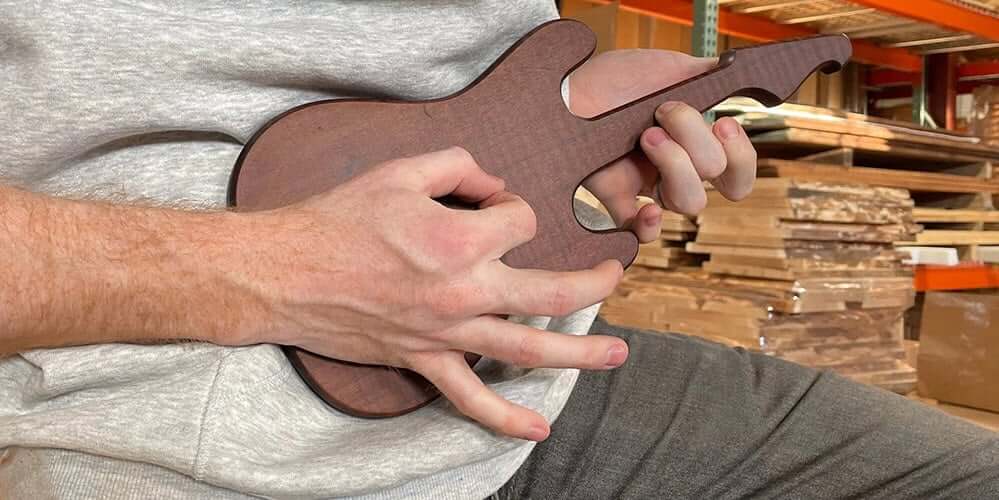 Not ready to build a guitar? Have some fun with our Guitar Serving Board Router Template!
FAQs
What is the best router bit for guitar body routing?
For most guitar body routing operations, professional luthiers prefer solid carbide spiral bits because they produce cleaner cuts and stay sharp longer in hardwoods. Downcut spiral bits are especially useful for pickup cavities, neck pockets, and figured maple tops where clean top edges matter.
Should I use a downcut or compression bit for guitar building?
Downcut bits are typically preferred for visible surfaces because they help reduce top-edge tear-out. Compression bits can produce clean edges on both sides of the material when the cutting depth is appropriate, making them useful for body profiling and full-depth cuts.
What router bits work best for figured maple guitar tops?
Figured maple can tear out easily due to its changing grain direction. Sharp carbide downcut spiral bits are commonly used because they help press fibers downward and leave cleaner top edges with less chipping.
Why do professional luthiers use coated carbide router bits?
Premium coatings like Spektra™ help reduce heat buildup and extend tool life when machining dense woods such as ebony, rosewood, and figured maple. Longer-lasting bits can also reduce sanding time and improve consistency across multiple builds.
What is the best CNC bit for routing pickup cavities?
A solid carbide downcut spiral bit is often the best choice for pickup cavities because it leaves clean top edges and smooth cavity walls. Longer-reach bits may also help with deeper pocketing operations in thicker guitar bodies.
How can I reduce tear-out and sanding time when routing guitar parts?
Using sharp carbide tooling, proper feeds and speeds, multiple shallow passes, and the correct spiral geometry can dramatically improve cut quality. Premium router bits often leave cleaner edges directly off the machine, reducing the amount of hand sanding and cleanup required afterward.