Choosing the Right Saw Blade for Every Project: A Comprehensive Guide
Table of Contents
- Understanding the Basics of Saw Blade Design
- Tooth Count: Why More Teeth Are Not Always Better
- Kerf: Thin Kerf vs. Full Kerf Blades
- Hook Angle: How Aggressive Should the Blade Be?
- Best Saw Blades for Crosscutting
- Best Saw Blades for Ripping
- Best Saw Blades for Plywood and Sheet Goods
- Combination Blades and General-Purpose Blades
- Blade Materials and Coatings
- Choosing the Right Blade for Your Saw
- Signs You Are Using the Wrong Saw Blade
- Quick Saw Blade Selection Guide
- Final Thoughts: Match the Blade to the Cut
- FAQs
The right saw blade can make the difference between a clean, accurate cut and a frustrating afternoon of burning, tearout, rough edges, or slow feed rates. Whether you are cutting hardwood, plywood, trim, sheet goods, or construction lumber, the blade matters just as much as the saw.
There is no single “best” saw blade for every job. The best blade depends on the material, the direction of the cut, the type of saw, and the quality of finish you need. Understanding a few key blade features — including tooth count, kerf, hook angle, and tooth geometry — will help you choose the right blade for each project.
Understanding the Basics of Saw Blade Design
Every saw blade is designed around a tradeoff between speed, smoothness, chip removal, and control. A blade made for fast ripping through solid wood will not behave the same way as a blade made for clean crosscuts in hardwood trim or splinter-free cuts in plywood.
Before choosing a blade, it helps to understand the main features that affect performance.
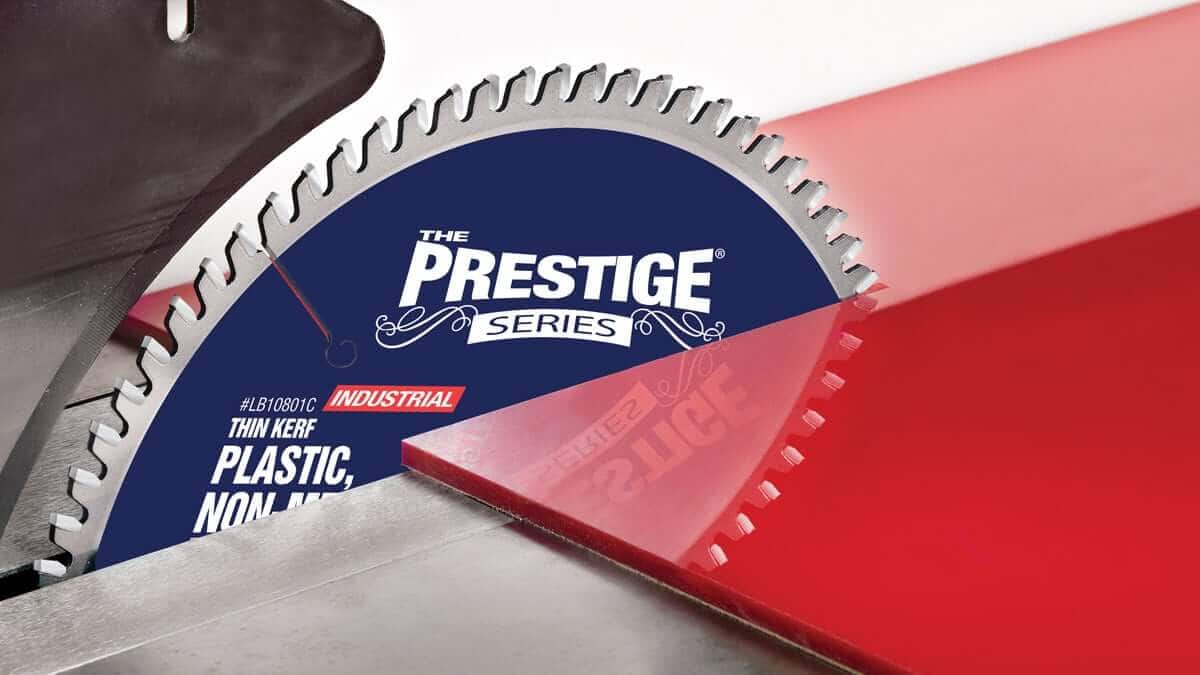
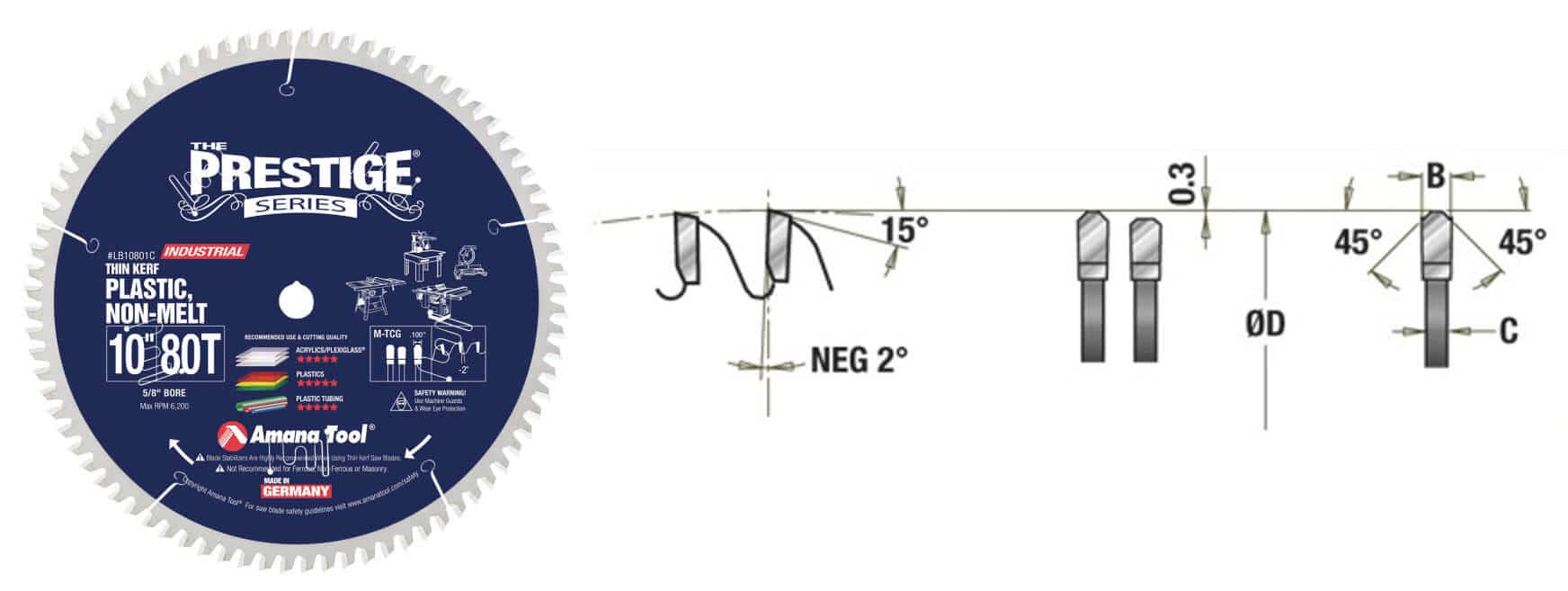 Amana Tool LB10801C Carbide Tipped Prestige Non-Melt Plastic 10 Inch Circular Saw Blade This 80-tooth plastic-cutting blade uses a high tooth count to shear material cleanly. In acrylic and other plastics, cut quality often matters more than maximum feed rate
Tooth Count: Why More Teeth Are Not Always Better
Tooth count is one of the first things most woodworkers notice on a saw blade, and for good reason. The number of teeth affects how fast the blade cuts, how smooth the cut looks, and how well the blade clears chips from the kerf.
As a general rule:
- Fewer teeth cut faster and remove more material with each pass.
- More teeth cut smoother but feed more slowly.
- Deep gullets help clear chips, especially when ripping solid wood.
A 24-tooth ripping blade, for example, is designed to move quickly through material with the grain. A 60- or 80-tooth crosscut blade is designed to leave a cleaner edge when cutting across the grain. A 40- or 50-tooth combination or general-purpose blade falls somewhere in the middle.
Kerf: Thin Kerf vs. Full Kerf Blades
The kerf is the width of the cut made by the blade. In practical terms, it is the amount of material removed as the blade passes through the workpiece.
Thin Kerf Blades
Thin kerf blades remove less material, which means the saw does not have to work as hard. This can be especially helpful on portable table saws, jobsite saws, circular saws, track saws, and lower-horsepower machines.
Thin kerf blades are often a good choice when you want:
- Less strain on the motor
- Less wasted material
- Faster feed on smaller saws
- Better performance from battery-powered or portable tools
The tradeoff is that thinner blades may be more prone to vibration or deflection, especially in demanding cuts or thick hardwoods.
Full Kerf Blades
Full kerf blades are thicker and generally more stable. They are often preferred on powerful cabinet saws or in production environments where stability, cut accuracy, and long blade life are priorities.
A full kerf blade may be the better choice when cutting dense hardwoods, making long rips, or working on a high-horsepower saw that can handle the extra material removal without bogging down.
Hook Angle: How Aggressive Should the Blade Be?
Hook angle refers to the angle of the tooth in relation to the center of the blade. It affects how aggressively the blade pulls material into the cut.
Positive Hook Angle
A positive hook angle leans the teeth forward, helping the blade cut more aggressively. This is common on ripping blades and table saw blades designed for fast feed rates.
Positive hook angles are useful for:
- Ripping solid wood
- Fast material removal
- Efficient cutting on table saws
Low or Negative Hook Angle
A low or negative hook angle makes the blade less aggressive and easier to control. This is common on miter saw blades, sliding compound miter saw blades, and blades designed for cleaner cuts in delicate materials.
Lower hook angles are useful for:
- Crosscutting
- Plywood and veneered sheet goods
- Laminates and melamine
- Miter saws and sliding saws
- Applications where control is more important than speed
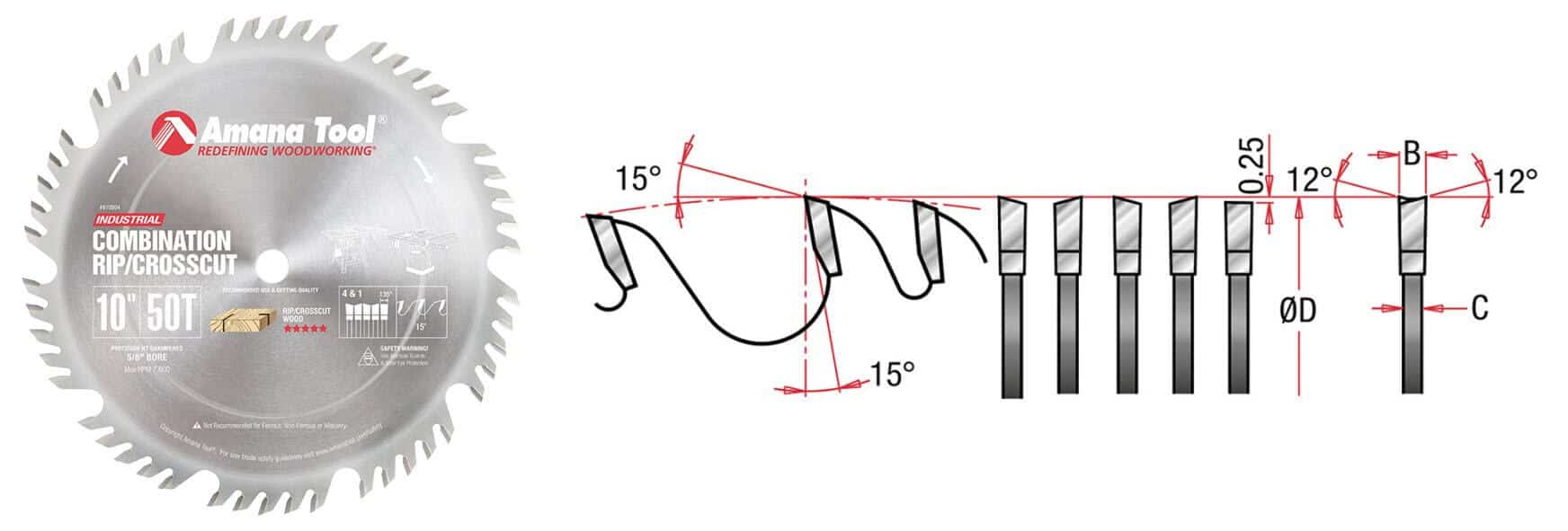 Amana Tool 610504 Carbide Tipped Combination Ripping and Crosscut 10 Inch Circular Saw Blade features four alternate top bevel teeth with a flat-top raker. The large gullets at the raker tooth allow deep cuts with improved chip ejection.
Best Saw Blades for Crosscutting
Crosscutting means cutting across the grain of the wood. Because the blade is severing wood fibers across their length, crosscuts require a blade that can slice cleanly rather than tear through the material.
A good crosscut blade usually has:
- A higher tooth count
- Alternate top bevel tooth geometry
- A clean-cutting edge pattern
- A moderate or low hook angle for better control
For a 10-inch table saw or miter saw blade, a 60- to 80-tooth blade is commonly used for clean crosscuts. These blades are ideal for hardwood trim, furniture parts, moldings, and other cuts where the finished edge matters.
Crosscut blades are not designed for the fastest feed rate. If you push too quickly, you may get burning, vibration, or tearout. Let the blade do the work and feed the material at a steady, controlled pace.
Best Saw Blades for Ripping
Ripping means cutting with the grain. In a rip cut, the blade needs to remove long wood fibers efficiently while clearing chips from the cut. This is why ripping blades usually have fewer teeth and deeper gullets.
A good ripping blade usually has:
- 20 to 30 teeth on a 10-inch blade
- Large gullets for chip removal
- A more aggressive hook angle
- Tooth geometry designed for fast, efficient cutting
Using a high-tooth-count blade for heavy ripping can lead to burning, slow feed rates, and unnecessary strain on the saw. The blade may produce a smoother edge, but it often cannot clear chips quickly enough for efficient ripping.
If you frequently rip hardwood, thick stock, or long boards, a dedicated ripping blade can dramatically improve performance.
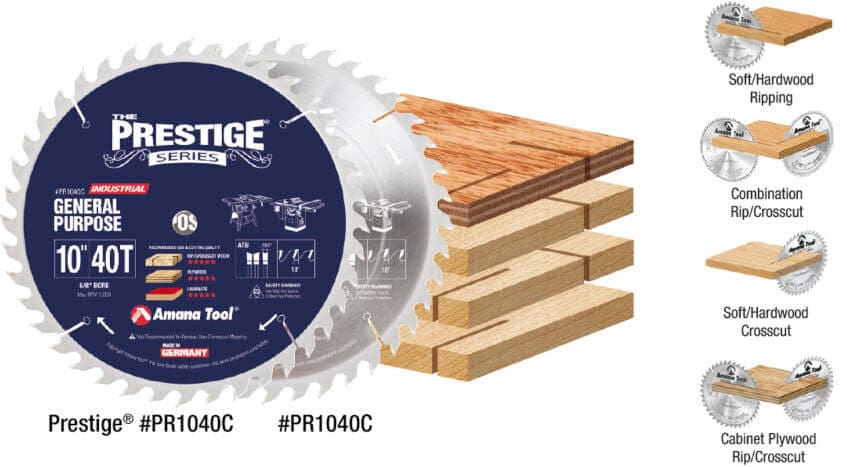 Prestige PR1040C General Purpose Carbide Tipped 10"D 40T ATB, 18° Circular Saw Blade features a massive tool-steel plate (.102" thick!) with expansion slots. The 40 teeth are ground with a steep 20° bevel angle, alternating left and right, for crisp, clean cuts both across and with the grain. The 18° hook angle yields an effortless feed. The precision-ground D-10 carbide teeth are individually computer-verified to have minimal run-out. Cuts smoother and stays sharper, for longer, in solid wood, plywood, MDF and chipboard.
Best Saw Blades for Plywood and Sheet Goods
Plywood, veneered panels, melamine, and other sheet goods can be difficult to cut cleanly because the surface layers are thin and prone to splintering. The goal is to support and slice the face veneer cleanly.
A good plywood blade usually has:
- A high tooth count
- ATB or Hi-ATB tooth geometry
- A clean, sharp carbide edge
- A controlled feed rate
For many plywood applications, a 60- to 80-tooth blade is a good choice. Hi-ATB blades are especially helpful when cutting veneered plywood, cabinet-grade panels, and other materials where the top surface needs to remain clean.
For best results when cutting plywood:
- Use a sharp blade
- Support the sheet properly
- Use a zero-clearance insert when possible
- Keep the good face oriented correctly for your saw type
- Feed at a steady, controlled pace
On a table saw, the blade cuts upward through the material, so the good face is usually placed up. With a handheld circular saw, the blade typically cuts upward into the bottom face, so the good face is usually placed down.
Combination Blades and General-Purpose Blades
Many woodworkers keep a combination or general-purpose blade installed for everyday work. These blades are designed to handle a wide range of cuts without requiring constant blade changes.
A traditional combination blade is designed to balance ripping and crosscutting. It may use grouped tooth patterns with larger gullets to help with chip removal. A general-purpose blade is often a more modern all-around blade, usually optimized for clean results across a variety of materials.
These blades are useful for:
- Small shops
- Hobby woodworkers
- Mixed materials
- Projects that involve both ripping and crosscutting
- Reducing the number of blade changes
The tradeoff is that an all-purpose blade will not usually rip as fast as a dedicated ripping blade or crosscut as cleanly as a dedicated finish blade. For many shops, however, a high-quality 40- or 50-tooth blade is an excellent everyday choice.
Blade Materials and Coatings
Most quality woodworking blades use carbide-tipped teeth. Carbide holds an edge longer than plain steel and can be sharpened when the blade becomes dull.
Blade coatings can also improve performance by reducing friction, resisting heat, and helping prevent pitch and resin buildup. This is especially useful when cutting materials that tend to gum up the blade, such as softwoods, plywood, laminates, or manufactured panels.
No coating replaces a sharp edge, but a well-made coated blade can cut cleaner, run cooler, and stay cleaner longer.
Choosing the Right Blade for Your Saw
The right blade also depends on the saw you are using. A blade that works well on a cabinet table saw may not be the best choice for a jobsite saw, circular saw, track saw, or miter saw.
Table Saws
Table saws are commonly used for ripping, crosscutting, dado work, plywood cutting, and general shop tasks. Many users keep one general-purpose blade installed and switch to a dedicated ripping or plywood blade when the project requires it.
Miter Saws
Miter saws are primarily used for crosscutting. Because the blade comes down into the workpiece, control and cut quality are especially important. Miter saw blades usually have a higher tooth count and a lower or negative hook angle.
Circular Saws
Circular saws are often used for framing, plywood, jobsite cuts, and rough cutting. Thin kerf blades are common because they reduce strain on the tool, especially on cordless saws.
Track Saws
Track saws are often used for sheet goods and clean panel cuts. A sharp, high-tooth-count blade designed for plywood or finish cuts can produce excellent results when paired with the track’s splinter guard.
Always check blade diameter, arbor size, maximum RPM rating, and saw compatibility before installing any blade.
Signs You Are Using the Wrong Saw Blade
If your saw is struggling or your cuts are not coming out cleanly, the blade may be the problem. Watch for these common signs:
- Burn marks on the cut edge
- Excessive tearout or splintering
- Slow feed rate
- Motor strain or bogging down
- Vibration or chatter
- Wandering cuts
- Rough edges that require extra sanding
- Pitch or resin buildup on the blade
Sometimes the solution is as simple as cleaning the blade. Other times, the blade may be dull, damaged, or simply the wrong design for the cut.
Quick Saw Blade Selection Guide
| Project or Cut Type | Recommended Blade Type | Typical Features |
|---|---|---|
| Ripping solid wood | Ripping blade | 20–30 teeth, deep gullets, positive hook angle |
| Crosscutting hardwood | Crosscut blade | 60–80 teeth, ATB geometry, smooth finish |
| Plywood and veneered panels | Plywood or finish blade | 60–80 teeth, ATB or Hi-ATB geometry |
| Everyday mixed shop use | Combination or general-purpose blade | 40–50 teeth, balanced performance |
| Portable or cordless saws | Thin kerf blade | Less material removal, reduced motor strain |
| Miter saw finish cuts | Fine crosscut blade | High tooth count, low or negative hook angle |
Final Thoughts: Match the Blade to the Cut
Choosing the right saw blade is not about finding one blade that can do everything perfectly. It is about matching the blade to the material, the machine, and the cut quality you need.
For fast ripping, use a ripping blade. For clean crosscuts, use a high-tooth-count crosscut blade. For plywood and sheet goods, choose a sharp finish blade designed to reduce tearout. For everyday mixed use, a high-quality combination or general-purpose blade can be a practical choice.
A better blade can improve cut quality, reduce sanding, protect your material, and make your saw feel more powerful and precise. Before upgrading your saw, make sure you are using the right blade for the job.
FAQs
What is the best saw blade for ripping hardwood?
The best saw blade for ripping hardwood is usually a dedicated ripping blade with 20–30 teeth, deep gullets, and a positive hook angle. These blades are designed to remove material efficiently along the grain, reducing burning and improving feed rate during long rip cuts.
What tooth count is best for cutting plywood?
For plywood and veneered sheet goods, a 60–80 tooth blade is typically best. Higher tooth counts help reduce tearout and splintering by making cleaner, finer cuts through delicate surface veneers and laminates.
What is the difference between a thin kerf and full kerf saw blade?
A thin kerf saw blade removes less material, making it easier for portable and lower-horsepower saws to cut efficiently. A full kerf blade is thicker and more stable, which can improve cut accuracy and reduce vibration on powerful cabinet saws and production equipment.
Can I use one saw blade for both ripping and crosscutting?
Yes. A combination blade or general-purpose blade can handle both ripping and crosscutting reasonably well. These blades are popular in small shops because they reduce the need for frequent blade changes, though they may not perform as efficiently as dedicated specialty blades.
Why does my saw blade burn wood while cutting?
Burning usually happens because the blade is dull, dirty, or not designed for the type of cut being made. Using a high-tooth-count blade for heavy ripping, feeding material too slowly, or allowing pitch buildup on the blade can all increase friction and create burn marks on the wood.