Drill Bit Geometry Explained: How Point Angle, Flutes, Material & Speed Affect the Cut
Table of Contents
- Quick Take: What Determines How a Drill Bit Cuts?
- Start With the Material You're Drilling
- Drill Bit Material: HSS, Cobalt, Carbide-Tipped, or Solid Carbide?
- Point Geometry: Why 118° and 135° Drills Cut Differently
- Woodworking Geometry: Brad Point vs. Through-Hole Bits
- Flute Geometry: Getting Chips Out of the Hole
- Bit Length: Use Only the Reach You Need
- Speed and Feed: Where Good Drill Bits Go Bad
- The Basic Math: Drill Diameter Changes RPM
- When Drilling Goes Wrong: Check the Whole System
- How to Choose a Drill Bit More Systematically
- The Bottom Line
- FAQs
Two drill bits can have the same diameter and still behave very differently in the cut.
Point geometry affects how the drill enters the material. Flute design controls how efficiently chips escape. Tool material influences edge life, toughness, and heat resistance. Speed and feed determine whether the cutting edges form clean chips or rub, overheat, and wear.
For experienced woodworkers, machinists, fabricators, CNC operators, and production shops, choosing a drill bit is therefore about much more than matching the diameter to the hole.
This guide explains the drill bit characteristics that have the greatest effect on cutting performance—and what to look at when a drilling operation isn't behaving as expected.
Quick Take: What Determines How a Drill Bit Cuts?
When two drill bits of the same size produce different results, look at these factors:
- Point geometry: affects centering, penetration, and cutting forces.
- Flute geometry: affects chip formation and evacuation.
- Tool material: affects toughness, wear resistance, rigidity, and heat resistance.
- Bit length: affects rigidity and deflection.
- Speed and feed: determine the cutting conditions at the edge.
The best drill bit is not necessarily the hardest or most expensive one. It is the bit whose geometry and material match the workpiece, hole, machine, and cutting conditions.
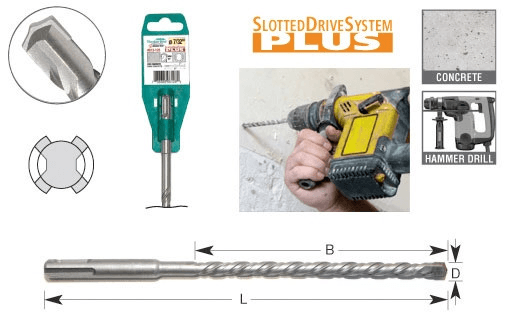 Slotted Drive System Plus - 4 Flute Carbide Tipped Masonry Drill Faster drilling of true round holes in the toughest concrete, with less vibration, for longer life and greater productivity.
Start With the Material You're Drilling
Before choosing point angle, flute style, or tool material, consider the workpiece.
Hardwood, MDF, aluminum, mild steel, and stainless steel present very different cutting problems. Some materials are abrasive. Some generate heat quickly. Some produce long chips that are difficult to evacuate. Wood-based panels may require especially clean entry or exit edges.
Ask:
- How hard or abrasive is the material?
- Does it produce long or easily evacuated chips?
- Is heat likely to be a problem?
- Is the hole blind or through?
- How deep is the hole relative to its diameter?
Those answers help determine what kind of drill geometry and cutting conditions make sense.
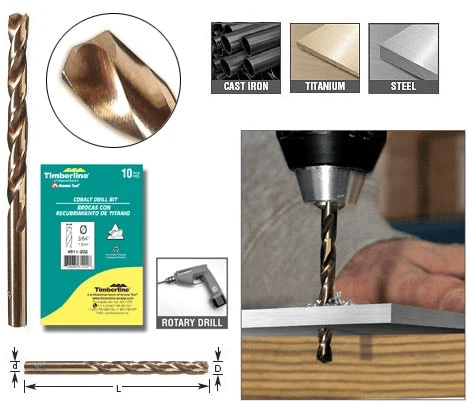 Cobalt Drill Bits Designed for drilling in extremely hard and abrasive materials like Cast Iron, Titanium and Stainless Steel.
Drill Bit Material: HSS, Cobalt, Carbide-Tipped, or Solid Carbide?
The material from which a drill is made affects its balance between toughness, wear resistance, rigidity, and heat resistance.
High-Speed Steel (HSS)
High-speed steel remains common because it is versatile, relatively tough, and economical. HSS drills can tolerate more flex and imperfect setups than very rigid carbide tooling, making them useful for a wide range of general drilling applications.
Cobalt-Alloy HSS
A “cobalt drill bit” is generally not a conventional steel drill with a cobalt coating. Cobalt is alloyed into the high-speed steel.
The alloy improves hot hardness, helping the cutting edge retain hardness at elevated temperatures. That can be particularly useful when drilling demanding metals.
Cobalt does not automatically make a drill the best choice for every application. Tool material still needs to match the workpiece, machine, and cutting conditions.
Carbide-Tipped Drills
Carbide-tipped drills place wear-resistant carbide at the cutting edges while using another material for much of the tool body.
They are common in production woodworking and boring applications, particularly when repeatedly drilling abrasive materials such as MDF, melamine, and engineered panels.
Solid Carbide Drills
Solid carbide drills offer excellent hardness, wear resistance, and rigidity. In a rigid, accurately aligned machine setup, it can provide excellent dimensional consistency and tool life, especially when cutting aluminum.
But carbide is less forgiving of flex, impact, runout, and unstable setups than tougher tool materials.
More wear-resistant does not necessarily mean more forgiving.
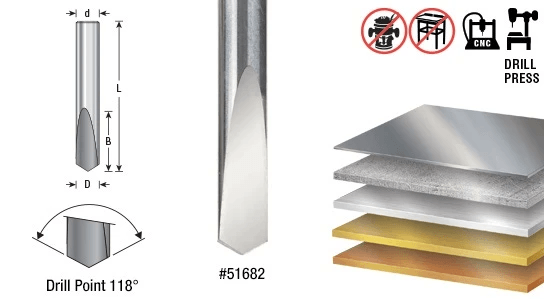 Solid Carbide CNC 118 Degree Point Spade Drills / Router Bits for Steel, Stainless Steel & Non-Ferrous Materials are used to drill very short, shallow holes in hard (or hardened) steel. They can be used either in CNC or drill presses.
Point Geometry: Why 118° and 135° Drills Cut Differently
The point angle is the included angle at the tip of a conventional twist drill. Two common designs are 118 degrees and 135 degrees.
118-Degree Points
The 118-degree point is widely used for general-purpose drilling. Its more pointed profile is common across a broad range of standard twist drills.
135-Degree Points
A 135-degree point is flatter and is often used in metalworking applications where different centering, penetration, and cutting-force characteristics are desirable.
But point angle alone does not tell you how a drill will behave.
What Is a Split Point?
At the center of a conventional twist drill is the chisel edge. Rather than cutting efficiently like the main cutting lips, this area pushes material aside as the drill enters.
A split-point grind modifies this center geometry to improve penetration and reduce the tendency of the drill to walk across the surface.
That means a 135-degree split-point drill can behave quite differently from a standard point drill of the same diameter.
When comparing drills, don't ask only, “Is it 118 degrees or 135 degrees?” Also look at how the point itself is ground.
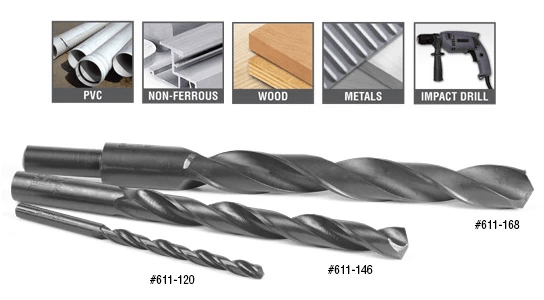 High-Speed Steel (HSS) Plastic, Aluminum, Non-Ferrous Materials & Wood Cutting Drill Bits with black oxide finish for high wear resistance & longer tool life. The 135° split point is designed for easy starting.
Woodworking Geometry: Brad Point vs. Through-Hole Bits
Point geometry matters just as much in woodworking and production boring.
Brad Point Bits
Brad point bits use a locating point and cutting geometry designed for accurate entry and clean holes in wood and wood-based materials.
They are commonly used for blind-hole applications such as shelf-pin holes, dowel holes, cabinetry, and furniture production.
Through-Hole or V-Point Bits
Through-hole boring bits use different point geometry because the tool is intended to pass through the workpiece.
This distinction is important: a blind-hole bit and a through-hole bit are not simply the same drill with different depth settings.
The machine controls depth. The bit geometry controls how the cutting edges interact with the material.
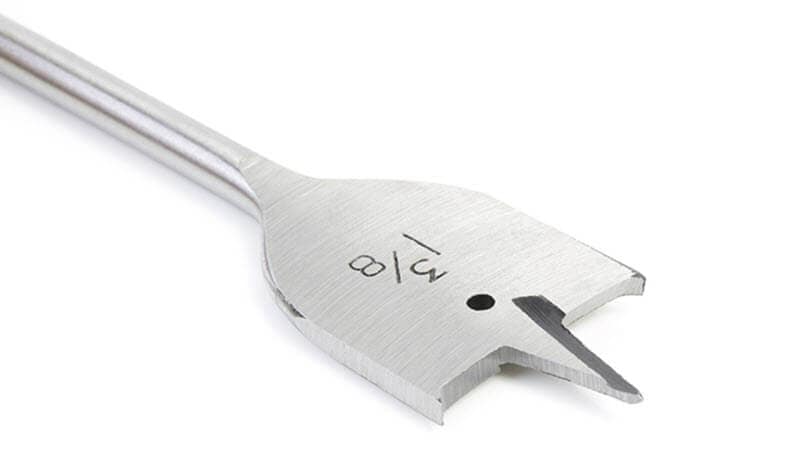
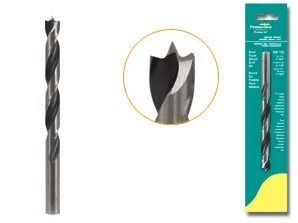 Brad Point HSS Drill Bits for precision wood cutting overcome the tendency to walk at the start of a hole & reduce tearout at the perimeter of the hole. They are fully ground and polished to give superior chip clearance.
Flute Geometry: Getting Chips Out of the Hole
A drill has to do two jobs at once: remove material at the cutting edge and carry the resulting chips back out of the hole.
That makes flute geometry critical.
If chips cannot escape efficiently, they can increase friction and heat, damage the hole surface, increase cutting forces, and shorten tool life.
Standard vs. Parabolic Flutes
Standard twist-drill flutes work well for many general drilling operations.
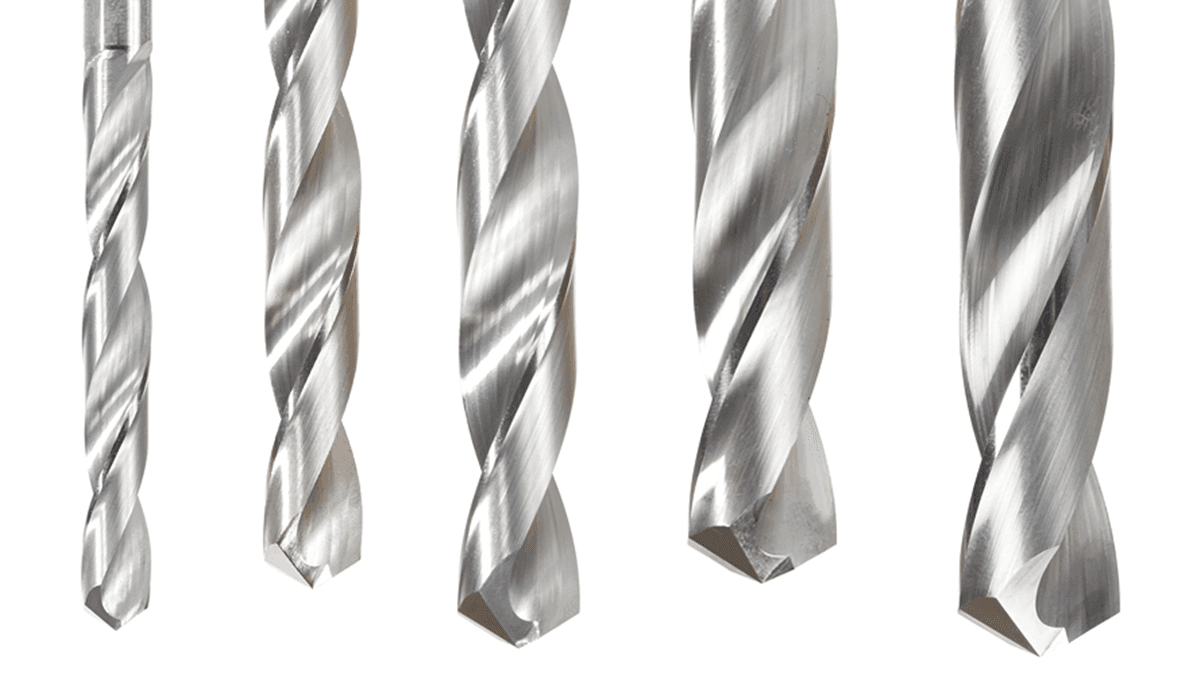
Parabolic-flute drills use a more open flute form intended to improve chip evacuation. They can be especially useful as holes become deeper or when the material produces chips that are difficult to clear.
The deeper the hole becomes, the farther chips must travel before they escape. That is why a drill that performs perfectly in a shallow hole may struggle in a deeper one even when the diameter and material remain the same.
Bit Length: Use Only the Reach You Need
Tool length has a direct effect on rigidity.
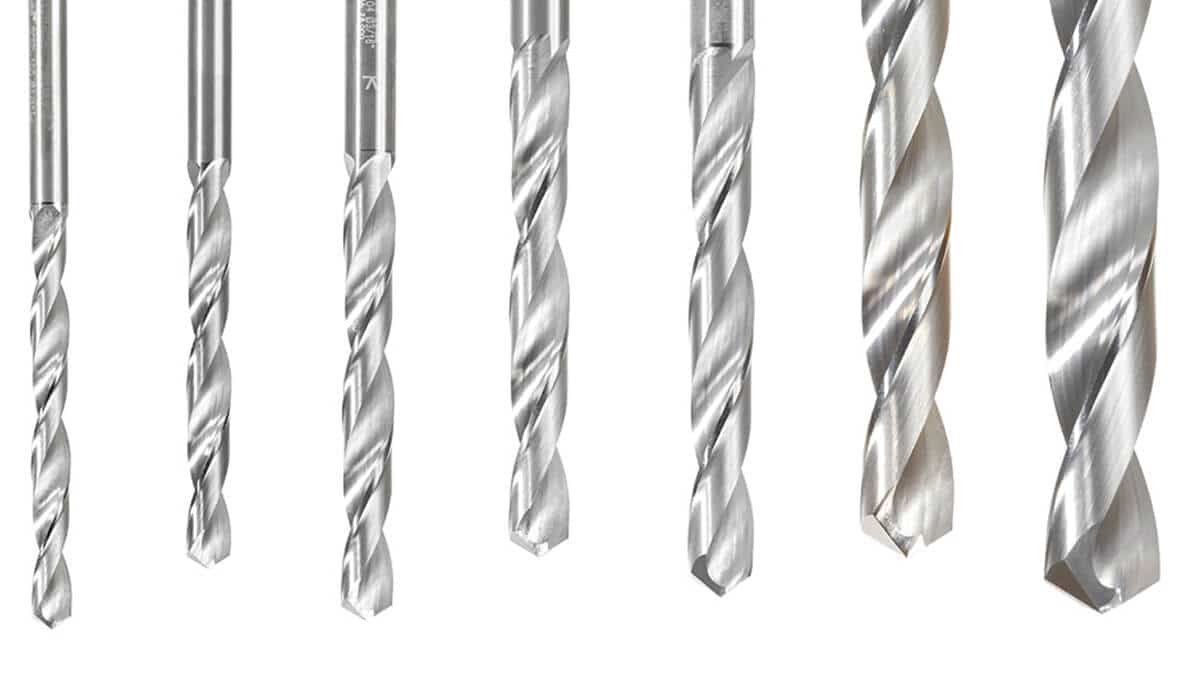
Jobber-length drills provide useful reach for general work, while shorter stub or screw-machine-length drills reduce unsupported tool length.
A shorter drill generally resists deflection better and may improve positional accuracy, hole consistency, and resistance to chatter.
A useful rule for many drilling operations is:
Use the shortest drill that can comfortably reach the required depth.
Long-reach tooling is essential when the application requires it. Otherwise, unnecessary length simply gives the tool more opportunity to flex.
Speed and Feed: Where Good Drill Bits Go Bad
Even the correct drill geometry can perform poorly if the cutting conditions are wrong.
Spindle speed determines how fast the cutting edge moves against the material. Feed determines how quickly the drill advances.
Those variables need to work together.
Too Much Speed
Excessive speed can generate heat and accelerate cutting-edge wear.
Too Little Feed
Feeding too lightly can also create heat.
A drill is supposed to cut and form chips. If the cutting edges spend too much time rubbing rather than removing material, temperature can rise even though the operator is trying to be “gentle” with the tool.
Too Much Feed
Excessive feed increases thrust and cutting forces. Depending on the tool, material, and machine, that can contribute to deflection, poor hole quality, or tool failure.
The goal is not simply to run slowly. It is to establish cutting conditions that allow the edges to cut efficiently.
The Basic Math: Drill Diameter Changes RPM
In metalworking, cutting speed is commonly expressed as surface feet per minute (SFM).
A useful relationship is:
RPM = (SFM × 3.82) ÷ Drill Diameter in Inches
This explains an important principle: if two drill diameters are cutting the same material at the same recommended surface speed, the larger drill must rotate more slowly.
Using the same spindle RPM for every drill diameter does not produce the same cutting speed at the cutting edge.
Actual speed and feed recommendations depend on the workpiece material, drill material and geometry, machine, coolant or lubrication, hole depth, and tooling manufacturer's recommendations.
When Drilling Goes Wrong: Check the Whole System
Drilling problems rarely have only one possible cause.
| Symptom | What to Check |
|---|---|
| Drill walks at entry | Point geometry, centering, rigidity |
| Hole is oversized | Runout, deflection, damaged cutting edges |
| Chatter | Tool length, workholding, rigidity, runout, speed/feed |
| Excessive heat | Speed, feed, dull edge, chip evacuation, lubrication/coolant |
| Chips pack in flutes | Hole depth, flute geometry, chip-clearance strategy |
| Ragged exit in wood or panels | Point geometry, tool sharpness, workpiece support, feed |
| Short tool life | Heat, abrasive material, cutting conditions, tool material |
The important principle is to avoid changing one variable blindly.
A hot drill may be turning too fast—but it might also be rubbing because the feed is too light, recutting trapped chips, or cutting with a dull edge. Chatter might be a speed problem, or it might simply be caused by an unnecessarily long drill or poor workholding.
How to Choose a Drill Bit More Systematically
Instead of choosing primarily by diameter, work through the application in this order:
- Identify the material.
- Determine the hole diameter, type, and depth.
- Choose suitable point and flute geometry.
- Select a tool material appropriate for the application.
- Use the shortest practical drill length.
- Verify machine and shank compatibility.
- Set appropriate speed and feed.
- Watch chip formation, heat, sound, and hole quality for signs that something needs adjustment.
The Bottom Line
A drill bit is much more than its diameter.
Its point geometry affects how it enters the material. Its flutes determine whether chips can escape. Its material affects edge life, toughness, and heat resistance. Its length influences rigidity. And speed and feed determine how all of those characteristics actually behave during the cut.
Understanding those relationships makes both drill selection and troubleshooting easier.
Instead of asking only, “What size drill bit do I need?”, ask:
“What drill geometry and cutting conditions does this hole require?”
That question will usually lead you to the better tool.
FAQs
What is the difference between a 118-degree and 135-degree drill bit?
A 118-degree point is common for general-purpose drilling, while a 135-degree point has a flatter geometry often used in metalworking. Point angle is only part of the equation, however; split-point geometry and the material being drilled also affect centering, penetration, and cutting performance.
What is a split-point drill bit?
A split-point drill modifies the center or chisel-edge geometry of a conventional twist drill. This helps the drill penetrate more efficiently and reduces its tendency to walk across the workpiece when starting a hole.
Are cobalt drill bits coated with cobalt?
No. What is commonly called a cobalt drill bit is typically made from high-speed steel alloyed with cobalt. The cobalt improves hot hardness, helping the cutting edge retain hardness at elevated temperatures.
Why does flute geometry matter on a drill bit?
Flutes carry chips away from the cutting edges and out of the hole. Poor chip evacuation can increase friction, heat, cutting forces, and tool wear. Flute design becomes especially important as holes get deeper or materials produce long, difficult-to-clear chips.
Why can drilling too slowly overheat a drill bit?
Reducing RPM can help in some situations, but feeding too lightly can cause the cutting edges to rub instead of forming proper chips. That friction generates heat and can accelerate tool wear. Effective drilling requires the right combination of spindle speed and feed.
Why are shorter drill bits more rigid?
A shorter drill has less unsupported length, which reduces its tendency to flex or deflect under cutting forces. When extra reach isn't required, a stub-length drill can improve rigidity, positional accuracy, and resistance to chatter.