Why Most Woodworkers Choose the Wrong CNC Downcut Bit
Table of Contents
- Why Downcut Spiral Bits Are So Popular
- The Hidden Trade-Offs of Standard Downcut Bits
- Even Good Downcut Bits Have Limits
- What Actually Makes a Better Downcut Bit?
- Meet the Upgrade: Spektra 46202-K
- What You May Notice Right Away
- Standard Downcut Bit vs. Spektra 46202-K
- When It Is Time to Upgrade Your Downcut Bit
- Why the 46202-K Has Become a Go-To Choice
- Final Thoughts
- FAQs
Why Most Woodworkers Choose the Wrong Downcut Bit (and How to Fix It)
If you already use a downcut spiral bit, you are probably doing a lot right.
Downcut bits are popular for a reason: they produce clean top edges, help reduce tear-out, and are often the best choice for plywood, laminates, veneered panels, and other materials where surface quality matters. For many woodworkers, cabinet makers, and CNC users, a downcut bit is not a specialty tool. It is part of the everyday workflow.
But even experienced users sometimes settle for performance that is “good enough” without realizing how much their bit may be costing them in burn marks, slower feed rates, shorter tool life, and inconsistent results over time.
That is the real issue. Most woodworkers do not choose the wrong type of bit. They choose the wrong version of the right bit.
If you are working with sheet goods, dados, grooves, or finish-sensitive materials and you want the clean top-edge finish of a downcut bit without as many of the usual trade-offs, upgrading to a higher-performance option like the Spektra 46202-K can make a noticeable difference.
Why Downcut Spiral Bits Are So Popular
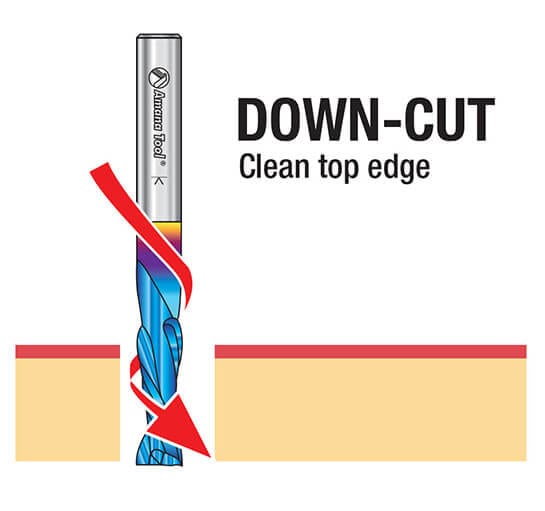
Downcut spiral bits remain one of the most widely used spiral plunge router bits because they solve a very common problem: top-surface tear-out.
When the cutting action pushes fibers downward into the material instead of pulling them upward, the top edge of the cut tends to stay cleaner. That matters when you are working with:
- Plywood
- Melamine
- Laminates
- Veneered sheet goods
- Pre-finished materials
- Hardwoods where edge appearance matters
This is why downcut bits are used so often for visible grooves, shallow dados, pattern routing, and finish-sensitive passes. They are also a common choice for CNC users who want a cleaner top edge on certain operations.
In other words, the popularity of downcut bits is well earned. They are not a niche product. They are a workhorse.
The Hidden Trade-Offs of Standard Downcut Bits
The problem is that the same geometry that gives a downcut bit its clean top-edge finish can also create challenges.
Because the flutes push chips downward, standard downcut bits tend to trap more heat in the cut. In real shop conditions, that can lead to several familiar frustrations:
- More heat buildup during longer runs
- Greater risk of burning in plywood, MDF, and hardwoods
- Chip packing in deeper cuts or less-than-ideal conditions
- Faster edge wear over time
- The need to slow feed rates to maintain cut quality
These issues do not always show up dramatically on the first cut. That is part of what makes them easy to overlook. Instead, they show up gradually: a little more burning here, a little more resistance there, a bit that seems to lose its edge sooner than expected, or a process that starts to feel less smooth and predictable.
Over time, those small issues add up. They can affect cut quality, workflow efficiency, and the overall value you are getting from the bit.
Even Good Downcut Bits Have Limits
Many woodworkers and CNC operators already buy quality bits from respected brands. And to be fair, there are many excellent downcut bits on the market. A well-made standard carbide bit from a reputable manufacturer can absolutely do good work.
But even a good conventional downcut bit still has to deal with the same core challenge: friction and heat.
That is why the next step in performance is not just about sharpness or flute direction. It is about how well the bit handles the heat and friction that naturally come with downcut cutting action.
For experienced users, this is an important shift in perspective. The question is no longer just, “Should I use a downcut?” The better question is, “Which downcut bit will keep performing at a higher level when the work gets demanding?”
Make this small jewelry box for yourself or someone you love!
What Actually Makes a Better Downcut Bit?
When woodworkers compare bits, they often focus on diameter, cut length, shank size, or whether the bit is upcut, downcut, or compression. Those are all important factors. But when you are comparing one downcut bit to another, the biggest differences often come from performance under load.
A higher-performance downcut bit should help address the biggest weaknesses of traditional downcut geometry. That means looking for improvements in three key areas:
1. Heat Resistance
Heat is one of the main enemies of cut quality and tool life. A bit that runs cooler is less likely to burn material, dull prematurely, or force you to compensate with slower cutting.
2. Reduced Friction
Less friction can improve how the bit moves through the material and reduce the strain created by chip compression and heat buildup.
3. Longer Edge Life
For buyers who use their bits regularly, long-term consistency matters. A bit that stays sharp longer can help maintain cleaner cuts and reduce replacement frequency.
This is where premium coatings and advanced bit technology start to matter in a meaningful way. They are not just marketing features. On the right tool, they can improve real-world cutting performance.
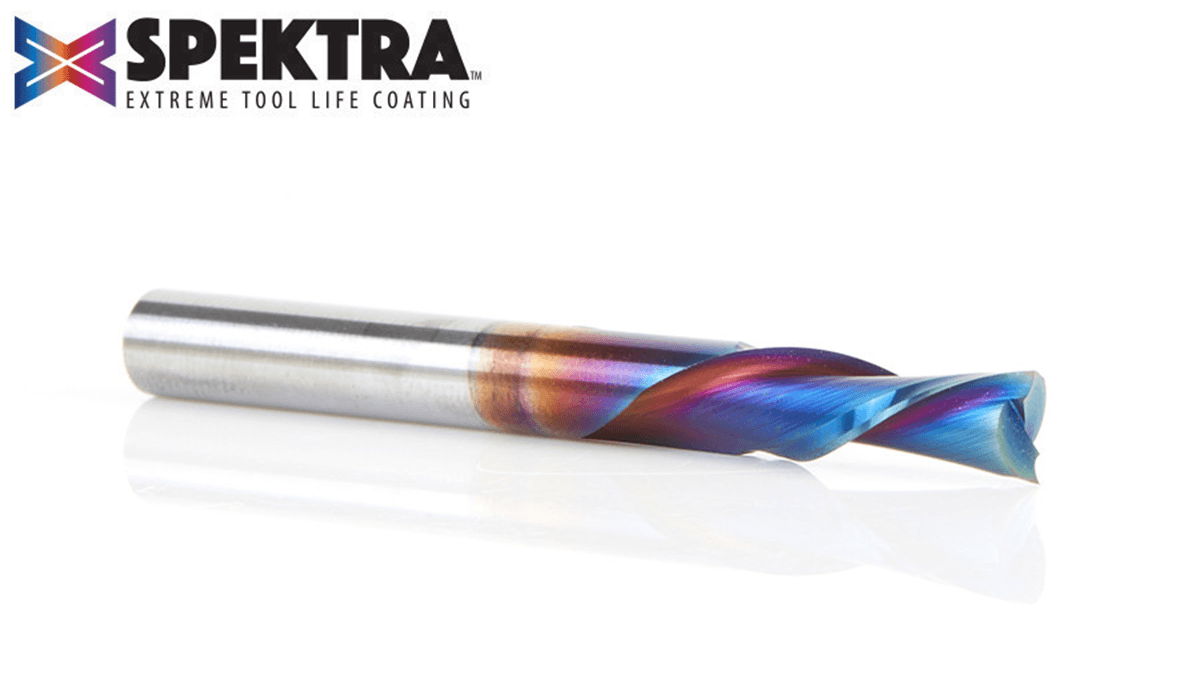
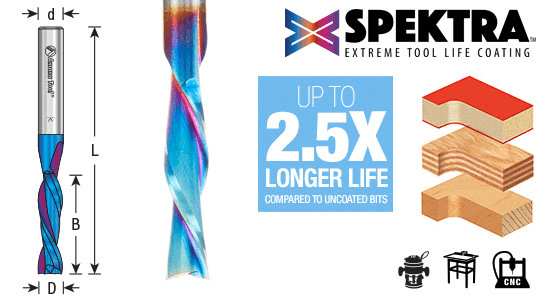 Spektra 46202-K downcut spiral router bit can be purchased individually, or in 2-packs5-packs.Also available in left-hand rotation for reverse-spinning CNC setups..
Meet the Upgrade: Spektra 46202-K
If you like what downcut bits do but dislike the heat, drag, and shorter lifespan that often come with them, the Spektra 46202-K deserves a close look.
The 46202-K is not popular simply because it is a downcut spiral plunge router bit. It stands out because it is built to improve the downcut experience.
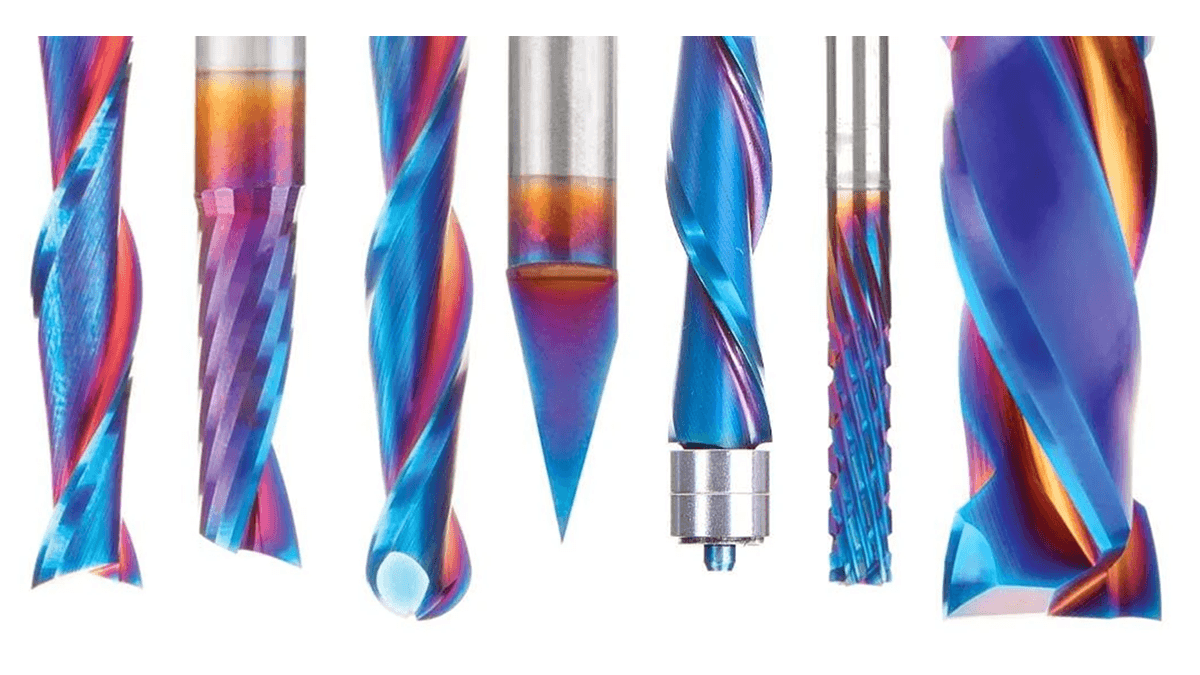
Its advanced nACo nanocomposite coating is designed to help the bit run cooler, reduce friction, and maintain edge performance longer than a typical uncoated bit. That matters especially in the kinds of jobs where downcut bits are most often used: plywood, MDF, laminates, veneered panels, and other sheet goods where both finish quality and productivity count.
In practical terms, that can mean:
- Cleaner cuts over a longer period of use
- Reduced risk of heat-related burning
- Less drag in demanding materials
- More stable performance throughout repeated operations
- Longer usable tool life
The result is a bit that still gives you the clean top-edge performance you expect from a downcut, but with fewer of the compromises that woodworkers have come to accept as normal.
What You May Notice Right Away
One of the best ways to understand the value of a premium downcut bit is to think in terms of shop experience, not just specifications.
When users upgrade from a standard downcut bit to a high-performance option like the Spektra 46202-K, the difference may show up in small but meaningful ways:
- The cut feels smoother and more controlled
- You see fewer burn marks, especially in tougher materials
- The bit stays productive longer before performance starts to drop
- You spend less time compensating for a bit that is running hot or dulling early
It is not always about one dramatic “before and after” cut. In many cases, the bigger advantage shows up over time. Cleaner results over repeated use. More confidence in the tool. Fewer interruptions. More consistency.
That is often what separates a decent bit from a bit you keep buying again.
Standard Downcut Bit vs. Spektra 46202-K
| Feature | Standard Downcut Bit | Spektra 46202-K |
|---|---|---|
| Top-edge finish | Clean | Clean |
| Heat buildup | Often higher | Reduced |
| Friction during demanding cuts | Can increase quickly | Lower, more controlled |
| Burn risk | More common | Lower |
| Edge life | Good, but limited by heat | Extended |
| Performance consistency over time | May decline sooner | More stable |
For many buyers, that is the real comparison that matters. Not just whether the bit can cut cleanly when it is new, but how well it holds up when it is actually used.
When It Is Time to Upgrade Your Downcut Bit
If you are wondering whether a premium downcut bit is worth it, consider what your current bit is asking you to tolerate.
You may be ready for an upgrade if:
- You cut plywood, MDF, or laminated materials regularly
- You often see scorch marks or heat buildup
- Your bit loses its edge faster than you would like
- You find yourself slowing down to protect cut quality
- You want more value from each bit you buy
In those situations, paying attention only to the initial purchase price can be misleading. A bit that costs less upfront but dulls faster, burns more easily, or creates more workflow friction may not be the better value in the long run.
That is exactly why many experienced users start looking for something better. Not a different category of tool. Just a better-performing version of the one they already know they need.
Why the 46202-K Has Become a Go-To Choice
The Spektra 46202-K has the kind of profile that makes it easy to reach for again and again. It is a practical, versatile bit for the type of finish-sensitive work many shops do every day, and it helps address the weak points that make traditional downcut bits frustrating over time.
For buyers who already know the value of a downcut spiral plunge bit, the 46202-K is not a departure from what works. It is an upgrade to what works.
That is an important distinction. The goal is not to convince experienced users to abandon the downcut category. It is to show them that they no longer have to accept the usual downcut compromises as unavoidable.
Final Thoughts
Most woodworkers do not choose the wrong bit because they lack experience. In fact, many choose downcut bits precisely because they understand what the job requires.
The bigger issue is that they may still be using a bit that delivers only part of what they need: good finish quality, but more heat, more drag, and shorter life than necessary.
If that sounds familiar, the fix is straightforward. Keep the downcut performance you already rely on. Upgrade to a bit designed to do more with it.
The Spektra 46202-K is a smart next step for woodworkers and CNC users who want cleaner cuts, less friction, and longer-lasting performance from one of the most commonly used spiral bits in the shop.
Explore the Spektra 46202-K and see what a high-performance downcut bit can do on your next project.
Get the Ultimate Downcut Bit Here
FAQs
What is the main advantage of a downcut spiral router bit?
A downcut spiral router bit pushes material fibers downward as it cuts, resulting in a cleaner top surface with minimal tear-out. This makes it ideal for plywood, laminates, veneered panels, and other materials where edge quality is critical.
Why do downcut bits sometimes cause burning or heat buildup?
Because downcut bits push chips downward into the cut, they can trap heat and reduce airflow around the cutting edge. This can lead to increased friction, especially in deeper cuts or dense materials like MDF and hardwoods, which may cause burning or faster tool wear.
How can I reduce burning when using a downcut bit?
To reduce burning, make sure you are using appropriate feed rates, avoid overly slow cutting speeds, and clear chips when possible. Using a high-performance coated bit—such as one designed to reduce friction and heat—can also significantly improve results.
Are coated router bits worth the extra cost?
For many users, yes. Coated router bits are designed to run cooler, reduce friction, and maintain sharpness longer than uncoated bits. This can lead to cleaner cuts, longer tool life, and better overall value—especially for frequent or production-level use.
When should I use a downcut bit instead of a compression bit?
Use a downcut bit when your priority is a clean top edge, especially for shallow cuts, dados, grooves, or finish passes. Compression bits are better suited for cutting completely through material when you need clean edges on both the top and bottom surfaces.